
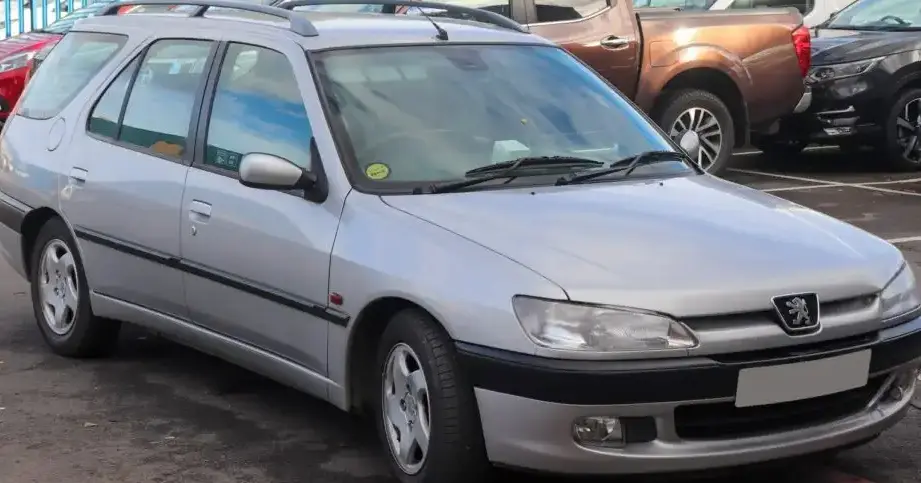
The Peugeot 306 Break (7E) 1.9d, produced between 1998 and 2002, was a popular station wagon variant within the broader 306 range. Positioned as an economical and practical option, it catered to buyers prioritizing fuel efficiency and load-carrying capacity over outright performance. The 306 series, launched in 1993, was Peugeot’s replacement for the 305, and the Break (estate) version offered increased versatility. This 1.9d model occupied the lower-mid range of the 306 Break lineup, sitting below the more powerful petrol variants and the higher-specification diesel models.
Technical Specifications
| Brand | Peugeot |
| Model | 306 |
| Generation | 306 Break (7E) |
| Type (Engine) | 1.9d (75 Hp) |
| Start of production | 1998 |
| End of production | 2002 |
| Powertrain Architecture | Internal Combustion engine |
| Body type | Station wagon (estate) |
| Seats | 5 |
| Doors | 5 |
| Fuel Type | Diesel |
| Power | 75 Hp |
| Engine layout | Front, Transverse |
| Engine Model/Code | DHV XUD9BSD |
| Engine configuration | Inline |
| Fuel injection system | Diesel Commonrail |
| Engine aspiration | Naturally aspirated engine |
| Engine oil capacity | 5 l (5.28 US qt | 4.4 UK qt) |
| Coolant capacity | 8 l (8.45 US qt | 7.04 UK qt) |
| Length | 4338 mm (170.79 in.) |
| Width | 1680 mm (66.14 in.) |
| Height | 1415 mm (55.71 in.) |
| Wheelbase | 2580 mm (101.57 in.) |
| Front track | 1423-1433 mm (56.02 – 56.42 in.) |
| Rear track | 1424-1432 mm (56.06 – 56.38 in.) |
| Front overhang | 815 mm (32.09 in.) |
| Rear overhang | 943 mm (37.13 in.) |
| Drivetrain | Front wheel drive |
Powertrain & Engine Architecture
The 306 Break 1.9d was powered by the DHV variant of the XUD9BSD engine, a 1868cc inline four-cylinder diesel engine. This engine was a mainstay of Peugeot and Citroën vehicles for many years, known for its durability and relatively simple mechanical design. The ‘DHV’ code signifies a later iteration of the XUD9 engine, incorporating improvements to meet evolving emissions standards. The engine utilized a diesel common rail fuel injection system, a relatively modern technology for the time, which improved fuel atomization and reduced engine noise compared to older mechanical injection systems. The XUD9BSD engine featured a single overhead camshaft (SOHC) valvetrain operating two valves per cylinder. The engine’s naturally aspirated design meant it relied solely on atmospheric pressure to draw air into the cylinders, contributing to its modest power output. The engine was transversely mounted at the front of the vehicle, driving the front wheels.
Driving Characteristics
The 1.9d engine produced 75 horsepower and approximately 128 lb-ft of torque. This resulted in a 0-60 mph time of around 13-14 seconds, and a top speed of approximately 95 mph. Performance was adequate for everyday driving, particularly when fully loaded, but it was not a sporty vehicle. The engine’s torque characteristics meant that it offered reasonable pulling power at lower engine speeds, making it suitable for hauling loads or navigating hilly terrain. The transmission was typically a five-speed manual or a four-speed automatic. The automatic transmission, while offering convenience, did detract from the vehicle’s acceleration and fuel economy compared to the manual version. Gear ratios were geared towards economy rather than performance, prioritizing fuel efficiency over rapid acceleration. Compared to the 2.0L petrol versions of the 306 Break, the 1.9d offered significantly less power but considerably better fuel economy.
Equipment & Trim Levels
The 1.9d Break typically came with a fairly basic level of equipment, reflecting its position as an entry-level or mid-range model. Standard features generally included power steering, central locking, and an adjustable steering column. Interior upholstery was typically cloth, and the dashboard featured a functional, if somewhat utilitarian, design. Optional extras included air conditioning, electric windows, and an upgraded stereo system. Higher trim levels, such as the ‘GLX’, added features like alloy wheels, fog lights, and more luxurious interior trim. Safety features were relatively basic for the era, typically including a driver’s airbag and seatbelts.
Chassis & Braking
The 306 Break utilized a MacPherson strut front suspension and a torsion beam rear suspension. This setup provided a reasonable balance between ride comfort and handling. The torsion beam rear suspension was a cost-effective solution, but it didn’t offer the same level of sophistication as independent rear suspension found on some higher-specification 306 models. Braking was typically accomplished with disc brakes on the front wheels and drum brakes on the rear wheels. Anti-lock Braking System (ABS) was available as an option, but not standard on all models. Stabilizer bars were fitted to both the front and rear axles to reduce body roll during cornering. The suspension and braking systems were tuned to suit the vehicle’s weight and power output, providing adequate stopping power and handling characteristics for everyday driving.
Market Reception & Comparison
The Peugeot 306 Break 1.9d was generally well-received by critics as a practical and economical family car. It was praised for its spacious interior, large boot capacity, and fuel efficiency. However, it was also criticized for its relatively slow performance and basic interior trim. Compared to other station wagons in its class, such as the Ford Focus Estate and the Vauxhall/Opel Astra Estate, the 306 Break offered a competitive level of practicality and value for money. The 1.9d engine offered superior fuel economy compared to the petrol engines, but it lacked the same level of refinement and performance. Reliability was generally good, although the diesel injection pump could be prone to failure if not properly maintained.
Legacy
The Peugeot 306 Break 1.9d has proven to be a relatively durable and reliable vehicle, and many examples are still on the road today. The XUD9 engine is known for its longevity, and with regular maintenance, it can cover high mileages. In the used car market, the 1.9d Break is often sought after by buyers looking for an affordable and practical estate car. Parts availability is generally good, although some specific components may be becoming increasingly difficult to find. The 306 Break 1.9d represents a practical and economical choice for those seeking a reliable and spacious station wagon from the late 1990s and early 2000s.
