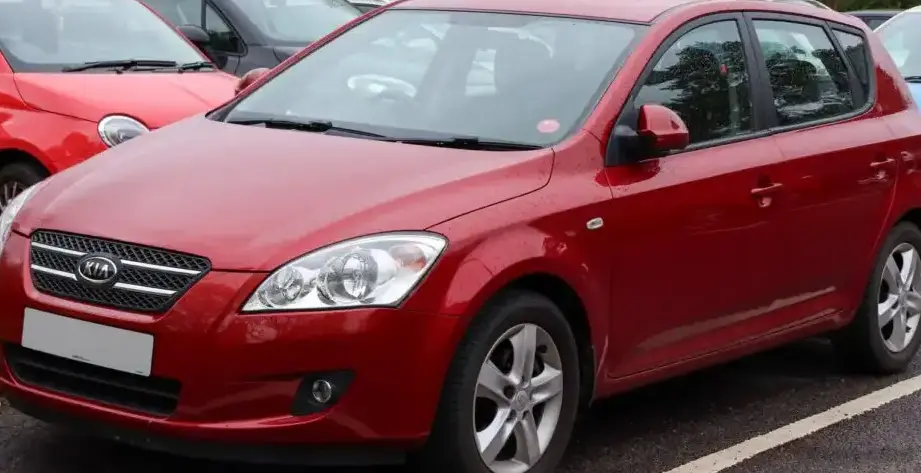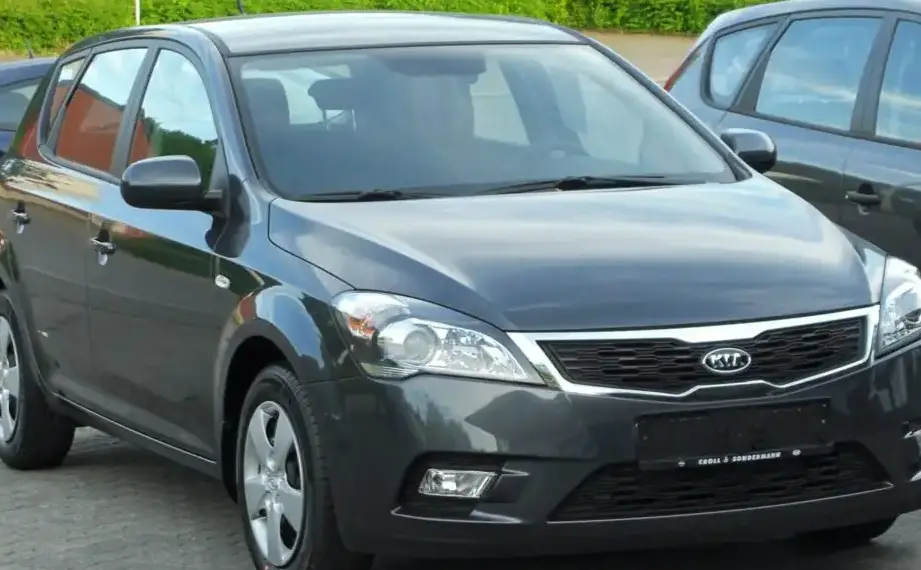
The Kia Cee’d, launched in 2006, represented Kia’s first foray into the European compact hatchback market, designed specifically to appeal to European tastes and driving conditions. The first generation (JD) underwent a significant facelift in 2009, bringing revised styling, improved interior materials, and updated engine options. The 1.6D 16V automatic variant, producing 115 horsepower, was introduced as a key part of this facelift, positioned as an efficient and comfortable option for buyers prioritizing fuel economy and ease of driving over outright performance. Production of this specific configuration ran from 2009 to 2012.
Technical Specifications
| Brand | Kia |
| Model | Cee’d |
| Generation | Cee’d I (facelift 2009) |
| Type (Engine) | 1.6D 16V (115 Hp) automatic |
| Start of production | 2009 |
| End of production | 2012 |
| Powertrain Architecture | Internal Combustion engine |
| Body type | Hatchback |
| Seats | 5 |
| Doors | 5 |
| Fuel consumption (urban) | 6.9 l/100 km (34.1 US mpg) |
| Fuel consumption (extra urban) | 4.9 l/100 km (48 US mpg) |
| Fuel consumption (combined) | 5.6 l/100 km (42 US mpg) |
| Fuel Type | Diesel |
| Acceleration 0 – 100 km/h | 12.8 sec |
| Acceleration 0 – 62 mph | 12.8 sec |
| Acceleration 0 – 60 mph | 12.2 sec |
| Maximum speed | 180 km/h (111.85 mph) |
| Emission standard | Euro 5 |
| Weight-to-power ratio | 11.9 kg/Hp |
| Weight-to-torque ratio | 5.4 kg/Nm |
| Power | 115 Hp |
| Torque | 255 Nm @ 1900 rpm (188.08 lb.-ft. @ 1900 rpm) |
| Engine layout | Front, Transverse |
| Engine Model/Code | D4FB |
| Engine displacement | 1582 cm3 (96.54 cu. in.) |
| Number of cylinders | 4 |
| Engine configuration | Inline |
| Number of valves per cylinder | 4 |
| Fuel injection system | Diesel Commonrail |
| Engine aspiration | Turbocharger, Intercooler |
| Valvetrain | DOHC |
| Engine oil capacity | 5.3 l (5.6 US qt | 4.66 UK qt) |
| Coolant capacity | 6.3 l (6.66 US qt | 5.54 UK qt) |
| Kerb Weight | 1374 kg (3029.15 lbs.) |
| Max. weight | 1840 kg (4056.51 lbs.) |
| Max load | 466 kg (1027.35 lbs.) |
| Trunk (boot) space – minimum | 340 l (12.01 cu. ft.) |
| Trunk (boot) space – maximum | 1300 l (45.91 cu. ft.) |
| Fuel tank capacity | 53 l (14 US gal | 11.66 UK gal) |
| Length | 4235 mm (166.73 in.) |
| Width | 1790 mm (70.47 in.) |
| Height | 1480 mm (58.27 in.) |
| Wheelbase | 2650 mm (104.33 in.) |
| Front track | 1538 mm (60.55 in.) |
| Rear track | 1536 mm (60.47 in.) |
| Minimum turning circle | 10.34 m (33.92 ft.) |
| Drivetrain | Front wheel drive |
| Number of gears | 4 |
| Gearbox type | automatic transmission |
| Front brakes | Ventilated discs |
| Rear brakes | Disc |
| Tires size | 205/55 R16 |
| Wheel rims size | 16 |
Powertrain & Engine Architecture
The 1.6D 16V engine, designated D4FB, is a four-cylinder diesel engine utilizing a common rail direct injection system. This system, supplied by Bosch, allowed for precise fuel delivery and optimized combustion, contributing to both fuel efficiency and reduced emissions. The engine featured a turbocharger with an intercooler, boosting power output to 115 horsepower and 255 Nm (188 lb-ft) of torque at 1900 rpm. The engine employed a double overhead camshaft (DOHC) valvetrain with four valves per cylinder, enhancing breathing and overall performance. The four-speed automatic transmission was a conventional hydraulic automatic, chosen for its smoothness and ease of use, rather than the more advanced dual-clutch transmissions becoming popular at the time.
Driving Characteristics
The Cee’d 1.6D automatic offered a comfortable and relaxed driving experience. While not particularly sporty, the engine provided adequate power for everyday driving situations. Acceleration from 0-60 mph took around 12.2 seconds, and top speed was limited to 111.85 mph. The four-speed automatic transmission, while smooth, lacked the responsiveness of a manual gearbox or a more modern automatic with more gears. Gear changes were noticeable, and the transmission sometimes hesitated during quick acceleration. Compared to the more powerful 1.6 petrol variants or the later 1.7 CRDi models, the 1.6D automatic prioritized fuel economy over performance. The relatively low gearing contributed to acceptable city driving, but could feel strained on highway inclines.
Equipment & Trim Levels
The 1.6D automatic trim typically fell into the mid-range of the Cee’d lineup. Standard equipment generally included air conditioning, electric front windows, central locking, a radio/CD player, and ABS brakes. Higher trim levels added features like alloy wheels, a trip computer, rear parking sensors, and upgraded interior trim. Interior upholstery was typically cloth, with a functional and durable design. Optional extras included a sunroof, leather upholstery, and a more advanced audio system.
Chassis & Braking
The Cee’d utilized a MacPherson strut front suspension and a coupled torsion beam rear suspension. This setup provided a good balance between ride comfort and handling. The front brakes were ventilated discs, while the rear brakes were solid discs. ABS (Anti-lock Braking System) was standard, enhancing braking performance and safety. The suspension was tuned for comfort, resulting in a relatively soft ride, but body roll was noticeable during cornering. Stabilizer bars were fitted front and rear to reduce body roll and improve handling stability.
Market Reception & Comparison
The Kia Cee’d 1.6D automatic was generally well-received by critics as a practical and affordable family hatchback. It was praised for its fuel efficiency, comfortable ride, and generous standard equipment. However, the engine was sometimes criticized for being underpowered, and the four-speed automatic transmission was considered dated compared to competitors. Compared to other diesel hatchbacks in its class, such as the Volkswagen Golf or Ford Focus, the Cee’d offered a more affordable price point but lacked the same level of refinement and performance. Fuel economy was competitive, averaging around 42 US mpg in combined driving.
Legacy
The Kia Cee’d 1.6D automatic, while not a performance standout, proved to be a reliable and durable vehicle. The D4FB engine is known for its longevity, and the four-speed automatic transmission, while simple, is generally robust. In the used car market, these models represent a good value proposition for buyers seeking an affordable and economical hatchback. Maintenance costs are relatively low, and parts availability is generally good. While not a collector’s item, the Cee’d 1.6D automatic remains a practical and dependable choice for everyday transportation.