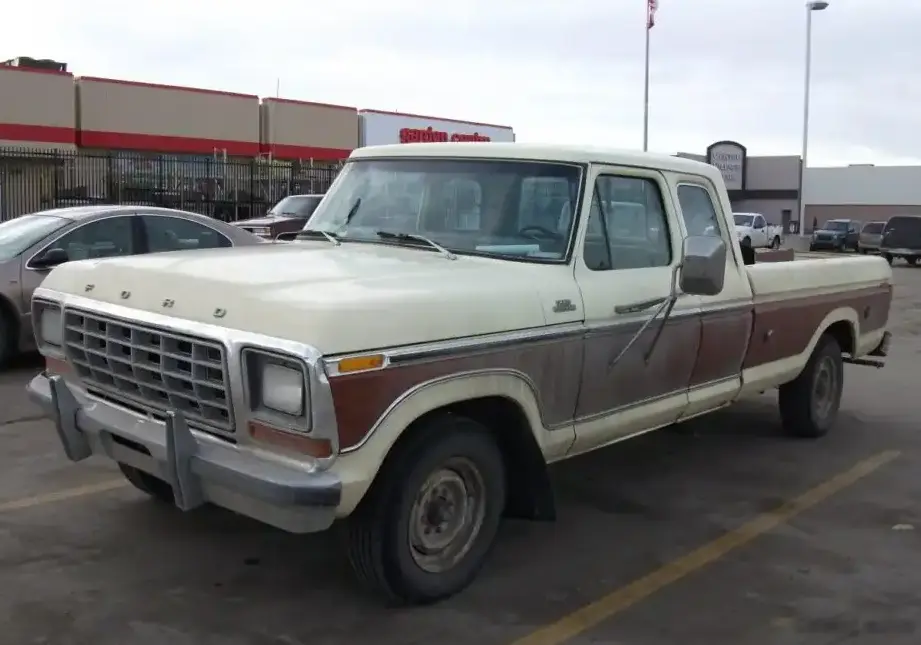
The Ford F-Series F-250 VI SuperCab, specifically equipped with the 7.5-liter 460 cubic inch V8 engine producing 220 horsepower and paired with an automatic transmission, represents a significant iteration of Ford’s heavy-duty truck lineage. Produced from 1977 through 1979, this variant occupied a middle ground within the F-250 range, offering a balance between capability and relative affordability. It was part of the sixth generation (1973-1979) of the F-Series, known for its increased size and emphasis on comfort compared to earlier models. The SuperCab configuration, denoting an extended cab, provided additional passenger space, making it a popular choice for families and work crews.
Technical Specifications
| Brand | Ford |
| Model | F-Series F-250 |
| Generation | F-Series F-250 VI SuperCab |
| Type (Engine) | 7.5 460 V8 (220 Hp) Automatic |
| Start of production | 1977 |
| End of production | 1979 |
| Powertrain Architecture | Internal Combustion engine |
| Body type | Pick-up |
| Seats | 6 |
| Doors | 2 |
| Fuel Type | Petrol (Gasoline) |
| Power | 220 Hp |
| Power per litre | 29.2 Hp/l |
| Engine displacement | 7538 cm3 / 460 cu. in. |
| Number of cylinders | 8 |
| Engine configuration | V-engine |
| Piston Stroke | 97.79 mm / 3.85 in. |
| Number of valves per cylinder | 4 |
| Fuel injection system | Carburettor |
| Engine aspiration | Naturally aspirated engine |
| Max. weight | 3674 kg / 8099.78 lbs. |
| Trunk (boot) space – minimum | 1727-2084 l / 60.99 – 73.6 cu. ft. |
| Fuel tank capacity | 73 l / 19.28 US gal | 16.06 UK gal |
| Length | 5362-5773 mm / 211.1 – 227.28 in. |
| Wheelbase | 3531-3937 mm / 139.02 – 155 in. |
| Wading depth | 673-678 mm / 26.5 – 26.69 in. |
| Drivetrain Architecture | The Internal combustion engine (ICE) drives the rear wheels of the vehicle. |
| Drive wheel | Rear wheel drive |
| Number of gears and type of gearbox | 4 gears, automatic transmission Cruise-O-Matic |
| Front suspension | Independent coil spring, Transverse stabilizer |
| Rear suspension | Transverse stabilizer, Leaf spring |
| Front brakes | Disc |
| Rear brakes | Drum |
| Power steering | Electric Steering |
| Tires size | 215/85 R16.5 |
| Wheel rims size | 6J x 16.5 |
Powertrain & Engine Architecture
The heart of this F-250 variant is Ford’s 460 cubic inch (7.5-liter) V8 engine. This engine, internally designated as the 385 series, was a mainstay of Ford’s truck and large car lineup for many years. The 1977-1979 iteration utilized a two-barrel carburetor for fuel delivery, a relatively simple system compared to later fuel injection technologies. The engine featured a cast iron block and heads, contributing to its durability but also its considerable weight. The valvetrain employed hydraulic lifters, reducing the need for frequent valve adjustments. The Cruise-O-Matic automatic transmission, a three-speed unit, was the standard transmission offering. This transmission was known for its robustness and relatively smooth operation, though it lacked the efficiency of more modern automatics. The transmission was column-shifted, a common practice for trucks of this era.
Driving Characteristics
The 220 horsepower and substantial 370 lb-ft of torque produced by the 460 V8 provided adequate, though not exhilarating, performance for the F-250. The automatic transmission, while convenient, did sap some power compared to the available manual transmissions. Acceleration was leisurely, particularly when hauling loads or climbing hills. The gear ratios in the Cruise-O-Matic were optimized for towing and hauling, prioritizing low-end grunt over quick acceleration. The truck’s substantial weight (over 8,000 lbs) further contributed to its deliberate driving experience. Compared to the smaller six-cylinder engines offered in the F-250, the 460 V8 provided a significant increase in power and towing capacity. However, it came at the cost of increased fuel consumption. Compared to later fuel-injected versions of the 460, the carbureted version was less responsive and less fuel-efficient.
Equipment & Trim Levels
The F-250 SuperCab with the 460 V8 typically included features such as a basic AM radio, a heater, and a cigarette lighter as standard equipment. The SuperCab configuration added a rear bench seat, increasing passenger capacity. The interior was generally utilitarian, with vinyl upholstery and rubber floor mats. Optional extras included air conditioning, power steering, power brakes, and a more upscale radio. The trim level was relatively basic, reflecting the truck’s work-oriented nature. Higher trim levels, such as the Ranger XLT, offered more luxurious interior appointments and exterior styling enhancements.
Chassis & Braking
The F-250 chassis was a traditional body-on-frame design, providing a robust and durable platform. The front suspension utilized independent coil springs and a transverse stabilizer bar, offering a reasonable ride quality for a heavy-duty truck. The rear suspension employed leaf springs, designed to handle heavy loads. Brakes were disc on the front axle and drum brakes on the rear. Power steering was often an optional extra, making maneuvering the large truck easier. The tires, typically 215/85R16.5, were designed for durability and load-carrying capacity rather than high performance.
Market Reception & Comparison
The F-250 with the 460 V8 and automatic transmission was generally well-received by buyers who needed a capable and reliable work truck. Critics noted the engine’s ample torque and the transmission’s smooth operation. However, fuel economy was a common complaint, particularly during the late 1970s energy crisis. Compared to the smaller engine options, the 460 V8 commanded a higher price, but offered significantly more power and towing capacity. Compared to competing trucks from Chevrolet and Dodge, the F-250 was considered to be a strong contender in terms of durability and overall value.
Legacy
The 460 V8 engine, in its various iterations, proved to be a remarkably durable and long-lasting powerplant. Many examples are still on the road today, a testament to its robust construction. While the carbureted version is less desirable than later fuel-injected models, it remains a relatively simple engine to maintain and repair. The F-250 SuperCab from this era has become a popular choice among collectors and enthusiasts, particularly those seeking a classic American work truck. Parts availability is generally good, although some specific trim pieces may be difficult to find. The combination of the 460 V8 and automatic transmission represents a sweet spot for many buyers, offering a balance of power, convenience, and affordability in the used truck market.