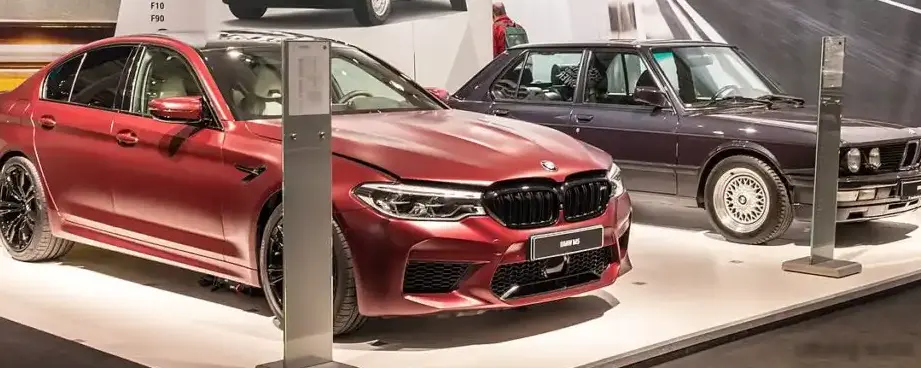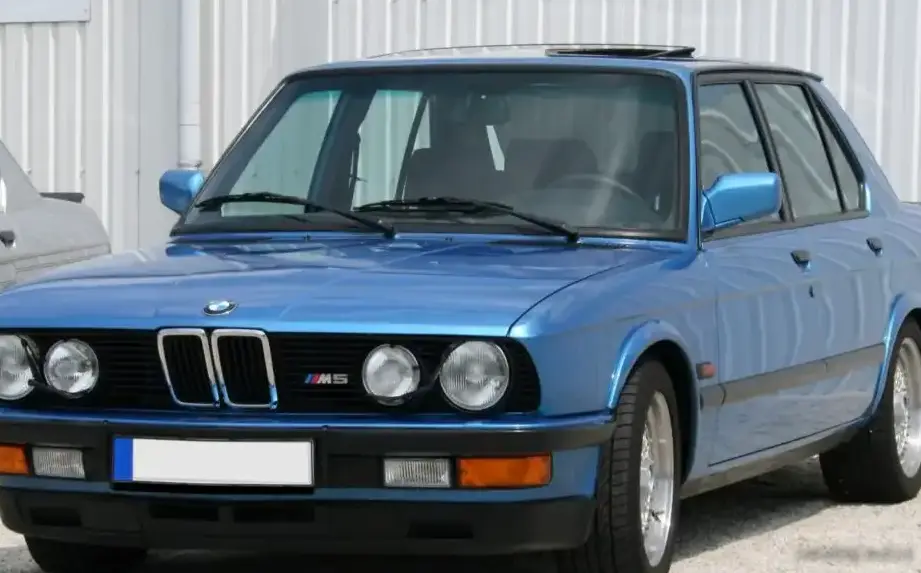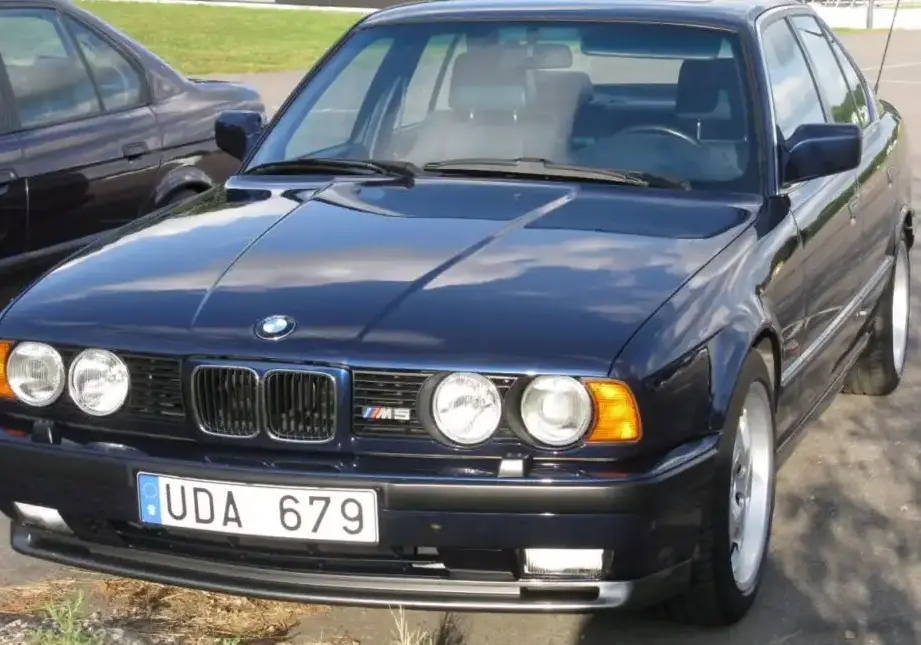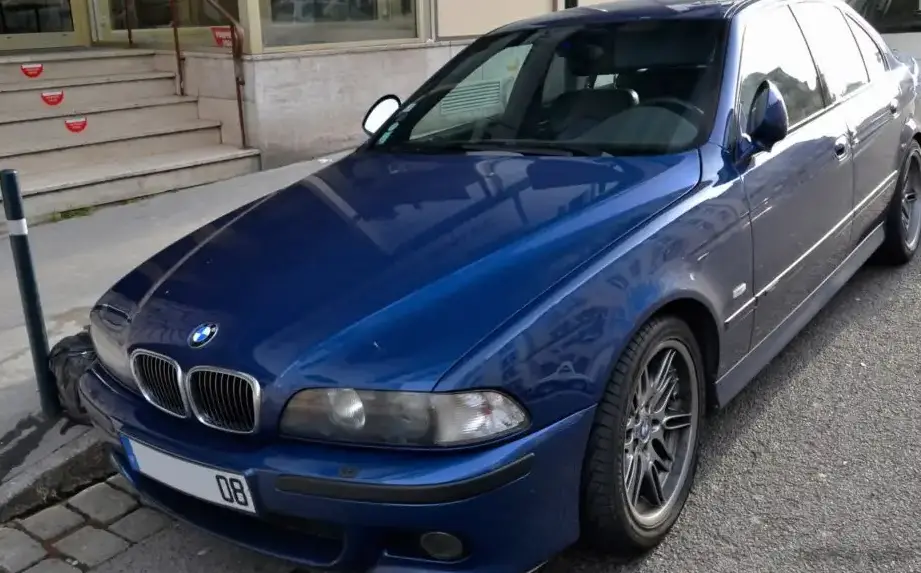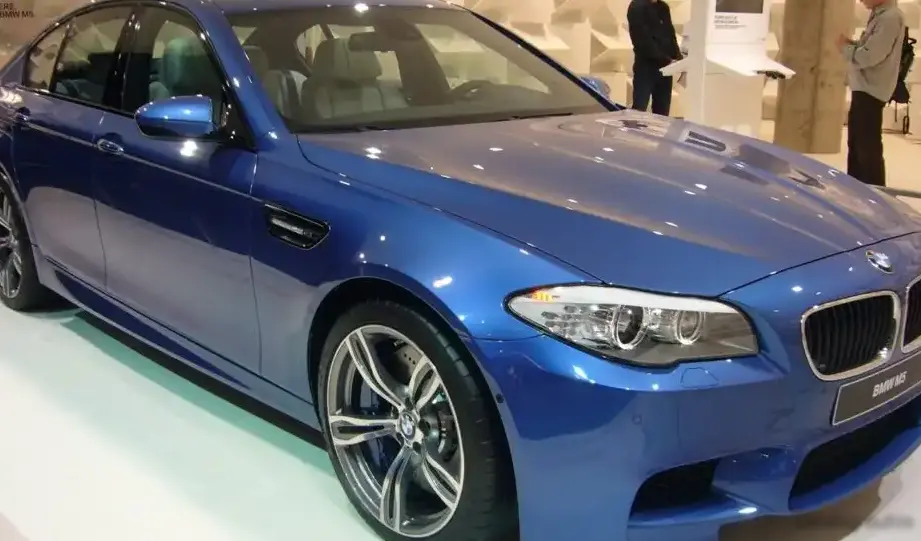
The BMW M5 (F10M), produced from August 2012 to June 2013, represents a high-performance iteration of the fifth-generation BMW 5 Series. Distinguished by its potent 4.4-liter twin-turbocharged V8 engine, the F10M M5 aimed to deliver a thrilling driving experience while maintaining a degree of everyday usability. This variant occupied the top echelon of the F10 5 Series lineup, serving as BMW’s flagship performance sedan. It built upon the foundation of the F10 chassis (internally designated F10), incorporating significant engine and chassis upgrades to justify its “M” designation. The F10M was the final iteration of the F10 M5 before the introduction of the sixth generation (F90) model.
Technical Specifications
| Brand | BMW |
| Model | M5 |
| Generation | M5 (F10M) |
| Type (Engine) | 4.4 V8 (560 Hp) |
| Start of production | August, 2012 |
| End of production | June, 2013 |
| Powertrain Architecture | Internal Combustion engine |
| Body type | Sedan |
| Seats | 5 |
| Doors | 4 |
| Fuel consumption (economy) – urban (EPA) | 15.7 l/100 km (15 US mpg, 18 UK mpg, 6.4 km/l) |
| Fuel consumption (economy) – extra urban (EPA) | 10.7 l/100 km (22 US mpg, 26.4 UK mpg, 9.3 km/l) |
| Fuel consumption (economy) – combined (EPA) | 13.8 l/100 km (17 US mpg, 20.5 UK mpg, 7.2 km/l) |
| CO2 emissions (EPA) | 321 g/km |
| Fuel Type | Petrol (Gasoline) |
| Acceleration 0 – 60 mph | 4.3 sec |
| Maximum speed | 250 km/h (155.34 mph), Electronically limited |
| Weight-to-power ratio | 3.5 kg/Hp, 283.5 Hp/tonne |
| Weight-to-torque ratio | 2.9 kg/Nm, 344.3 Nm/tonne |
| Power | 560 Hp @ 6000-7000 rpm |
| Power per litre | 127.4 Hp/l |
| Torque | 680 Nm @ 1500-5750 rpm (501.54 lb.-ft. @ 1500-5750 rpm) |
| Maximum engine speed | 7200 rpm |
| Engine layout | Front, Longitudinal |
| Engine Model/Code | S63B44B |
| Engine displacement | 4395 cm3 (268.2 cu. in.) |
| Number of cylinders | 8 |
| Engine configuration | V-engine |
| Cylinder Bore | 89 mm (3.5 in.) |
| Piston Stroke | 88.3 mm (3.48 in.) |
| Compression ratio | 10:1 |
| Number of valves per cylinder | 4 |
| Fuel injection system | Direct injection |
| Engine aspiration | Twin-power turbo, Intercooler |
| Valvetrain | Double-VANOS, VALVETRONIC |
| Engine oil capacity | 8.4 l (8.88 US qt | 7.39 UK qt) |
| Coolant | 18.5 l (19.55 US qt | 16.28 UK qt) |
| Kerb Weight | 1975 kg (4354.13 lbs.) |
| Max. weight | 2410 kg (5313.14 lbs.) |
| Max load | 435 kg (959.01 lbs.) |
| Trunk (boot) space – minimum | 520 l (18.36 cu. ft.) |
| Fuel tank capacity | 80 l (21.13 US gal | 17.6 UK gal) |
| Max. roof load | 100 kg (220.46 lbs.) |
| Length | 4910 mm (193.31 in.) |
| Width | 1891 mm (74.45 in.) |
| Width including mirrors | 2119 mm (83.43 in.) |
| Height | 1456 mm (57.32 in.) |
| Wheelbase | 2964 mm (116.69 in.) |
| Front track | 1627 mm (64.06 in.) |
| Rear (Back) track | 1582 mm (62.28 in.) |
| Front overhang | 836 mm (32.91 in.) |
| Rear overhang | 1110 mm (43.7 in.) |
| Ride height (ground clearance) | 117 mm (4.61 in.) |
| Drag coefficient (Cd) | 0.33 |
| Minimum turning circle (turning diameter) | 12.6 m (41.34 ft.) |
| Drivetrain Architecture | The Internal combustion engine (ICE) drives the rear wheels of the vehicle. |
| Drive wheel | Rear wheel drive |
| Number of gears and type of gearbox | 6 gears, manual transmission |
| Front suspension | Coil spring, Double wishbone, Transverse stabilizer |
| Rear suspension | Independent multi-link spring suspension with stabilizer |
| Front brakes | Ventilated discs, 400×36 mm |
| Rear brakes | Ventilated discs, 396×24 mm |
| Assisting systems | ABS (Anti-lock braking system) |
| Steering type | Steering rack and pinion |
| Power steering | Hydraulic Steering |
| Tires size | Front wheel tires: 265/40 R19; 265/35 R20Rear wheel tires: 295/35 R19; 295/30 R20 |
| Wheel rims size | Front wheel rims: 9J x 19; 9J x 20Rear wheel rims: 10J x 19; 10J x 20 |
Powertrain & Engine Architecture
The heart of the F10M M5 is the S63B44B engine, a 4.4-liter twin-turbocharged V8. This engine represents a significant departure from the naturally aspirated V10 found in the preceding E60 M5. The S63B44B utilizes direct fuel injection and BMW’s Double-VANOS and VALVETRONIC technologies for precise control of valve timing and lift, optimizing both power and efficiency. The twin-turbochargers, positioned within the V of the engine, minimize turbo lag and provide a broad torque curve. The engine produces 560 horsepower at 6,000-7,000 rpm and a substantial 680 Nm (501.54 lb-ft) of torque between 1,500 and 5,750 rpm. The standard transmission for the F10M was a 6-speed manual, although a 7-speed dual-clutch transmission (DCT) was also available as an option. The DCT offered faster shift times and improved efficiency.
Driving Characteristics
The F10M M5 delivers a markedly different driving experience compared to its E60 predecessor. The twin-turbo V8 provides immense power and torque, resulting in blistering acceleration. The 0-60 mph sprint takes just 4.3 seconds. While the manual transmission offers a more engaging experience for purists, the DCT provides seamless gear changes and allows the driver to focus on maximizing performance. The electronically adjustable suspension allows drivers to tailor the ride to their preferences, ranging from comfortable for daily driving to firm and controlled for track use. The steering is precise and communicative, providing excellent feedback. The car’s weight, approximately 1975 kg (4354.13 lbs), is noticeable, but the powerful engine and sophisticated chassis effectively mitigate its effects.
Equipment & Trim Levels
The M5 came standard with a comprehensive list of features, including leather upholstery, power-adjustable heated front seats, a premium sound system, navigation, and a sunroof. Optional extras included carbon fiber trim, upgraded leather, a head-up display, and an active suspension system. The interior design was largely consistent with other F10 5 Series models, but with M-specific accents, such as M badging, aluminum pedals, and unique instrument cluster graphics. Exterior features included an aggressive aerodynamic body kit, quad exhaust outlets, and M-specific alloy wheels.
Chassis & Braking
The F10M M5 features a reinforced chassis and a specially tuned suspension system to handle the increased power and performance. The front suspension utilizes a double-wishbone design with a transverse stabilizer, while the rear suspension employs an independent multi-link setup, also with a stabilizer. Braking duties are handled by large, ventilated discs with multi-piston calipers. The front brakes measure 400×36 mm, while the rear brakes are 396×24 mm. An anti-lock braking system (ABS) is standard. The car’s electronic stability control system can be adjusted to allow for varying degrees of driver intervention.
Market Reception & Comparison
The F10M M5 was generally well-received by automotive critics. It was praised for its powerful engine, impressive performance, and refined driving experience. However, some critics noted that the car lacked the raw, visceral feel of the E60 M5. Compared to the standard F10 5 Series models, the M5 offered a significantly more engaging driving experience and a much higher level of performance. Compared to other high-performance sedans of the time, such as the Mercedes-Benz E63 AMG and the Audi RS6, the M5 offered a compelling combination of power, handling, and luxury. Fuel economy, at 13.8 l/100 km (17 US mpg), was relatively poor, but typical for a high-performance vehicle of this type.
Legacy
The F10M M5 represents a pivotal moment in the M5’s history, marking the transition from a naturally aspirated V10 to a turbocharged V8. The S63B44B engine proved to be a robust and reliable powerplant, and the F10M M5 has maintained a strong following among enthusiasts. On the used car market, well-maintained examples of the F10M M5 command a premium price. Regular maintenance, including oil changes and inspections of the turbochargers and cooling system, is crucial for ensuring the long-term reliability of this high-performance sedan. The F10M remains a desirable and capable performance car, offering a unique blend of power, luxury, and technology.