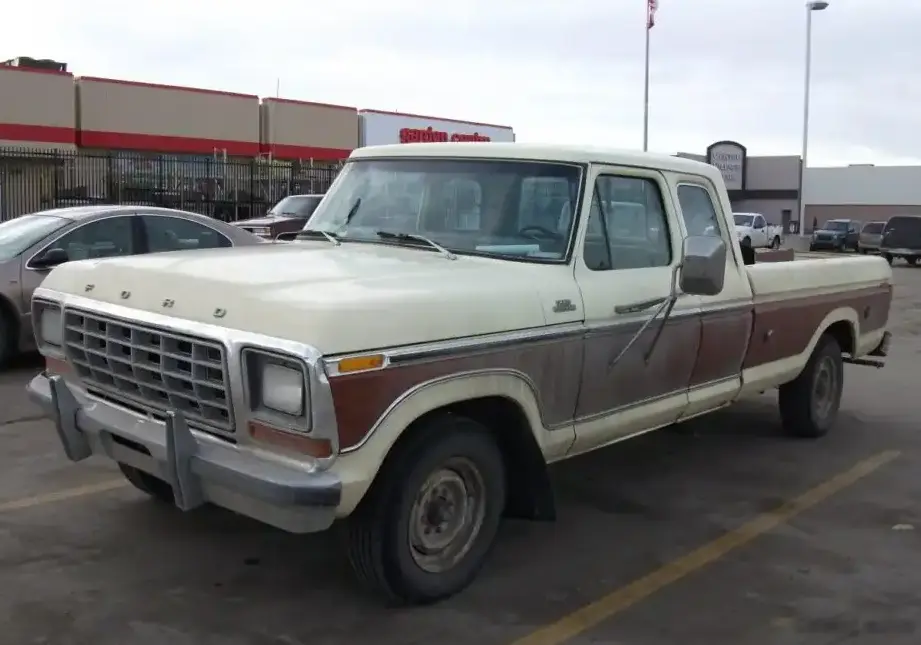
The Ford F-250 VI SuperCab, produced from 1975 to 1976, represented a significant iteration in Ford’s long-running F-Series pickup truck lineage. This generation, designated the sixth series, offered a larger cab configuration – the “SuperCab” – providing increased passenger space compared to the standard cab models. The 7.5-liter 460 cubic inch V8 engine paired with an automatic transmission was a popular configuration, aimed at buyers needing substantial towing and hauling capacity. It occupied a middle ground in the F-250 lineup, offering more power than the smaller engine options but remaining more affordable than the heaviest-duty configurations.
Technical Specifications
| Brand | Ford |
| Model | F-Series F-250 |
| Generation | F-Series F-250 VI SuperCab |
| Type (Engine) | 7.5 460 V8 (245 Hp) Automatic |
| Start of production | 1975 |
| End of production | 1976 |
| Powertrain Architecture | Internal Combustion engine |
| Body type | Pick-up |
| Seats | 6 |
| Doors | 2 |
| Fuel Type | Petrol (Gasoline) |
| Power | 245 Hp |
| Power per litre | 32.5 Hp/l |
| Engine displacement | 7538 cm3 / 460 cu. in. |
| Number of cylinders | 8 |
| Engine configuration | V-engine |
| Piston Stroke | 97.79 mm / 3.85 in. |
| Number of valves per cylinder | 4 |
| Fuel injection system | Carburettor |
| Engine aspiration | Naturally aspirated engine |
| Max. weight | 3674 kg / 8099.78 lbs. |
| Trunk (boot) space – minimum | 1727-2084 l / 60.99 – 73.6 cu. ft. |
| Length | 5362-5773 mm / 211.1 – 227.28 in. |
| Wheelbase | 3531-3937 mm / 139.02 – 155 in. |
| Wading depth | 673-678 mm / 26.5 – 26.69 in. |
| Drivetrain Architecture | The Internal combustion engine (ICE) drives the rear wheels of the vehicle. |
| Drive wheel | Rear wheel drive |
| Number of gears and type of gearbox | automatic transmission Cruise-O-Matic |
| Front suspension | Independent coil spring |
| Rear suspension | Leaf spring |
| Front brakes | Disc |
| Rear brakes | Drum |
| Power steering | Electric Steering |
| Tires size | 215/85 R16.5 |
| Wheel rims size | 16.5 |
Powertrain & Engine Architecture
The heart of this F-250 variant was the 460 cubic inch (7.5-liter) Ford V8 engine. This engine, internally designated as the 385 series, was a mainstay of Ford’s heavy-duty truck and car offerings for many years. The 1975-1976 version produced 245 horsepower, a figure that, while modest by modern standards, was considered substantial for a work truck of the era. The engine utilized a cast iron block and cylinder heads, and employed a two-barrel carburetor for fuel delivery. The valvetrain featured a hydraulic lifter camshaft, contributing to relatively quiet operation and reduced maintenance. The engine’s longitudinal front-engine layout was typical for rear-wheel-drive trucks. The automatic transmission was a Ford Cruise-O-Matic, a three-speed unit known for its durability. It was designed to handle the substantial torque output of the 460 V8, providing smooth shifts and reliable performance under load.
Driving Characteristics
The F-250 with the 460 V8 and Cruise-O-Matic offered a driving experience geared towards utility rather than sportiness. Acceleration was adequate, but the truck’s considerable weight (over 8,000 lbs) meant it wasn’t particularly quick. The automatic transmission’s gear ratios were optimized for towing and hauling, providing strong low-end torque. However, this came at the expense of higher-speed performance. Compared to the smaller six-cylinder or 302 V8 engine options, the 460 provided significantly more power and capability. Compared to a manual transmission equipped F-250, the automatic offered greater ease of use, particularly in stop-and-go traffic or when towing heavy loads. However, the manual transmission generally provided slightly better fuel economy and a more direct connection to the engine.
Equipment & Trim Levels
The F-250 SuperCab, even in its base trim, offered a reasonable level of standard equipment for the time. The interior typically featured a vinyl bench seat, capable of seating up to six passengers. The dashboard was functional and straightforward, with basic gauges displaying speed, fuel level, temperature, and oil pressure. Optional extras included air conditioning, a radio, upgraded interior trim, and power steering. The SuperCab configuration itself was a significant upgrade, providing a larger rear seating area with a small, jump-seat style bench. The exterior typically featured minimal chrome trim, reflecting the truck’s work-oriented nature. Paint options were generally limited to solid colors, with two-tone paint schemes available as an option.
Chassis & Braking
The F-250’s chassis was built for durability and load-carrying capacity. It featured a heavy-duty frame and a robust suspension system. The front suspension utilized independent coil springs, providing a relatively comfortable ride for a truck of this size. The rear suspension employed leaf springs, designed to handle heavy loads and provide stability. Braking duties were handled by disc brakes on the front wheels and drum brakes on the rear. Power steering was often included, making maneuvering the large truck easier, especially at low speeds. The tires, typically 215/85 R16.5 size, were designed for both on-road and off-road use, providing good traction in a variety of conditions.
Market Reception & Comparison
The 1975-1976 Ford F-250 SuperCab with the 460 V8 and automatic transmission was well-received by buyers who needed a capable and comfortable work truck. Critics praised the truck’s spacious interior, strong engine, and durable construction. However, fuel economy was a common concern, as the 460 V8 was a relatively thirsty engine. Compared to the smaller engine options, the 460 offered significantly more power and towing capacity, but at a higher price point. Compared to competing trucks from Chevrolet and Dodge, the F-250 was generally considered to be a well-rounded and reliable option. The SuperCab configuration was a key selling point, offering a unique combination of passenger space and cargo capacity.
Legacy
The 460 V8 engine, in its various iterations, proved to be a remarkably durable and long-lasting powerplant. Many examples of the 1975-1976 F-250 are still on the road today, a testament to the engine’s robust design and Ford’s build quality. While fuel economy is a concern by modern standards, the 460 V8 remains a popular choice for restoration projects and classic truck enthusiasts. The Cruise-O-Matic transmission, while not as sophisticated as modern automatic transmissions, is also known for its reliability. In the used car market, these F-250s command a reasonable price, particularly those that have been well-maintained and are in good condition. They represent a piece of American automotive history, embodying the ruggedness and practicality of a bygone era.