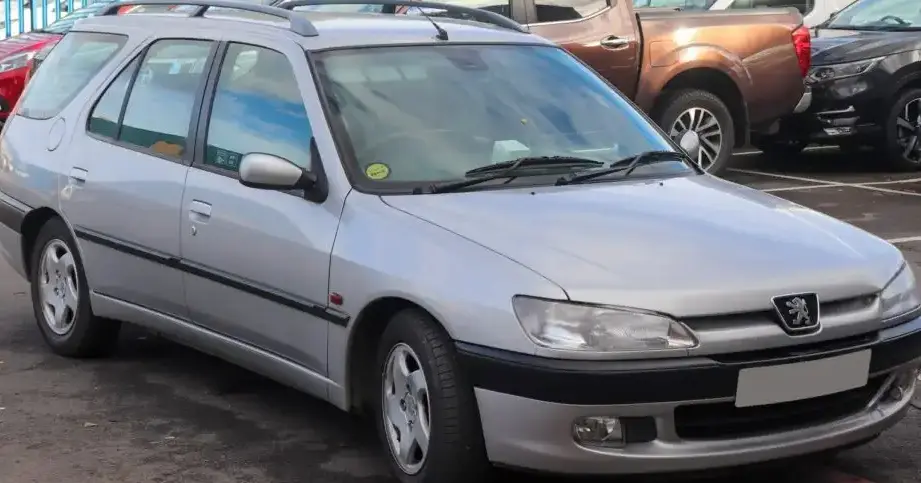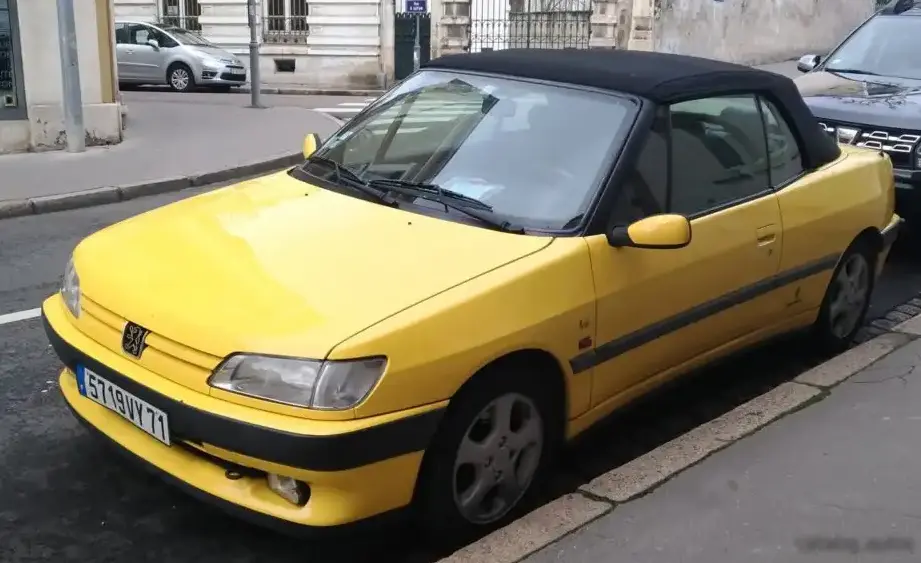
The Peugeot 306 Cabriolet (7D) 1.8, produced between 1994 and 1997, represented a stylish and accessible entry point into the world of open-top motoring for European buyers. Positioned within the broader 306 range – a compact family car based on the 1HX0 platform – the Cabriolet offered a more emotive and recreational driving experience. The 1.8-liter engine, producing 101 horsepower, was a mid-range offering, slotting below the more potent 2.0-liter 16-valve variants and above the base 1.4-liter models. This configuration aimed to balance affordability with reasonable performance, making it a popular choice for those seeking a fun, yet practical, convertible.
Technical Specifications
| Brand | Peugeot |
| Model | 306 |
| Generation | 306 Cabrio (7D) |
| Type (Engine) | 1.8 (101 Hp) |
| Start of production | 1994 |
| End of production | 1997 |
| Powertrain Architecture | Internal Combustion engine |
| Body type | Cabriolet |
| Seats | 4 |
| Doors | 2 |
| Fuel consumption (combined) | 8.2 l/100 km |
| Fuel consumption (US mpg) | 28.7 US mpg |
| Fuel consumption (UK mpg) | 34.4 UK mpg |
| Fuel consumption (km/l) | 12.2 km/l |
| Fuel Type | Petrol (Gasoline) |
| Acceleration 0 – 100 km/h | 12.6 sec |
| Acceleration 0 – 62 mph | 12.6 sec |
| Acceleration 0 – 60 mph | 12 sec |
| Maximum speed | 182 km/h (113.09 mph) |
| Weight-to-power ratio | 12.1 kg/Hp |
| Power per tonne | 82.8 Hp/tonne |
| Weight-to-torque ratio | 8 kg/Nm |
| Torque per tonne | 125.4 Nm/tonne |
| Power | 101 Hp @ 6000 rpm |
| Power per litre | 57.3 Hp/l |
| Torque | 153 Nm @ 3000 rpm (112.85 lb.-ft. @ 3000 rpm) |
| Engine layout | Front, Transverse |
| Engine Model/Code | LFZ XU7JP |
| Engine displacement | 1762 cm3 (107.52 cu. in.) |
| Number of cylinders | 4 |
| Engine configuration | Inline |
| Cylinder Bore | 83 mm (3.27 in.) |
| Piston Stroke | 81.4 mm (3.2 in.) |
| Compression ratio | 9.2:1 |
| Number of valves per cylinder | 2 |
| Fuel injection system | Multi-port manifold injection |
| Engine aspiration | Naturally aspirated |
| Valvetrain | OHC |
| Engine oil capacity | 4.3 l (4.54 US qt | 3.78 UK qt) |
| Coolant capacity | 7.5 l (7.93 US qt | 6.6 UK qt) |
| Kerb Weight | 1220 kg (2689.64 lbs.) |
| Max. weight | 1570 kg (3461.26 lbs.) |
| Max load | 350 kg (771.62 lbs.) |
| Trunk (boot) space – minimum | 274 l (9.68 cu. ft.) |
| Fuel tank capacity | 56 l (14.79 US gal | 12.32 UK gal) |
| Length | 4144 mm (163.15 in.) |
| Width | 1689 mm (66.5 in.) |
| Height | 1356 mm (53.39 in.) |
| Wheelbase | 2540 mm (100 in.) |
| Front track | 1454 mm (57.24 in.) |
| Rear track | 1429 mm (56.26 in.) |
| Drivetrain Architecture | Front wheel drive |
| Number of gears | 5 gears, manual transmission |
| Front suspension | Wishbone |
| Rear suspension | Trailing arm |
| Front brakes | Ventilated discs |
| Rear brakes | Drum |
| Assisting systems | ABS (Anti-lock braking system) |
| Steering type | Steering rack and pinion |
| Power steering | Hydraulic |
| Tires size | 185/60 R14 |
Powertrain & Engine Architecture
The heart of the 306 Cabriolet 1.8 was the XU7JP engine, a 1762cc inline-four cylinder unit. This engine, a mainstay of Peugeot and Citroën vehicles throughout the 1990s, featured a single overhead camshaft (OHC) design and multi-port fuel injection. The LFZ engine code specifically denotes a version tuned to produce 101 horsepower at 6000 rpm and 153 Nm (113 lb-ft) of torque at 3000 rpm. The XU7JP engine was known for its relative simplicity and durability, although it wasn’t a particularly high-revving or technologically advanced unit. The five-speed manual transmission was the standard offering, providing a reasonable spread of gears for both urban driving and highway cruising. The transmission was a conventional setup, prioritizing reliability and ease of maintenance over outright performance.
Driving Characteristics
The 1.8-liter engine, coupled with the Cabriolet’s added weight compared to the coupe or hatchback versions, resulted in a driving experience that prioritized comfort and usability over outright speed. Acceleration from 0-60 mph took around 12 seconds, and the top speed was approximately 113 mph. While not particularly brisk, the engine provided sufficient power for everyday driving, with a usable torque curve that made it relatively easy to keep up with traffic. The five-speed gearbox allowed drivers to select the appropriate gear for the situation, although the shift quality wasn’t as precise as some contemporary rivals. The Cabriolet’s suspension, tuned for comfort, provided a reasonably smooth ride, although body roll was noticeable in corners. The hydraulic power steering offered light and easy steering, making it maneuverable in tight spaces.
Equipment & Trim Levels
The 306 Cabriolet 1.8 typically came with a decent level of standard equipment, reflecting its position as a desirable variant. Features included power steering, central locking, electric front windows, and an AM/FM radio. Interior upholstery was typically cloth, with options for upgraded materials available. Dashboard design was functional and straightforward, with a clear instrument cluster. Optional extras included leather upholstery, air conditioning, and a more sophisticated audio system. The Cabriolet also featured a manually operated soft top, which could be raised or lowered relatively easily, although it wasn’t insulated to the same degree as some more expensive convertibles.
Chassis & Braking
The 306 Cabriolet utilized a front-wheel-drive chassis with independent wishbone suspension at the front and a trailing arm setup at the rear. Braking was provided by ventilated discs at the front and drum brakes at the rear. ABS (Anti-lock Braking System) was standard, enhancing safety by preventing wheel lock-up during hard braking. The suspension was tuned to provide a comfortable ride, but the Cabriolet’s increased weight compared to other 306 body styles meant that the suspension had to work harder to control body roll. Stabilizer bars were fitted to both the front and rear axles to help reduce body roll and improve handling.
Market Reception & Comparison
The Peugeot 306 Cabriolet 1.8 was generally well-received by automotive critics as an affordable and stylish convertible. It was praised for its comfortable ride, decent equipment levels, and attractive design. However, it was also criticized for its relatively modest performance and somewhat dated interior. Compared to the higher-spec 2.0-liter 16-valve models, the 1.8 offered less power and a slower driving experience, but it was also more fuel-efficient and less expensive to insure. Against rivals like the Renault Mégane Cabriolet and Volkswagen Golf Cabriolet, the 306 offered a compelling combination of style, practicality, and value.
Legacy
The Peugeot 306 Cabriolet 1.8 has proven to be a relatively reliable vehicle, with the XU7JP engine being known for its durability. However, as with any older car, regular maintenance is essential to prevent problems. Common issues include corrosion, particularly on the bodywork, and wear and tear on suspension components. Today, the 306 Cabriolet 1.8 is gaining popularity among classic car enthusiasts as an affordable and enjoyable entry into the world of classic convertibles. Its simple mechanicals and readily available parts make it relatively easy to maintain, and its stylish design continues to appeal to a wide range of buyers. The 1.8-liter engine, while not the most powerful option, offers a good balance of performance and fuel economy, making it a practical choice for both weekend drives and everyday use.