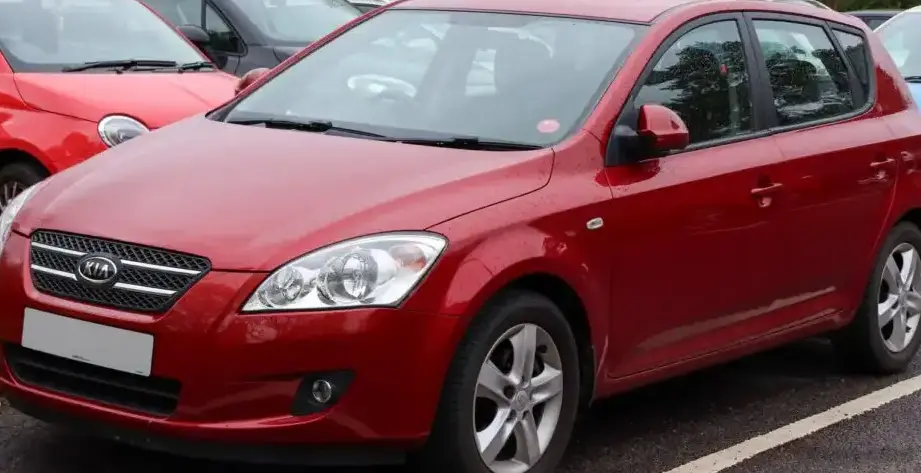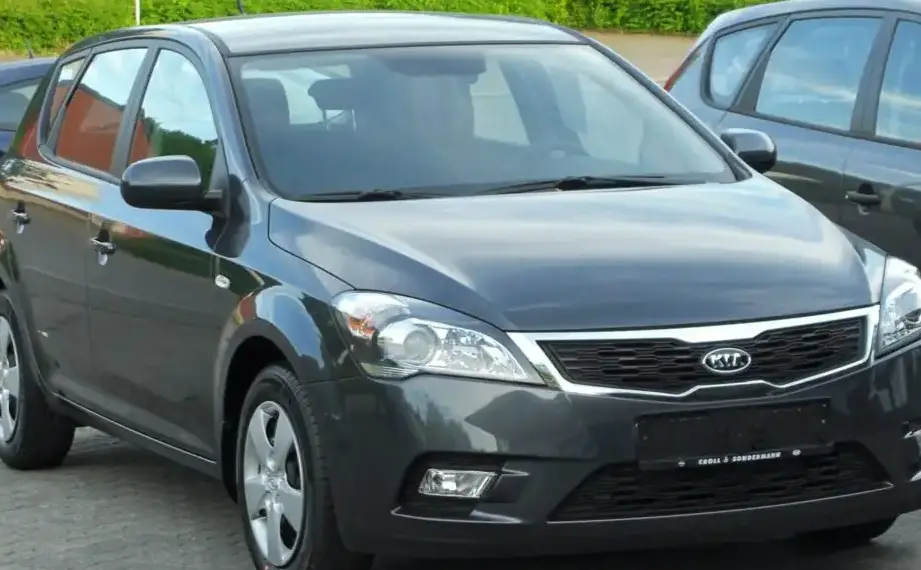
The Kia Cee’d, launched in 2006, represented Kia’s first foray into the European compact hatchback market. The first generation (JD) underwent a significant facelift in 2009, denoted as the Cee’d I (facelift 2009). Among the engine options available, the 1.6D 16V producing 90 horsepower was a key variant, particularly in markets prioritizing fuel efficiency and lower running costs. Production of this specific configuration ran from 2009 to 2012, positioning it as an entry-level offering within the Cee’d range.
Technical Specifications
| Brand | Kia |
| Model | Cee’d |
| Generation | Cee’d I (facelift 2009) |
| Type (Engine) | 1.6D 16V (90 Hp) |
| Start of production | 2009 |
| End of production | 2012 |
| Powertrain Architecture | Internal Combustion engine |
| Body type | Hatchback |
| Seats | 5 |
| Doors | 5 |
| Fuel consumption (urban) | 4.9 l/100 km (48 US mpg, 57.6 UK mpg, 20.4 km/l) |
| Fuel consumption (extra urban) | 4 l/100 km (58.8 US mpg, 70.6 UK mpg, 25 km/l) |
| Fuel consumption (combined) | 4.3 l/100 km (54.7 US mpg, 65.7 UK mpg, 23.3 km/l) |
| Fuel Type | Diesel |
| Acceleration 0 – 100 km/h | 14 sec |
| Acceleration 0 – 62 mph | 14 sec |
| Acceleration 0 – 60 mph | 13.3 sec |
| Maximum speed | 172 km/h (106.88 mph) |
| Emission standard | Euro 5 |
| Weight-to-power ratio | 15.2 kg/Hp |
| Weight-to-torque ratio | 5.8 kg/Nm |
| Power | 90 Hp |
| Power per litre | 56.9 Hp/l |
| Torque | 235 Nm @ 1750 rpm (173.33 lb.-ft. @ 1750 rpm) |
| Engine layout | Front, Transverse |
| Engine Model/Code | D4FB |
| Engine displacement | 1582 cm3 (96.54 cu. in.) |
| Number of cylinders | 4 |
| Engine configuration | Inline |
| Number of valves per cylinder | 4 |
| Fuel injection system | Diesel Commonrail |
| Engine aspiration | Turbocharger, Intercooler |
| Valvetrain | DOHC |
| Engine oil capacity | 5.3 l (5.6 US qt | 4.66 UK qt) |
| Coolant capacity | 6.3 l (6.66 US qt | 5.54 UK qt) |
| Kerb Weight | 1367 kg (3013.72 lbs.) |
| Max. weight | 1820 kg (4012.41 lbs.) |
| Max load | 453 kg (998.69 lbs.) |
| Trunk (boot) space – minimum | 340 l (12.01 cu. ft.) |
| Trunk (boot) space – maximum | 1300 l (45.91 cu. ft.) |
| Fuel tank capacity | 53 l (14 US gal | 11.66 UK gal) |
| Length | 4235 mm (166.73 in.) |
| Width | 1790 mm (70.47 in.) |
| Height | 1480 mm (58.27 in.) |
| Wheelbase | 2650 mm (104.33 in.) |
| Front track | 1538 mm (60.55 in.) |
| Rear track | 1536 mm (60.47 in.) |
| Minimum turning circle | 10.34 m (33.92 ft.) |
| Drivetrain | Front wheel drive |
| Number of gears | 6 |
| Gearbox type | Manual transmission |
| Front brakes | Ventilated discs |
| Rear brakes | Disc |
| Assisting systems | ABS (Anti-lock braking system) |
| Steering type | Steering rack and pinion |
| Tires size | 185/65 R15 |
| Wheel rims size | 15 |
Powertrain & Engine Architecture
The 1.6D 16V engine, internally designated D4FB, was a mainstay of the Hyundai-Kia diesel lineup during this period. It’s a four-cylinder, inline diesel engine featuring a turbocharger with intercooling and a common rail direct injection system. The common rail system, operating at high pressure, allowed for precise fuel delivery and contributed to improved combustion efficiency and reduced emissions. The engine utilized a double overhead camshaft (DOHC) valvetrain, operating 16 valves (four per cylinder) to optimize gas flow. The 90 horsepower output was achieved at a relatively modest engine speed, prioritizing fuel economy over outright performance. The engine’s design incorporated a diesel particulate filter (DPF) to meet stringent Euro 5 emission standards.
Driving Characteristics
The 1.6D 90 hp Cee’d offered a practical and economical driving experience. Acceleration was not its strong suit, with a 0-60 mph time around 13.3 seconds. However, the 235 Nm of torque, available from 1750 rpm, provided adequate pulling power for everyday driving and overtaking maneuvers. The six-speed manual transmission was well-matched to the engine’s characteristics, allowing drivers to keep the engine in its optimal torque band. Compared to higher-output versions of the Cee’d, such as those with the 1.6 GDI gasoline engine, the diesel variant prioritized fuel efficiency and low-end torque over outright speed. The manual transmission offered a more engaging driving experience than the optional four-speed automatic, which further reduced performance.
Equipment & Trim Levels
The 1.6D 90 hp variant typically occupied the lower to mid-range of the Cee’d lineup. Standard equipment generally included air conditioning, power steering, electric front windows, and a basic audio system. Safety features such as ABS and front airbags were also standard. Higher trim levels, such as the ‘2’ or ‘3’ trims, added features like alloy wheels, rear electric windows, a more sophisticated audio system, and climate control. Optional extras included parking sensors, a sunroof, and leather upholstery.
Chassis & Braking
The Cee’d I featured a MacPherson strut front suspension and a coupled torsion beam rear suspension. This setup provided a reasonable balance between ride comfort and handling. The front brakes were ventilated discs, offering good stopping power, while the rear brakes were solid discs. The steering was a rack and pinion system, providing precise and responsive steering feel. The 1.6D models typically rode on 15-inch wheels with 185/65 R15 tires, prioritizing comfort and fuel efficiency over sporty handling.
Market Reception & Comparison
The Kia Cee’d 1.6D 90 hp was well-received in Europe as a practical and affordable family hatchback. Critics praised its fuel efficiency, comfortable ride, and competitive pricing. However, some noted its relatively modest performance and somewhat basic interior compared to rivals like the Volkswagen Golf or Ford Focus. Compared to the petrol versions of the Cee’d, the 1.6D offered significantly better fuel economy, making it a popular choice for drivers covering high mileages. The 1.6D also proved more economical to run than the more powerful diesel variants, due to its simpler turbocharger setup and lower overall stress on the engine.
Legacy
The Kia Cee’d 1.6D 90 hp has proven to be a relatively reliable powertrain. The D4FB engine, while not without its potential issues (such as DPF clogging if not properly maintained), is generally considered durable and long-lasting. On the used car market, these models represent a good value proposition for buyers seeking an economical and practical hatchback. Regular maintenance, including timely oil changes and DPF regeneration, is crucial to ensure the longevity of the engine and maintain its fuel efficiency. The Cee’d’s success helped establish Kia as a credible player in the European compact car segment, paving the way for subsequent generations of the model.