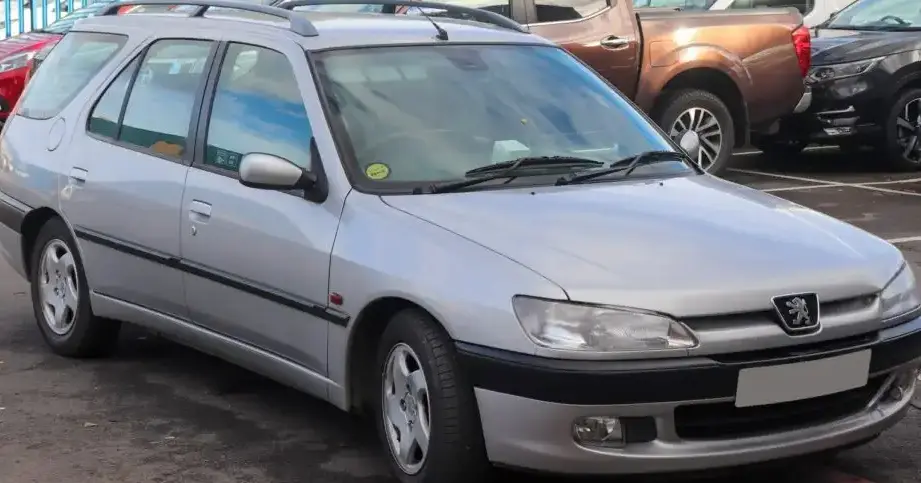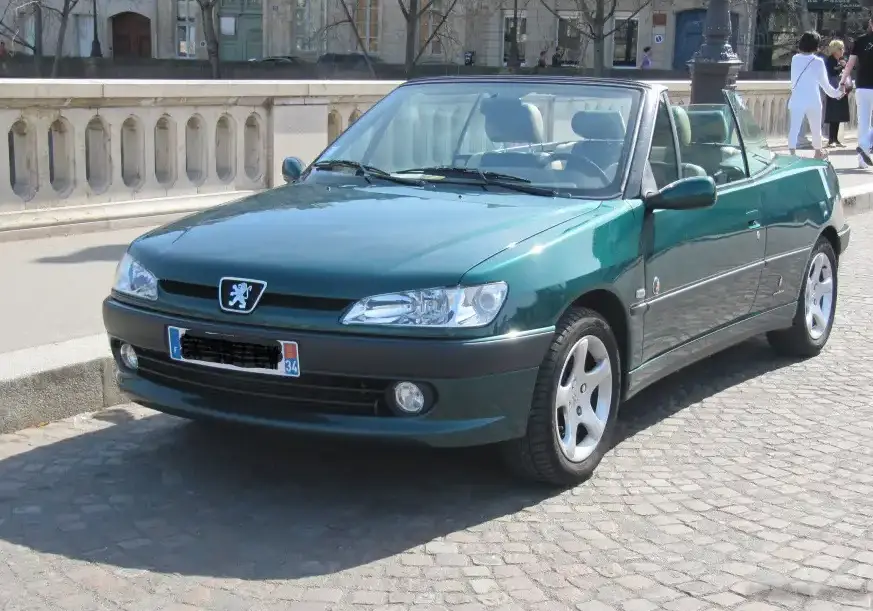
The Peugeot 306 Cabriolet, particularly the facelifted version introduced in 1997, represented a significant offering in the affordable European convertible market. Produced from 1997 through 2002, the 1.6i variant, powered by the NFZ (TU5JP) engine producing 88 horsepower, occupied an entry-level position within the 306 Cabrio range. It aimed to provide open-top motoring to a wider audience, prioritizing affordability and fuel efficiency over outright performance. This model was a key part of Peugeot’s strategy to broaden the appeal of the 306 platform, which was based on the shared PSA Group platform, also underpinning the Citroën ZX and later models.
Technical Specifications
| Brand | Peugeot |
| Model | 306 |
| Generation | 306 Cabrio (facelift 1997) |
| Type (Engine) | 1.6i (88 Hp) |
| Start of production | 1997 |
| End of production | 2002 |
| Powertrain Architecture | Internal Combustion engine |
| Body type | Cabriolet |
| Seats | 4 |
| Doors | 2 |
| Fuel consumption (urban) | 10.6 l/100 km (22.2 US mpg, 26.6 UK mpg, 9.4 km/l) |
| Fuel consumption (extra urban) | 6.4 l/100 km (36.8 US mpg, 44.1 UK mpg, 15.6 km/l) |
| Fuel consumption (combined) | 7.9 l/100 km (29.8 US mpg, 35.8 UK mpg, 12.7 km/l) |
| Fuel Type | Petrol (Gasoline) |
| Acceleration 0 – 100 km/h | 15 sec |
| Acceleration 0 – 62 mph | 15 sec |
| Acceleration 0 – 60 mph | 14.3 sec |
| Maximum speed | 178 km/h (110.6 mph) |
| Weight-to-power ratio | 13.8 kg/Hp, 72.7 Hp/tonne |
| Weight-to-torque ratio | 9 kg/Nm, 111.6 Nm/tonne |
| Power | 88 Hp @ 5600 rpm |
| Power per litre | 55.5 Hp/l |
| Torque | 135 Nm @ 3000 rpm (99.57 lb.-ft. @ 3000 rpm) |
| Engine layout | Front, Transverse |
| Engine Model/Code | NFZ TU5JP |
| Engine displacement | 1587 cm3 (96.84 cu. in.) |
| Number of cylinders | 4 |
| Engine configuration | Inline |
| Cylinder Bore | 78.5 mm (3.09 in.) |
| Piston Stroke | 82 mm (3.23 in.) |
| Compression ratio | 9.6:1 |
| Number of valves per cylinder | 2 |
| Fuel injection system | Multi-port manifold injection |
| Engine aspiration | Naturally aspirated engine |
| Valvetrain | SOHC |
| Engine oil capacity | 3.2 l (3.38 US qt | 2.82 UK qt) |
| Coolant | 7 l (7.4 US qt | 6.16 UK qt) |
| Kerb Weight | 1210 kg (2667.59 lbs.) |
| Max. weight | 1640 kg (3615.58 lbs.) |
| Max load | 430 kg (947.99 lbs.) |
| Trunk (boot) space – minimum | 274 l (9.68 cu. ft.) |
| Fuel tank capacity | 60 l (15.85 US gal | 13.2 UK gal) |
| Permitted trailer load with brakes (12%) | 1000 kg (2204.62 lbs.) |
| Permitted trailer load without brakes | 640 kg (1410.96 lbs.) |
| Length | 4179 mm (164.53 in.) |
| Width | 1680 mm (66.14 in.) |
| Height | 1356 mm (53.39 in.) |
| Wheelbase | 2540 mm (100 in.) |
| Front track | 1454-1465 mm (57.24 – 57.68 in.) |
| Rear (Back) track | 1420-1439 mm (55.91 – 56.65 in.) |
| Front overhang | 815 mm (32.09 in.) |
| Rear overhang | 824 mm (32.44 in.) |
| Ride height (ground clearance) | 120 mm (4.72 in.) |
| Drag coefficient (Cd) | 0.37 |
| Minimum turning circle (turning diameter) | 11.0 m (36.09 ft.) |
| Drivetrain Architecture | The Internal combustion engine (ICE) drives the front wheels of the vehicle. |
| Drive wheel | Front wheel drive |
| Number of gears and type of gearbox | 5 gears, manual transmission |
| Front suspension | Wishbone |
| Rear suspension | Trailing arm |
| Front brakes | Ventilated discs |
| Rear brakes | Drum |
| Assisting systems | ABS (Anti-lock braking system) |
| Steering type | Steering rack and pinion |
| Power steering | Hydraulic Steering |
| Tires size | 185/65 R14 H |
| Wheel rims size | 14 |
Powertrain & Engine Architecture
The heart of the 306 Cabrio 1.6i was the NFZ engine, specifically the TU5JP code. This 1.6-liter inline-four cylinder engine was a staple of Peugeot and Citroën vehicles during the 1990s and early 2000s. It featured a single overhead camshaft (SOHC) valvetrain operating two valves per cylinder. Fuel delivery was handled by a multi-port fuel injection system, providing a balance between efficiency and performance. The engine’s 9.6:1 compression ratio was typical for the era, and it produced 88 horsepower at 5600 rpm and 135 Nm (99.57 lb-ft) of torque at 3000 rpm. The engine was transversely mounted in the front of the vehicle, driving the front wheels. The standard transmission was a five-speed manual, though a four-speed automatic was also available, impacting performance and fuel economy.
Driving Characteristics
The 1.6i engine, paired with the five-speed manual transmission, provided adequate, but not exhilarating, performance. Acceleration from 0 to 60 mph took around 14.3 seconds, and the top speed was approximately 110.6 mph. The automatic transmission option noticeably dulled acceleration. The engine felt relatively responsive at lower RPMs, making it suitable for city driving, but lacked the punch of the higher-output 2.0-liter variants. The 306 Cabrio’s handling was generally considered good for a front-wheel-drive convertible, offering a comfortable ride. The relatively light weight of the 1.6i model contributed to its agility, but the standard tires and suspension setup weren’t geared towards aggressive driving.
Equipment & Trim Levels
The 1.6i Cabriolet typically came with a reasonable level of standard equipment. This included power steering, central locking, electric front windows, and an AM/FM radio. Interior upholstery was typically cloth, with a relatively simple dashboard layout. Optional extras included alloy wheels, a leather steering wheel, upgraded audio systems, and, crucially, air conditioning – a popular addition, especially for convertible drivers. The trim level was generally considered the base model for the Cabriolet range, focusing on providing an affordable entry point into open-top motoring.
Chassis & Braking
The 306 Cabriolet utilized a front-wheel-drive chassis with independent wishbone suspension at the front and a trailing arm setup at the rear. The front brakes were ventilated discs, providing adequate stopping power, while the rear brakes were drums. This configuration was typical for vehicles in this price range during the late 1990s. ABS (Anti-lock Braking System) was available as an option, enhancing safety. The suspension was tuned for comfort, prioritizing ride quality over sporty handling. Stabilizer bars were fitted to both the front and rear axles to reduce body roll during cornering.
Market Reception & Comparison
The 306 Cabrio 1.6i was generally well-received as an affordable and stylish convertible. Critics praised its attractive design and comfortable ride. However, the 1.6i engine was often criticized for lacking power, particularly when compared to the more potent 2.0-liter versions. Fuel economy was a strong point, with combined figures around 35.8 UK mpg. Compared to rivals like the Renault Mégane Cabriolet and Volkswagen Golf Cabriolet, the 306 offered a compelling combination of price, style, and practicality. The 2.0-liter models offered significantly more performance but came at a higher price point and with increased running costs.
Legacy
The Peugeot 306 Cabrio 1.6i has proven to be a relatively reliable vehicle, with the TU5JP engine being known for its durability. However, like all older cars, it’s susceptible to age-related issues such as rust and wear and tear on suspension components. In the used car market, the 1.6i models are generally the most affordable 306 Cabriolets, making them an attractive option for those seeking a classic convertible on a budget. Parts availability is generally good, and the relatively simple mechanical design makes it accessible for DIY maintenance. The 306 Cabriolet, in all its variants, remains a popular choice among classic car enthusiasts, representing a stylish and affordable entry into the world of open-top motoring.