
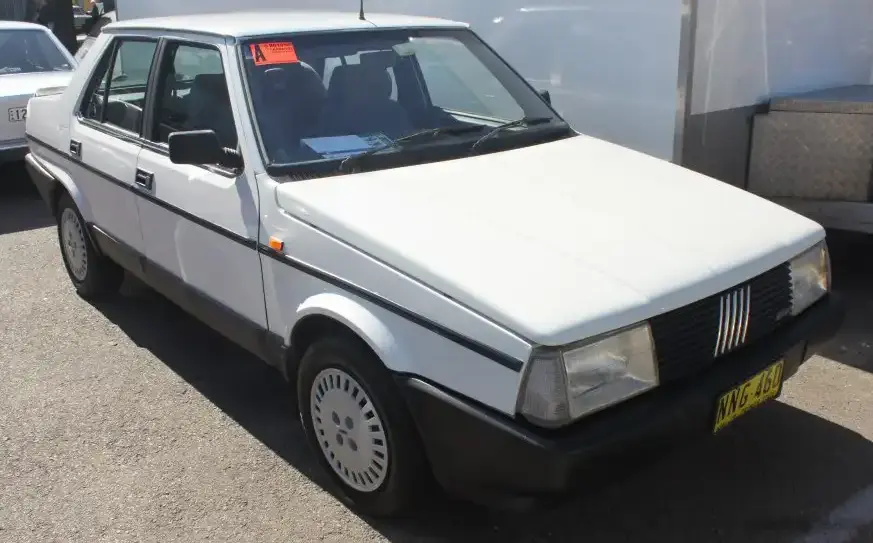
The Fiat Regata 60 Diesel 1.7, produced between 1985 and 1989, represented the entry-level diesel offering within the Regata (138) series. Positioned as an economical and practical family sedan, it aimed to provide affordable transportation in a market increasingly focused on fuel efficiency. The Regata itself was a replacement for the Fiat 134, offering a more modern design and improved features while retaining a similar overall size and practicality. This particular 60 horsepower diesel variant was primarily targeted at buyers prioritizing low running costs over outright performance.
Technical Specifications
| Brand | Fiat |
| Model | Regata |
| Generation | Regata (138) |
| Type (Engine) | 60 Diesel 1.7 (60 Hp) |
| Start of production | 1985 |
| End of production | 1989 |
| Powertrain Architecture | Internal Combustion engine |
| Body type | Sedan |
| Seats | 5 |
| Doors | 4 |
| Fuel Type | Diesel |
| Power | 60 Hp |
| Engine Model/Code | 138 C.000 |
| Engine aspiration | Naturally aspirated engine |
| Trunk (boot) space – minimum | 513 l / 18.12 cu. ft. |
| Fuel tank capacity | 55 l / 14.53 US gal | 12.1 UK gal |
| Length | 4260 mm / 167.72 in. |
| Width | 1650 mm / 64.96 in. |
| Height | 1410 mm / 55.51 in. |
| Front overhang | 820 mm / 32.28 in. |
| Rear overhang | 992 mm / 39.06 in. |
Powertrain & Engine Architecture
The Regata 60 Diesel was powered by the Fiat 138 C.000 engine, a 1.7-liter inline-four diesel. This engine was a naturally aspirated, indirect injection diesel, a common configuration for the time. Indirect injection, while quieter than direct injection, generally resulted in slightly lower power output and fuel efficiency. The engine featured a cast iron block and cylinder head, contributing to its durability, but also adding to its overall weight. The engine utilized a Bosch mechanical fuel injection pump, delivering fuel to the pre-chamber where combustion initiated. The valvetrain consisted of a single overhead camshaft operating two valves per cylinder. The engine’s relatively low compression ratio, typical for indirect injection diesels, helped to reduce engine noise and vibration. The 60 horsepower output was achieved at a relatively low engine speed, prioritizing torque over peak power. The engine was mated to a four-speed manual transmission as standard, although a three-speed automatic transmission was also available, albeit less common.
Driving Characteristics
The Regata 60 Diesel, particularly in its manual transmission guise, offered modest but adequate performance for everyday driving. Acceleration was not a strong point, with 0-60 mph times estimated to be well over 15 seconds. However, the engine’s torque characteristics meant that it felt reasonably responsive at lower speeds, making it suitable for urban driving and navigating hilly terrain. The three-speed automatic transmission further dulled acceleration, but provided a more relaxed driving experience. Gear ratios were spaced to prioritize fuel economy and ease of driving rather than sporty performance. The suspension, while comfortable, was not particularly sophisticated, resulting in noticeable body roll during cornering. Steering was relatively light, making it easy to maneuver in tight spaces, but lacked significant feedback. Overall, the driving experience was geared towards practicality and economy rather than driving enjoyment.
Equipment & Trim Levels
The Regata 60 Diesel was typically equipped with basic, functional features. Standard equipment included cloth upholstery, a simple dashboard layout with analog gauges, and manual windows and door locks. The interior was designed for durability and ease of cleaning rather than luxury. Optional extras included a radio, upgraded upholstery, and, on some markets, power steering. The trim level was generally quite basic, reflecting the car’s position as the entry-level diesel model. The exterior featured steel wheels with hubcaps, black plastic bumpers, and minimal chrome trim. The overall aesthetic was understated and functional.
Chassis & Braking
The Regata 60 Diesel utilized a relatively conventional chassis design. It featured a front independent suspension with MacPherson struts and a rear rigid axle suspension with leaf springs. This setup provided a reasonable balance between ride comfort and handling, although it was not particularly sophisticated. Braking was typically accomplished with front disc brakes and rear drum brakes. The braking system was adequate for the car’s weight and performance, but lacked the stopping power of more modern vehicles. Steering was a recirculating ball system, providing light steering effort but limited feedback. The car’s relatively simple suspension and braking systems contributed to its ease of maintenance and repair.
Market Reception & Comparison
The Fiat Regata 60 Diesel was generally well-received as an affordable and economical family car. Critics praised its fuel efficiency and durability, but noted its lack of performance and refinement. Compared to other diesel-powered cars of the time, such as the Peugeot 205 Diesel or the Volkswagen Golf Diesel, the Regata offered a similar level of practicality and economy, but lacked the more sophisticated engineering and driving dynamics of its German and French competitors. Within the Regata lineup, the 60 Diesel was positioned below the more powerful 80 Diesel and the gasoline-powered variants. The 80 Diesel offered significantly more performance, while the gasoline engines provided a smoother and quieter driving experience, albeit at the expense of fuel economy. The Regata 60 Diesel appealed to buyers who prioritized low running costs and reliability above all else.
Legacy
The Fiat Regata 60 Diesel, while not a particularly exciting or innovative vehicle, proved to be a reliable and durable workhorse for many owners. The 138 C.000 engine, in particular, was known for its longevity and relatively simple maintenance requirements. Today, the Regata 60 Diesel is a relatively rare sight on the roads, but those examples that remain are often well-maintained by enthusiasts who appreciate their simplicity and affordability. The car represents a bygone era of automotive engineering, when durability and practicality were prioritized over performance and luxury. In the used car market, values remain low, making it an accessible entry point for classic car enthusiasts. However, finding parts can be challenging, as production ceased over three decades ago. The Regata 60 Diesel serves as a reminder of a time when affordable, reliable transportation was the primary goal of many car buyers.
