Technical Specifications
| Brand | Mercedes-Benz |
| Model | CLS |
| Generation | CLS coupe (C219) |
| Type (Engine) | CLS 320 CDI V6 (224 Hp) 7G-TRONIC |
| Start of production | July, 2005 |
| End of production | June, 2006 |
| Powertrain Architecture | Internal Combustion engine |
| Body type | Coupe |
| Seats | 4 |
| Doors | 4 |
| Fuel consumption (economy) – urban (NEDC) | 10.6-11 l/100 km (22.2 – 21.4 US mpg, 26.6 – 25.7 UK mpg, 9.4 – 9.1 km/l) |
| Fuel consumption (economy) – extra urban (NEDC) | 5.9-6.4 l/100 km (39.9 – 36.8 US mpg, 47.9 – 44.1 UK mpg, 16.9 – 15.6 km/l) |
| Fuel consumption (economy) – combined (NEDC) | 7.6-8.1 l/100 km (30.9 – 29 US mpg, 37.2 – 34.9 UK mpg, 13.2 – 12.3 km/l) |
| CO2 emissions (NEDC) | 202-215 g/km |
| Fuel Type | Diesel |
| Acceleration 0 – 100 km/h | 7 sec |
| Acceleration 0 – 62 mph | 7 sec |
| Acceleration 0 – 60 mph | 6.7 sec |
| Maximum speed | 246 km/h (152.86 mph) |
| Emission standard | Euro 4 |
| Weight-to-power ratio | 7.8 kg/Hp, 128.7 Hp/tonne |
| Weight-to-torque ratio | 3.4 kg/Nm, 293.1 Nm/tonne |
| Power | 224 Hp @ 4000 rpm |
| Power per litre | 75 Hp/l |
| Torque | 510 Nm @ 1800-2600 rpm (376.16 lb.-ft. @ 1800-2600 rpm) |
| Engine layout | Front, Longitudinal |
| Engine Model/Code | OM 642.920 |
| Engine displacement | 2987 cm3 (182.28 cu. in.) |
| Number of cylinders | 6 |
| Engine configuration | V-engine |
| Cylinder Bore | 83 mm (3.27 in.) |
| Piston Stroke | 92 mm (3.62 in.) |
| Compression ratio | 18:1 |
| Number of valves per cylinder | 4 |
| Fuel injection system | Diesel Commonrail |
| Engine aspiration | Turbocharger, Intercooler |
| Valvetrain | DOHC |
| Engine oil capacity | 8.5 l (8.98 US qt | 7.48 UK qt) |
| Coolant | 12.6 l (13.31 US qt | 11.09 UK qt) |
| Kerb Weight | 1740 kg (3836.04 lbs.) |
| Max. weight | 2280 kg (5026.54 lbs.) |
| Max load | 540 kg (1190.5 lbs.) |
| Trunk (boot) space – minimum | 505 l (17.83 cu. ft.) |
| Fuel tank capacity | 80 l (21.13 US gal | 17.6 UK gal) |
| Length | 4913 mm (193.43 in.) |
| Width | 1873 mm (73.74 in.) |
| Width including mirrors | 2059 mm (81.06 in.) |
| Height | 1403 mm (55.24 in.) |
| Wheelbase | 2854 mm (112.36 in.) |
| Front track | 1593 mm (62.72 in.) |
| Rear (Back) track | 1603 mm (63.11 in.) |
| Front overhang | 894 mm (35.2 in.) |
| Rear overhang | 1165 mm (45.87 in.) |
| Minimum turning circle (turning diameter) | 11.2 m (36.75 ft.) |
| Drivetrain Architecture | The Internal combustion engine (ICE) drives the rear wheels of the vehicle. |
| Drive wheel | Rear wheel drive |
| Number of gears and type of gearbox | 7 gears, automatic transmission G-TRONIC |
| Front brakes | Ventilated discs, 312 mm |
| Rear brakes | Ventilated discs, 330 mm |
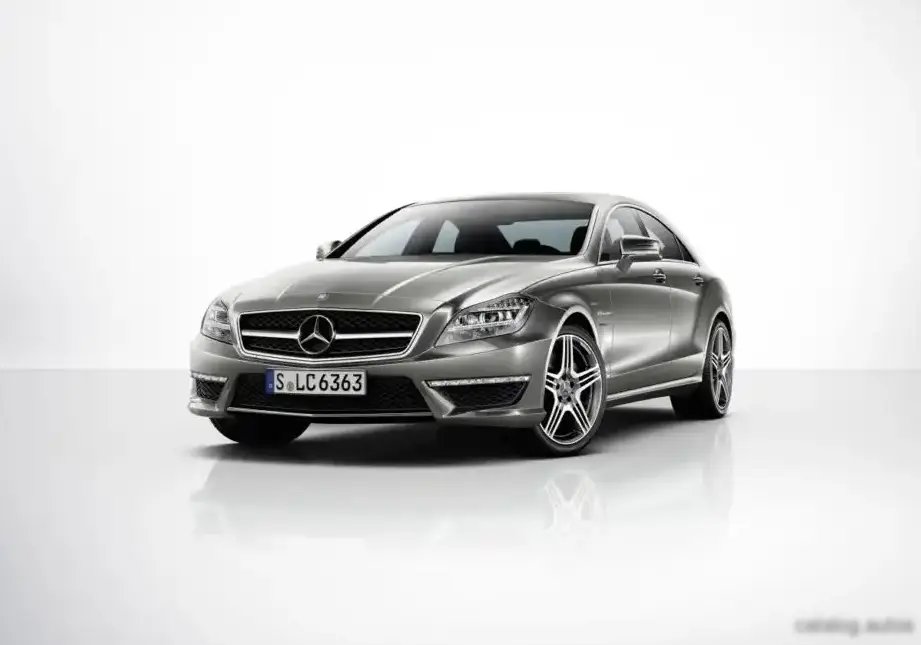
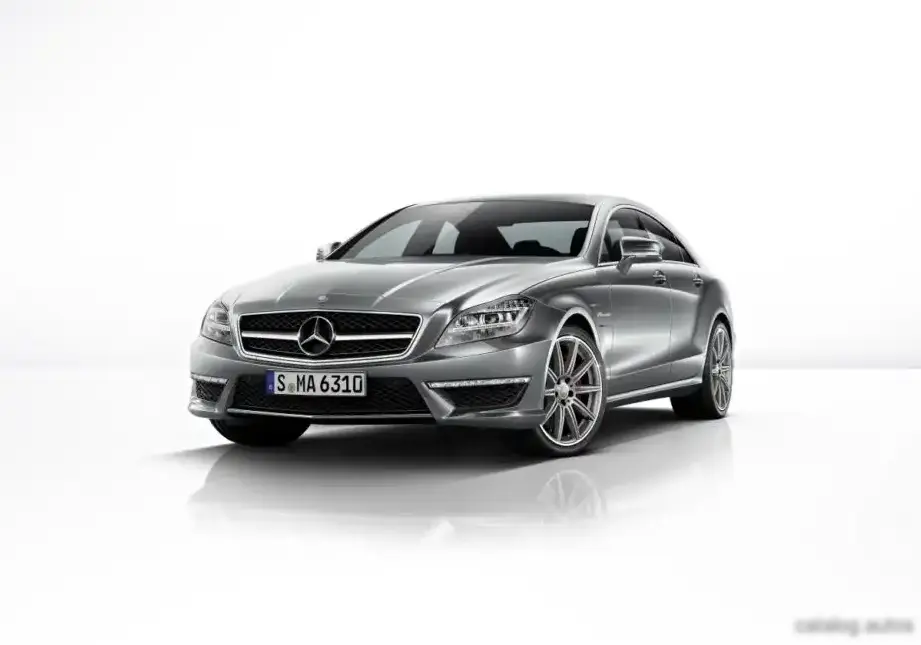
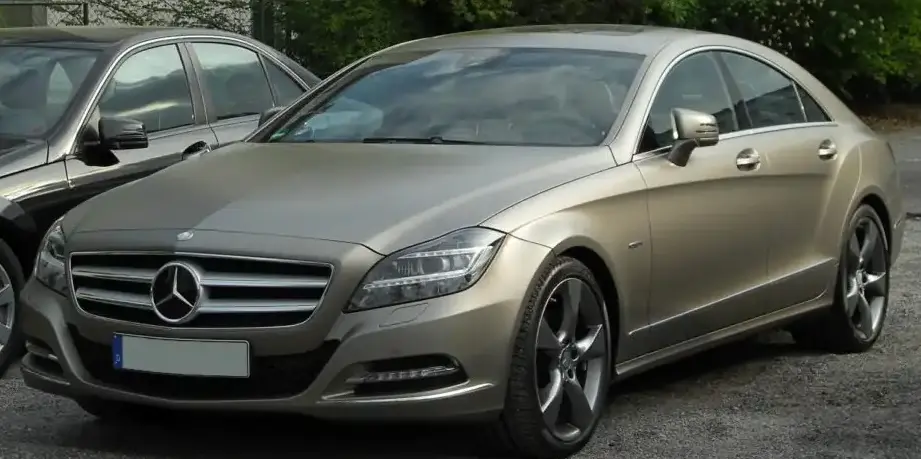
The Mercedes-Benz CLS 320 CDI, produced from July 2005 to June 2006, represents a significant entry point into the first generation (C219) CLS-Class “four-door coupe” lineup. Positioned as a diesel-powered alternative within the range, it offered a blend of luxury, performance, and fuel efficiency. The C219 CLS, launched in 2004, pioneered a new segment, combining the elegant lines of a coupe with the practicality of a sedan. The 320 CDI variant aimed to appeal to buyers seeking a refined driving experience with lower running costs than the gasoline-powered options.
Powertrain & Engine Architecture
At the heart of the CLS 320 CDI lies the OM 642.920 3.0-liter V6 diesel engine. This engine, a mainstay of Mercedes-Benz’s diesel offerings, is characterized by its robust construction and advanced technology. It utilizes a common rail direct injection system, delivering fuel at extremely high pressure for optimized combustion. The engine also features a variable geometry turbocharger (VGT) and an intercooler, enhancing both power and torque across a broad rev range. The DOHC (Double Overhead Camshaft) valvetrain, with four valves per cylinder, further contributes to the engine’s efficiency and performance. The 7G-TRONIC automatic transmission, a seven-speed unit, was standard. This transmission is known for its smooth shifting and ability to optimize engine speed for both performance and fuel economy. The transmission’s gear ratios are tuned to maximize the diesel engine’s torque, providing strong acceleration in everyday driving situations.
Driving Characteristics
The CLS 320 CDI delivers a refined and comfortable driving experience. While not as overtly sporty as the gasoline-powered CLS models, the 320 CDI offers ample power and torque for confident overtaking and highway cruising. The 510 Nm (376 lb-ft) of torque, available from 1800-2600 rpm, provides strong pull from low engine speeds. The 7G-TRONIC transmission contributes to smooth and seamless gear changes, enhancing the overall driving experience. Compared to the CLS 350, the 320 CDI offers superior fuel economy and a more relaxed driving style. However, it lacks the outright acceleration of the higher-powered models. The 0-60 mph time of around 6.7 seconds is respectable, but noticeably slower than the CLS 500. The rear-wheel drive configuration provides a balanced feel, although it can be less forgiving in slippery conditions than all-wheel drive systems.
Equipment & Trim Levels
The CLS 320 CDI came well-equipped as standard, reflecting its positioning as a luxury vehicle. Standard features typically included leather upholstery, automatic climate control, a premium audio system, and power-adjustable front seats. Safety features such as ABS, traction control, and multiple airbags were also standard. Optional extras included a panoramic sunroof, upgraded audio systems (such as Harman Kardon), wood trim, and advanced driver-assistance systems. Interior color schemes were customizable, allowing buyers to personalize their vehicles. The dashboard layout and overall interior design were consistent with other Mercedes-Benz models of the period, emphasizing elegance and sophistication.
Chassis & Braking
The CLS 320 CDI utilizes a sophisticated suspension system designed to provide both comfort and handling. The front suspension features a multi-link setup with coil springs, while the rear suspension employs an independent multi-link spring suspension. An optional air suspension system was available, offering adjustable ride height and damping for enhanced comfort and control. Braking duties are handled by ventilated disc brakes on all four wheels, providing ample stopping power. ABS (Anti-lock Braking System) is standard, enhancing safety during emergency braking situations. The CLS 320 CDI’s chassis is designed to minimize body roll and provide a stable and predictable driving experience.
Market Reception & Comparison
The CLS 320 CDI was generally well-received by automotive critics. It was praised for its stylish design, comfortable interior, and fuel-efficient diesel engine. Critics noted that the 320 CDI offered a compelling alternative to the gasoline-powered CLS models, particularly for buyers who prioritized economy and refinement. Compared to the CLS 350, the 320 CDI offered significantly better fuel economy, making it a more practical choice for long-distance driving. However, some critics noted that the diesel engine was slightly noisier than the gasoline engines. Reliability reports suggest that the OM 642 engine is generally robust, but regular maintenance is essential to prevent issues with the fuel injection system and turbocharger.
Legacy
The CLS 320 CDI, while only produced for a short period, remains a desirable used car today. The OM 642 engine is known for its longevity and relatively low maintenance costs, provided it is properly maintained. The C219 CLS, as a whole, is considered a design icon, and the 320 CDI offers a unique combination of style, comfort, and fuel efficiency. However, potential buyers should be aware of the potential for issues with the diesel particulate filter (DPF) and the common rail injection system, particularly on vehicles with high mileage. Overall, the CLS 320 CDI represents a well-engineered and stylish vehicle that continues to appeal to discerning buyers.