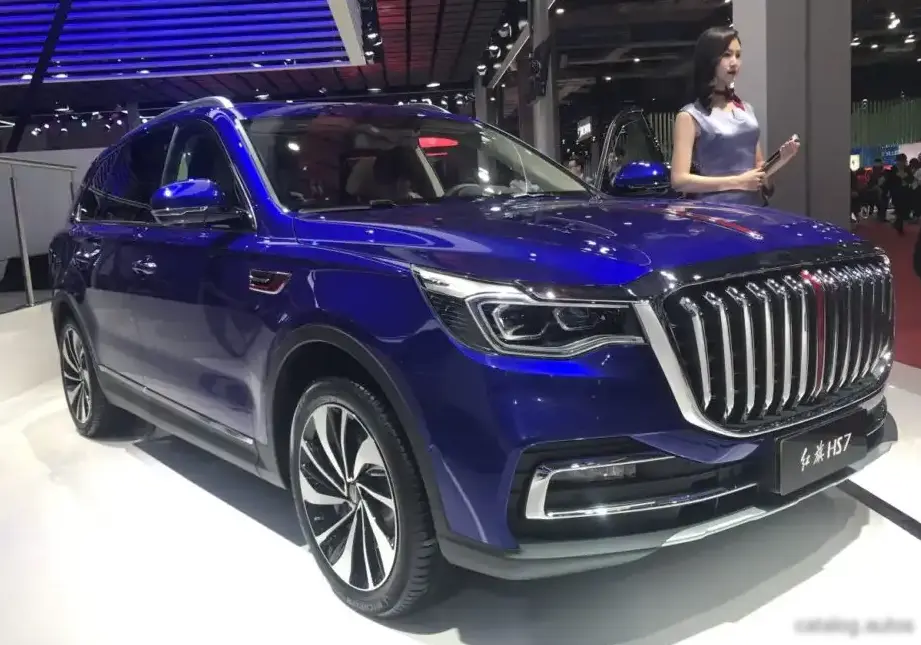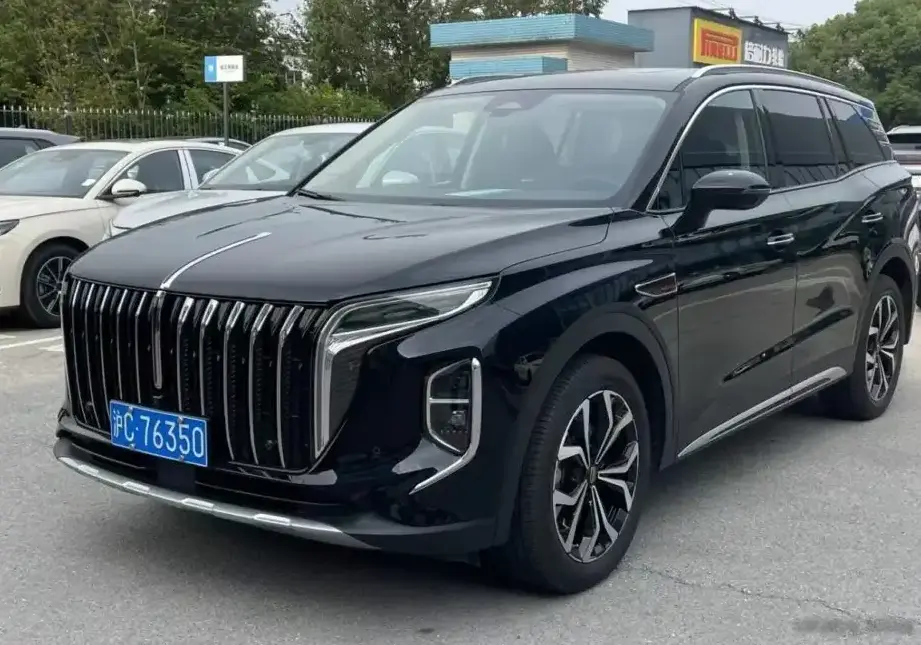
The Hongqi HS7 II 2.0T (252 Hp) Mild Hybrid Automatic, launched in 2023, represents a significant offering in the burgeoning Chinese luxury SUV market. As the second iteration of the HS7, this variant builds upon the foundation laid by the original model, aiming to provide a blend of comfort, technology, and moderate performance. Positioned as a mid-range option within the HS7 lineup, it slots between the base models and potentially higher-performance trims (depending on market availability). The HS7 II is a key component of Hongqi’s strategy to revitalize the brand and compete with established international luxury automakers. It is built on a dedicated SUV platform and designed to appeal to buyers seeking a spacious, well-equipped vehicle with a degree of hybrid efficiency.
Technical Specifications
| Brand | Hongqi |
| Model | HS7 |
| Generation | HS7 II |
| Type (Engine) | 2.0T (252 Hp) Mild Hybrid Automatic |
| Start of production | 2023 |
| Powertrain Architecture | MHEV (Mild Hybrid Electric Vehicle) |
| Body type | SUV |
| Seats | 6 |
| Doors | 5 |
| Fuel consumption (combined) | 7.7 l/100 km (30.5 US mpg, 36.7 UK mpg, 13 km/l) |
| Fuel Type | Petrol (Gasoline) |
| Acceleration 0 – 100 km/h | 8.5 sec |
| Acceleration 0 – 62 mph | 8.5 sec |
| Acceleration 0 – 60 mph | 8.1 sec |
| Maximum speed | 230 km/h (142.92 mph) |
| Emission standard | China V |
| Weight-to-power ratio | 7.9 kg/Hp (127 Hp/tonne) |
| Weight-to-torque ratio | 5.2 kg/Nm (191.4 Nm/tonne) |
| Battery voltage | 48 V |
| Battery technology | Lithium-ion (Li-Ion) |
| Power | 252 Hp |
| Power per litre | 126.7 Hp/l |
| Torque | 380 Nm (280.27 lb.-ft.) |
| Engine layout | Front, Transverse |
| Engine Model/Code | CA4GC20TD-35 |
| Engine displacement | 1989 cm3 (121.38 cu. in.) |
| Number of cylinders | 4 |
| Engine configuration | Inline |
| Number of valves per cylinder | 4 |
| Fuel injection system | Direct injection |
| Engine aspiration | Turbocharger, Intercooler |
| Engine oil capacity | 5.3 l (5.6 US qt, 4.66 UK qt) |
| Coolant capacity | 12.3 l (13 US qt, 10.82 UK qt) |
| Kerb Weight | 1985 kg (4376.18 lbs.) |
| Length | 4995 mm (196.65 in.) |
| Width | 1960 mm (77.17 in.) |
| Height | 1760 mm (69.29 in.) |
| Wheelbase | 2920 mm (114.96 in.) |
| Drivetrain | Front wheel drive, MHEV |
| Number of gears | 8 |
| Gearbox type | Automatic transmission |
| Front suspension | Independent type McPherson |
| Rear suspension | Independent multi-link suspension |
| Front brakes | Ventilated discs |
| Rear brakes | Ventilated discs |
| Steering type | Steering rack and pinion |
| Power steering | Electric |
| Tires size | 235/55 R20 |
| Wheel rims size | 20 |
Powertrain & Engine Architecture
The HS7 II 2.0T utilizes the CA4GC20TD-35 engine, a 1.989-liter turbocharged inline-four cylinder gasoline engine. This engine benefits from direct fuel injection and an intercooler, contributing to improved efficiency and power output. The 252 horsepower and 380 Nm (280.27 lb.-ft.) of torque are respectable figures for this class of SUV. The “Mild Hybrid” designation indicates the presence of a 48-volt electrical system and a small electric motor/generator. This system assists the engine during acceleration, allowing for smoother starts and improved fuel economy. It also enables a start/stop system to function more effectively. The engine is transversely mounted, driving the front wheels through an 8-speed automatic transmission. The transmission is tuned for comfort and efficiency, prioritizing smooth shifts over aggressive performance.
Driving Characteristics
The HS7 II 2.0T offers a comfortable and refined driving experience. The 8-speed automatic transmission provides seamless gear changes, and the mild hybrid system helps to mask any turbo lag. Acceleration to 60 mph in approximately 8.1 seconds is adequate for everyday driving, but it doesn’t offer the brisk performance of some competitors with more powerful engines. The front-wheel-drive configuration provides predictable handling, although it lacks the all-weather capability of an all-wheel-drive system. The suspension is tuned for comfort, absorbing bumps and imperfections in the road effectively. Steering feel is light and precise, making it easy to maneuver in urban environments. Compared to potential higher-output versions of the HS7, this 2.0T variant prioritizes fuel efficiency and a relaxed driving experience over outright performance.
Equipment & Trim Levels
The HS7 II 2.0T typically comes well-equipped, reflecting its positioning as a luxury SUV. Standard features generally include leather upholstery, a large touchscreen infotainment system with navigation, a panoramic sunroof, and a suite of advanced driver-assistance systems (ADAS) such as adaptive cruise control, lane-keeping assist, and automatic emergency braking. Higher trim levels may add features like premium audio systems, ventilated and massaging front seats, and more sophisticated interior trim materials. The HS7 II is designed to accommodate six passengers comfortably, with ample legroom and headroom in all three rows.
Chassis & Braking
The HS7 II utilizes an independent McPherson strut suspension at the front and an independent multi-link suspension at the rear. This setup provides a good balance of ride comfort and handling. Ventilated disc brakes are fitted to all four wheels, providing adequate stopping power. The electric power steering system offers light and precise steering feel. The vehicle’s relatively high curb weight of 1985 kg (4376.18 lbs.) contributes to its stable and planted feel on the road.
Market Reception & Comparison
The Hongqi HS7 II 2.0T has been generally well-received in the Chinese market, where it competes with established luxury SUVs from brands like Audi, BMW, and Mercedes-Benz. Critics have praised its spacious interior, comfortable ride, and extensive list of standard features. However, some have noted that its performance is not as engaging as some of its European rivals. Fuel economy is competitive for its class, with the mild hybrid system contributing to improved efficiency. Compared to other HS7 variants, the 2.0T offers a more affordable entry point into the HS7 range, making it an attractive option for buyers who prioritize value and comfort over outright performance.
Legacy
As a relatively new model, the long-term reliability of the HS7 II 2.0T remains to be seen. However, Hongqi has been investing heavily in improving the quality and reliability of its vehicles. The CA4GC20TD-35 engine is a modern design with proven technology, and the 8-speed automatic transmission is known for its durability. In the used car market, the HS7 II 2.0T is likely to appeal to buyers seeking a spacious, well-equipped luxury SUV at a competitive price. Its mild hybrid system and comfortable ride should make it a popular choice for those who prioritize fuel efficiency and a relaxed driving experience.