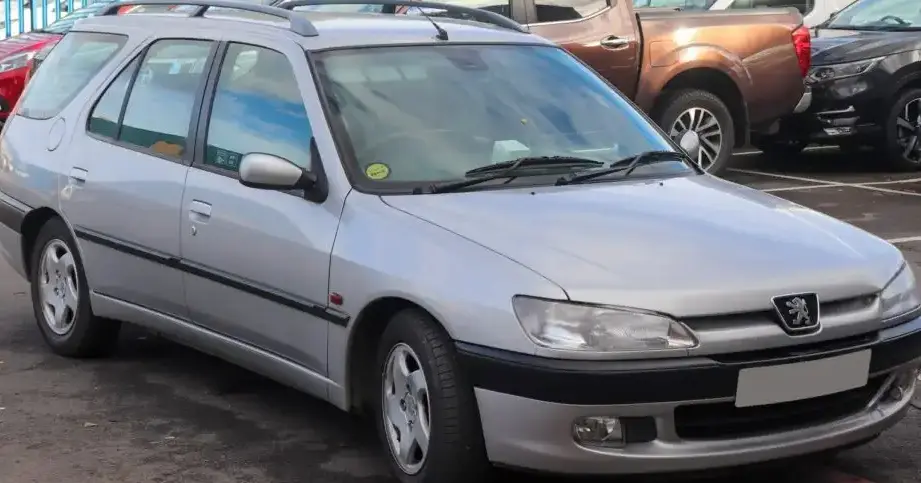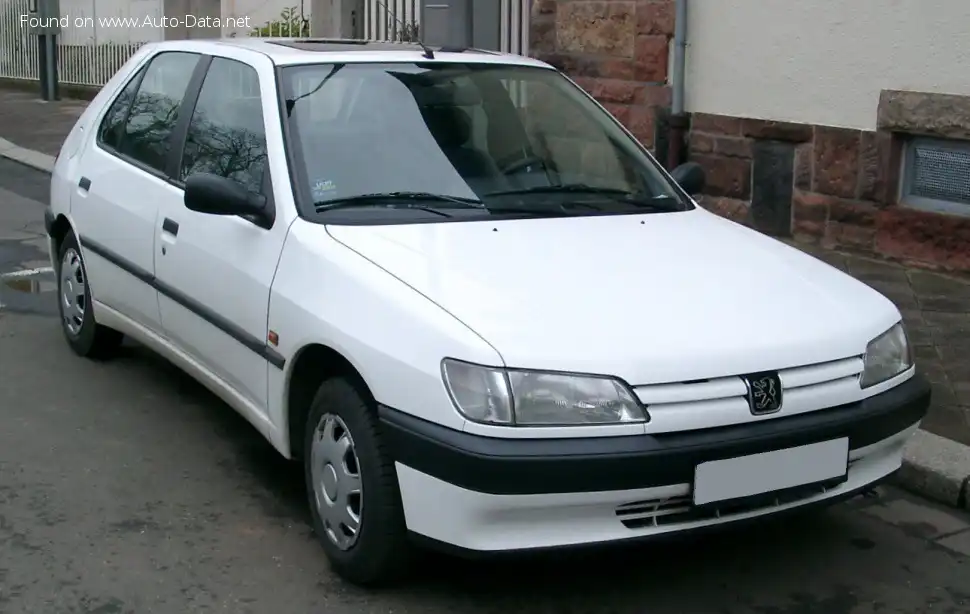
The Peugeot 306, produced between 1993 and 2002, was a small family car designed to replace the Peugeot 205. The 306 represented a significant step forward for Peugeot in terms of design, safety, and overall refinement. Within the 306 range, the 1.8-liter (101 hp) automatic variant, produced from 1993 to 1997, occupied a middle ground, offering a balance between affordability, comfort, and reasonable performance. It was positioned as a more accessible option compared to the sportier XSi and GTI models, while providing a more refined experience than the base 1.4-liter engine. This variant was primarily sold in European markets, where compact hatchbacks were – and continue to be – a dominant segment.
Technical Specifications
| Brand | Peugeot |
| Model | 306 |
| Generation | 306 Hatchback (7A/C) |
| Type (Engine) | 1.8 (101 Hp) Automatic |
| Start of production | 1993 |
| End of production | 1997 |
| Powertrain Architecture | Internal Combustion engine |
| Body type | Hatchback |
| Seats | 5 |
| Doors | 3-5 |
| Fuel consumption (combined) | 8 l/100 km (29.4 US mpg, 35.3 UK mpg, 12.5 km/l) |
| Fuel Type | Petrol (Gasoline) |
| Acceleration 0 – 100 km/h | 12.2 sec |
| Acceleration 0 – 62 mph | 12.2 sec |
| Acceleration 0 – 60 mph | 11.6 sec |
| Maximum speed | 185 km/h (114.95 mph) |
| Weight-to-power ratio | 10.7 kg/Hp, 93.5 Hp/tonne |
| Weight-to-torque ratio | 7.1 kg/Nm, 141.7 Nm/tonne |
| Power | 101 Hp @ 6000 rpm |
| Power per litre | 57.3 Hp/l |
| Torque | 153 Nm @ 3000 rpm (112.85 lb.-ft. @ 3000 rpm) |
| Engine layout | Front, Transverse |
| Engine Model/Code | LFY XU7JP4 |
| Engine displacement | 1762 cm3 (107.52 cu. in.) |
| Number of cylinders | 4 |
| Engine configuration | Inline |
| Cylinder Bore | 83 mm (3.27 in.) |
| Piston Stroke | 81.4 mm (3.2 in.) |
| Compression ratio | 9.2:1 |
| Number of valves per cylinder | 2 |
| Fuel injection system | Multi-port manifold injection |
| Engine aspiration | Naturally aspirated engine |
| Valvetrain | OHC |
| Engine oil capacity | 4.3 l (4.54 US qt | 3.78 UK qt) |
| Coolant | 7.5 l (7.93 US qt | 6.6 UK qt) |
| Kerb Weight | 1080 kg (2380.99 lbs.) |
| Max. weight | 1590 kg (3505.35 lbs.) |
| Max load | 510 kg (1124.36 lbs.) |
| Trunk (boot) space – minimum | 338 l (11.94 cu. ft.) |
| Trunk (boot) space – maximum | 637 l (22.5 cu. ft.) |
| Fuel tank capacity | 60 l (15.85 US gal | 13.2 UK gal) |
| Length | 3995 mm (157.28 in.) |
| Width | 1692 mm (66.61 in.) |
| Height | 1380 mm (54.33 in.) |
| Wheelbase | 2580 mm (101.57 in.) |
| Front track | 1454 mm (57.24 in.) |
| Rear (Back) track | 1429 mm (56.26 in.) |
| Drivetrain Architecture | The Internal combustion engine (ICE) drives the front wheels of the vehicle. |
| Drive wheel | Front wheel drive |
| Number of gears and type of gearbox | 4 gears, automatic transmission |
| Front suspension | Wishbone |
| Rear suspension | Trailing arm |
| Front brakes | Ventilated discs |
| Rear brakes | Disc |
| Assisting systems | ABS (Anti-lock braking system) |
| Steering type | Steering rack and pinion |
| Power steering | Hydraulic Steering |
| Tires size | 185/60 R14 |
| Wheel rims size | 14 |
Powertrain & Engine Architecture
The 1.8-liter engine, designated LFY and belonging to the XU7JP4 family, was a naturally aspirated, inline-four cylinder unit. It featured a single overhead camshaft (OHC) operating two valves per cylinder. The engine utilized multi-port fuel injection, a common setup for the time, providing a balance between efficiency and performance. The XU7JP4 engine was known for its relative simplicity and durability, although it wasn’t a particularly high-revving or technologically advanced design. The automatic transmission was a four-speed unit, designed to provide smooth, if not particularly sporty, gear changes. This transmission was not known for its efficiency compared to manual options, and its programming prioritized comfort over performance.
Driving Characteristics
The 1.8L automatic 306 offered a comfortable and relaxed driving experience. With 101 horsepower, acceleration was adequate for everyday driving, but it wasn’t a particularly quick car. The 0-60 mph time of around 11.6 seconds reflects this. The automatic transmission, while convenient, did detract from the engine’s available power, resulting in a noticeable difference in performance compared to the five-speed manual version. Gear ratios were optimized for fuel economy and smooth cruising rather than spirited acceleration. The car felt most at home on the highway, where the engine could comfortably maintain cruising speeds. Compared to the higher-output 2.0-liter XSi and GTI models, the 1.8 automatic felt significantly less responsive and engaging.
Equipment & Trim Levels
The 1.8-liter automatic typically came with a reasonable level of standard equipment. This included power steering, central locking, electric front windows, and an adjustable steering column. Interior upholstery was typically cloth, with a relatively simple dashboard layout. Optional extras included air conditioning, a sunroof, and upgraded audio systems. Trim levels varied slightly depending on the market, but generally, the 1.8 automatic was positioned as a mid-range offering, bridging the gap between the basic models and the more luxurious trims.
Chassis & Braking
The 306 utilized a relatively conventional chassis setup. Front suspension consisted of independent wishbones, while the rear employed a trailing arm configuration. Brakes were ventilated discs at the front and solid discs at the rear. ABS (Anti-lock Braking System) was standard, enhancing safety. The suspension was tuned for comfort, providing a reasonably compliant ride, although it wasn’t particularly sporty. The 1.8 automatic, being heavier than some of the lower-spec models, sometimes felt slightly less agile in corners.
Market Reception & Comparison
The 1.8-liter automatic 306 was generally well-received as a practical and comfortable family car. Critics praised its ride quality and ease of use, but noted that the automatic transmission dulled the engine’s performance. Fuel economy was reasonable for the time, but not exceptional. Compared to the manual versions and the higher-output engines, the 1.8 automatic offered a less engaging driving experience, but it appealed to buyers who prioritized comfort and convenience. It competed with other small family cars such as the Ford Escort, Vauxhall/Opel Astra, and Volkswagen Golf.
Legacy
The Peugeot 306 1.8 automatic, while not the most exciting variant in the range, proved to be a reliable and durable car. The XU7JP4 engine is known for its longevity, and the automatic transmission, while not particularly sophisticated, is generally robust. Today, these cars are relatively affordable to purchase and maintain, making them popular choices for budget-conscious buyers. Parts availability is generally good, although some trim-specific components may be harder to find. The 306, in all its variants, holds a nostalgic appeal for many, representing a well-built and practical French hatchback from the 1990s.