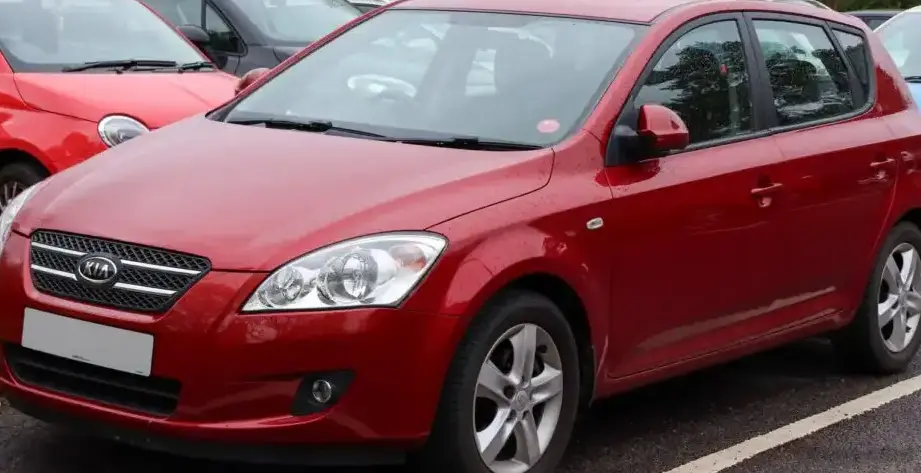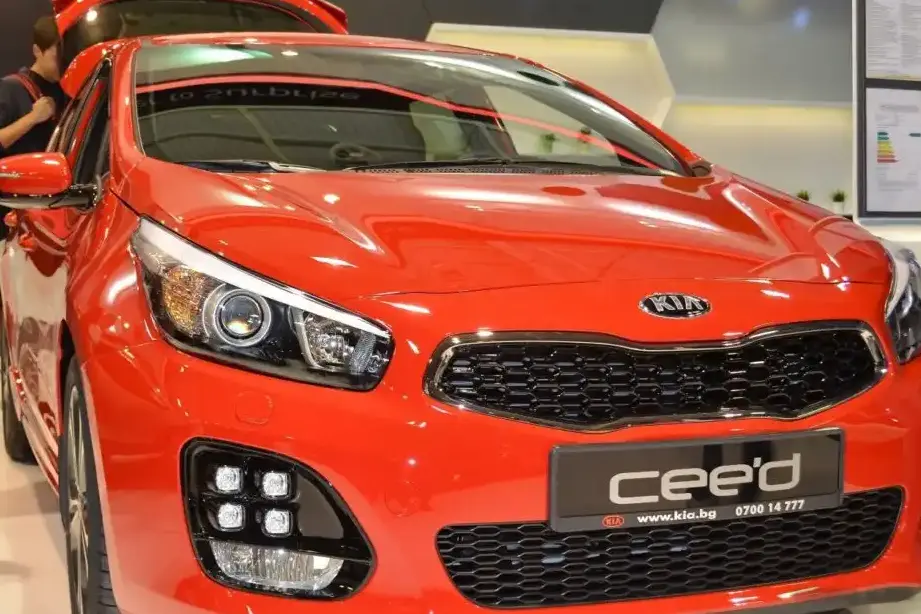
The Kia Cee’d II (facelift, produced from June 2015 to 2018) 1.6 CRDI with 136 horsepower and a dual-clutch transmission (DCT) represented a significant offering in the European compact hatchback segment. Positioned as a mid-range trim, it aimed to balance fuel efficiency, performance, and modern technology for buyers seeking a practical and well-equipped vehicle. This facelift brought styling updates and refined the already popular second-generation Cee’d, building upon the foundation of the 1HX0 platform shared with the Hyundai i30. The inclusion of the ISG (Idle Stop & Go) system further emphasized Kia’s commitment to reducing emissions and improving fuel economy.
Technical Specifications
| Brand | Kia |
| Model | Cee’d |
| Generation | Cee’d II (facelift 2015) |
| Type (Engine) | 1.6 CRDI (136 Hp) ISG DCT |
| Start of production | June, 2015 |
| End of production | 2018 |
| Powertrain Architecture | Internal Combustion engine |
| Body type | Hatchback |
| Seats | 5 |
| Doors | 5 |
| Fuel consumption (urban) | 4.6 l/100 km (51.1 US mpg, 61.4 UK mpg, 21.7 km/l) |
| Fuel consumption (extra urban) | 3.9 l/100 km (60.3 US mpg, 72.4 UK mpg, 25.6 km/l) |
| Fuel consumption (combined) | 4.2 l/100 km (56 US mpg, 67.3 UK mpg, 23.8 km/l) |
| CO2 emissions | 109 g/km |
| Fuel Type | Diesel |
| Acceleration 0 – 100 km/h | 10.6 sec |
| Acceleration 0 – 62 mph | 10.6 sec |
| Acceleration 0 – 60 mph | 10.1 sec |
| Maximum speed | 200 km/h (124.27 mph) |
| Emission standard | Euro 6 |
| Weight-to-power ratio | 9.7 kg/Hp, 102.9 Hp/tonne |
| Weight-to-torque ratio | 4.4 kg/Nm, 226.9 Nm/tonne |
| Power | 136 Hp @ 4000 rpm |
| Power per litre | 86 Hp/l |
| Torque | 300 Nm @ 1750-2500 rpm (221.27 lb.-ft. @ 1750-2500 rpm) |
| Engine layout | Front, Transverse |
| Engine Model/Code | D4FB |
| Engine displacement | 1582 cm3 (96.54 cu. in.) |
| Number of cylinders | 4 |
| Engine configuration | Inline |
| Cylinder Bore | 77.2 mm (3.04 in.) |
| Piston Stroke | 84.5 mm (3.33 in.) |
| Compression ratio | 16:1 |
| Number of valves per cylinder | 4 |
| Fuel injection system | Diesel Commonrail |
| Engine aspiration | Turbocharger, Intercooler |
| Engine oil capacity | 5.3 l (5.6 US qt | 4.66 UK qt) |
| Coolant | 6.7 l (7.08 US qt | 5.9 UK qt) |
| Kerb Weight | 1322-1439 kg (2914.51 – 3172.45 lbs.) |
| Max. weight | 1940 kg (4276.97 lbs.) |
| Max load | 501-618 kg (1104.52 – 1362.46 lbs.) |
| Trunk (boot) space – minimum | 380 l (13.42 cu. ft.) |
| Trunk (boot) space – maximum | 1318 l (46.54 cu. ft.) |
| Fuel tank capacity | 53 l (14 US gal | 11.66 UK gal) |
| Max. roof load | 80 kg (176.37 lbs.) |
| Permitted trailer load with brakes (12%) | 1500 kg (3306.93 lbs.) |
| Permitted trailer load without brakes | 650 kg (1433 lbs.) |
| Permitted towbar download | 75 kg (165.35 lbs.) |
| Length | 4310 mm (169.69 in.) |
| Width | 1780 mm (70.08 in.) |
| Width including mirrors | 2035 mm (80.12 in.) |
| Height | 1470 mm (57.87 in.) |
| Wheelbase | 2650 mm (104.33 in.) |
| Front track | 1549-1555 mm (60.98 – 61.22 in.) |
| Rear (Back) track | 1557-1563 mm (61.3 – 61.54 in.) |
| Front overhang | 900 mm (35.43 in.) |
| Rear overhang | 760 mm (29.92 in.) |
| Minimum turning circle (turning diameter) | 10.6 m (34.78 ft.) |
| Drivetrain Architecture | The Internal combustion engine (ICE) drives the front wheels of the vehicle. |
| Drive wheel | Front wheel drive |
| Number of gears and type of gearbox | 7 gears, automatic transmission DCT |
| Front suspension | Independent type McPherson |
| Rear suspension | Independent multi-link suspension |
| Front brakes | Ventilated discs, 280-300 mm |
| Rear brakes | Disc, 262-284 mm |
| Assisting systems | ABS (Anti-lock braking system) |
| Steering type | Steering rack and pinion |
| Tires size | 205/55 R16 91H; 225/45 R17 91V |
| Wheel rims size | 6; 5J x 16 ET50; 7; 0J x 17 ET53 |
INTRODUCTION
The Kia Cee’d II facelift, launched in 2015, represented a mid-cycle refresh of Kia’s popular European-market compact hatchback. The 1.6 CRDI variant, producing 136 horsepower and paired with a seven-speed dual-clutch transmission (DCT), was a key component of the lineup. This combination aimed to deliver a balance of performance, fuel efficiency, and driving comfort. The Cee’d was specifically designed for the European market, offering a compelling alternative to established rivals like the Volkswagen Golf, Ford Focus, and Opel Astra. The facelift brought subtle styling changes, improved interior materials, and enhanced technology features, solidifying the Cee’d’s position as a strong contender in the competitive C-segment.
Powertrain & Engine Architecture
The heart of this Cee’d variant is the D4FB 1.6-liter four-cylinder diesel engine. This engine utilizes a common-rail direct injection system, delivering fuel at extremely high pressure for optimized combustion. The D4FB engine is known for its relatively quiet operation and good low-end torque. A turbocharger with an intercooler further enhances performance, boosting power output to 136 hp at 4000 rpm and generating 300 Nm (221 lb-ft) of torque between 1750 and 2500 rpm. The engine features four valves per cylinder and a compression ratio of 16:1. The seven-speed DCT provides quick and smooth gear changes, contributing to both performance and fuel efficiency. The ISG (Idle Stop & Go) system automatically shuts off the engine when the vehicle is stopped, reducing fuel consumption and emissions in urban driving conditions.
Driving Characteristics
The 1.6 CRDI 136 hp DCT Cee’d offers a comfortable and refined driving experience. While not a performance-oriented model, the engine provides adequate power for everyday driving and highway cruising. The DCT transmission shifts quickly and efficiently, minimizing power loss during gear changes. Compared to the manual transmission versions, the DCT offers greater convenience, particularly in stop-and-go traffic. However, some drivers may prefer the more direct feel of a manual gearbox. The 0-60 mph acceleration time of around 10.1 seconds is respectable for a diesel-powered compact hatchback. The engine’s strong low-end torque makes it easy to accelerate from low speeds and overtake other vehicles. The suspension is tuned for comfort, providing a smooth ride over most road surfaces.
Equipment & Trim Levels
The 1.6 CRDI 136 hp ISG DCT trim typically included a generous level of standard equipment. Features commonly found in this variant include air conditioning, power windows, power mirrors, a touchscreen infotainment system with Bluetooth connectivity, and alloy wheels. Higher trim levels offered additional features such as a rearview camera, parking sensors, automatic climate control, and a panoramic sunroof. Interior upholstery was typically cloth, with options for leather upgrades. Safety features included ABS, ESC (Electronic Stability Control), and multiple airbags.
Chassis & Braking
The Cee’d II utilizes a McPherson strut front suspension and a multi-link rear suspension, providing a good balance of ride comfort and handling. The front brakes are ventilated discs, ranging from 280-300mm in size, while the rear brakes are solid discs, measuring 262-284mm. ABS (Anti-lock Braking System) is standard, enhancing braking performance and stability. The steering is a rack and pinion system, providing precise and responsive steering feel.
Market Reception & Comparison
The Kia Cee’d II facelift, including the 1.6 CRDI 136 hp DCT variant, was generally well-received by automotive critics. It was praised for its stylish design, spacious interior, generous equipment levels, and competitive pricing. The diesel engine was noted for its fuel efficiency and refinement. Compared to other trims in the Cee’d lineup, the 1.6 CRDI DCT offered a good balance of performance and economy, making it a popular choice for drivers who prioritize fuel efficiency and convenience. The petrol versions offered a more engaging driving experience, while the more powerful diesel variants provided greater performance. Fuel economy figures of around 56 US mpg combined were highly competitive in its class.
Legacy
The Kia Cee’d II 1.6 CRDI 136 hp DCT has proven to be a reliable and durable vehicle. The D4FB engine, while not without its potential issues (like DPF clogging with infrequent long journeys), is generally considered robust when properly maintained. The DCT transmission has also proven to be relatively reliable, although regular servicing is essential. On the used car market, these Cee’ds represent good value for money, offering a well-equipped and fuel-efficient compact hatchback at an affordable price. The Cee’d’s success helped to establish Kia as a major player in the European automotive market, demonstrating the brand’s commitment to quality, innovation, and customer satisfaction.