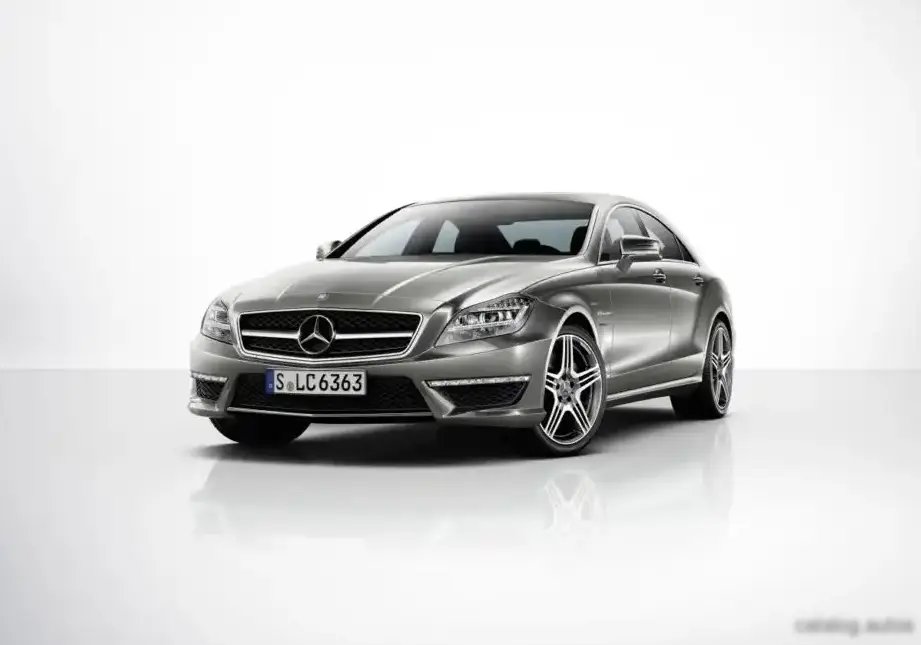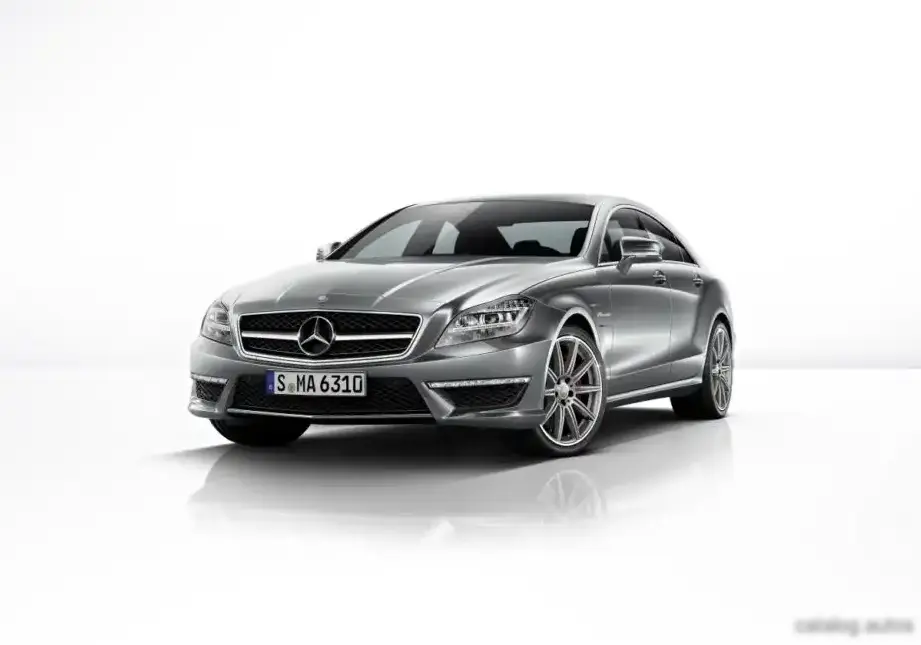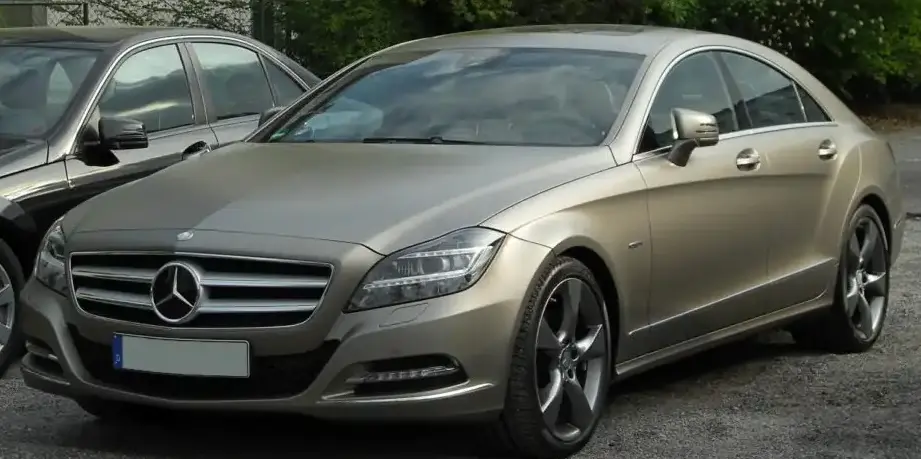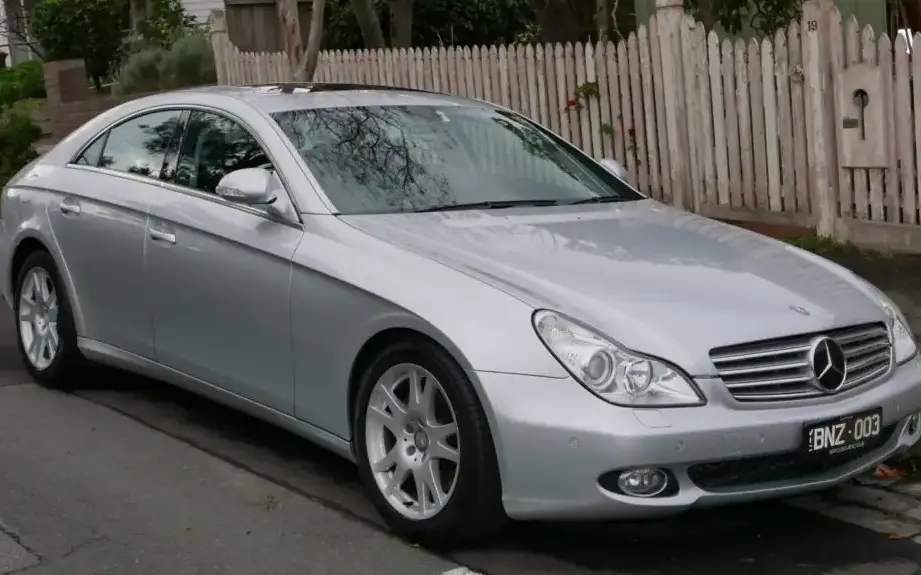
The Mercedes-Benz CLS 550, produced between 2006 and 2008, represented the performance pinnacle of the first-generation CLS-Class (C219) four-door coupe. Positioned as the flagship variant, it offered a substantial upgrade over the CLS 350 and CLS 500 models, appealing to buyers seeking a blend of luxury, performance, and distinctive styling. The C219 CLS was a groundbreaking vehicle, widely credited with popularizing the “four-door coupe” segment, and the 550 model embodied this innovative spirit with its powerful V8 engine and advanced transmission technology. It was primarily marketed towards affluent buyers in North America, Europe, and Asia who desired a more dynamic alternative to traditional luxury sedans.
Technical Specifications
| Brand | Mercedes-Benz |
| Model | CLS |
| Generation | CLS coupe (C219) |
| Type (Engine) | CLS 550 V8 (382 Hp) 7G-TRONIC |
| Start of production | 2006 |
| End of production | 2008 |
| Powertrain Architecture | Internal Combustion engine |
| Body type | Coupe |
| Seats | 4 |
| Doors | 4 |
| Fuel consumption (urban) | 15.6 l/100 km (15.1 US mpg, 18.1 UK mpg, 6.4 km/l) |
| Fuel consumption (extra urban) | 9.9 l/100 km (23.8 US mpg, 28.5 UK mpg, 10.1 km/l) |
| Fuel Type | Petrol (Gasoline) |
| Acceleration 0 – 60 mph | 5.4 sec |
| Maximum speed | 250 km/h (155.34 mph), Electronically limited |
| Weight-to-power ratio | 4.7 kg/Hp, 211 Hp/tonne |
| Weight-to-torque ratio | 3.4 kg/Nm, 292.8 Nm/tonne |
| Power | 382 Hp @ 6000 rpm |
| Power per litre | 70 Hp/l |
| Torque | 530 Nm @ 2800-4800 rpm (390.91 lb.-ft. @ 2800-4800 rpm) |
| Engine layout | Front, Longitudinal |
| Engine Model/Code | M 273 |
| Engine displacement | 5461 cm3 (333.25 cu. in.) |
| Number of cylinders | 8 |
| Engine configuration | V-engine |
| Cylinder Bore | 98 mm (3.86 in.) |
| Piston Stroke | 90.5 mm (3.56 in.) |
| Compression ratio | 10.7:1 |
| Number of valves per cylinder | 4 |
| Fuel injection system | Multi-port manifold injection |
| Engine aspiration | Naturally aspirated engine |
| Valvetrain | DOHC |
| Engine oil capacity | 8.5 l (8.98 US qt | 7.48 UK qt) |
| Coolant | 11.3 l (11.94 US qt | 9.94 UK qt) |
| Kerb Weight | 1810 kg (3990.37 lbs.) |
| Trunk (boot) space – minimum | 450 l (15.89 cu. ft.) |
| Fuel tank capacity | 80 l (21.13 US gal | 17.6 UK gal) |
| Max. roof load | 100 kg (220.46 lbs.) |
| Length | 4910 mm (193.31 in.) |
| Width | 1873 mm (73.74 in.) |
| Width including mirrors | 2059 mm (81.06 in.) |
| Height | 1390 mm (54.72 in.) |
| Wheelbase | 2854 mm (112.36 in.) |
| Front track | 1587 mm (62.48 in.) |
| Rear (Back) track | 1600 mm (62.99 in.) |
| Drag coefficient (Cd) | 0.30 |
| Minimum turning circle (turning diameter) | 11.2 m (36.75 ft.) |
| Drivetrain Architecture | The Internal combustion engine (ICE) drives the rear wheels of the vehicle. |
| Drive wheel | Rear wheel drive |
| Number of gears and type of gearbox | 7 gears, automatic transmission G-TRONIC |
| Front suspension | Independent multi-link suspension, Transverse stabilizer, Air suspension |
| Rear suspension | Independent multi-link suspension, Air suspension, Transverse stabilizer |
| Front brakes | Ventilated discs, 330 mm |
| Rear brakes | Ventilated discs, 300 mm |
| Assisting systems | ABS (Anti-lock braking system) |
| Steering type | Steering rack and pinion |
| Power steering | Hydraulic Steering |
| Tires size | 245/40 R18; 275/35 R18 |
| Wheel rims size | 8.5J x 18; 9.5J x 18 |
Powertrain & Engine Architecture
The heart of the CLS 550 was the M273 5.4-liter naturally aspirated V8 engine. This engine, a cornerstone of Mercedes-Benz’s performance lineup during the mid-2000s, featured all-aluminum construction, three valves per cylinder, and a sophisticated multi-port fuel injection system. The M273 was known for its smooth power delivery and refined character. It produced 382 horsepower at 6,000 rpm and 390 lb-ft of torque between 2,800 and 4,800 rpm. The engine’s dual overhead camshafts (DOHC) and variable valve timing contributed to its efficiency and responsiveness. Paired with the engine was the 7G-TRONIC seven-speed automatic transmission. This transmission, a significant advancement over previous Mercedes-Benz automatics, offered smooth, quick shifts and a wide range of gear ratios, optimizing both performance and fuel economy. The 7G-TRONIC also featured a manual shift mode, allowing drivers to exert more control over gear selection.
Driving Characteristics
The CLS 550 delivered a distinctly grand touring experience. The combination of the powerful V8 and the 7G-TRONIC transmission resulted in brisk acceleration – 0 to 60 mph in approximately 5.4 seconds – and effortless cruising. While not as overtly sporty as some of its rivals, the CLS 550 offered a refined and comfortable ride, thanks to its air suspension system. Compared to the CLS 350 (with its smaller V6 engine), the 550 provided a substantial increase in power and torque, resulting in noticeably quicker acceleration and more confident passing maneuvers. The 7G-TRONIC transmission’s close gear ratios kept the engine in its optimal power band, enhancing responsiveness. Compared to a hypothetical CLS 550 with a manual transmission (which was not offered), the 7G-TRONIC provided smoother operation and greater convenience for everyday driving.
Equipment & Trim Levels
The CLS 550 came standard with a comprehensive array of luxury features, including leather upholstery, wood trim, dual-zone automatic climate control, a premium sound system, and power-adjustable front seats with memory function. Common optional extras included a panoramic sunroof, rear-seat entertainment system, and advanced driver-assistance features such as Distronic adaptive cruise control and Parktronic parking assist. Interior color schemes were customizable, with a range of leather and wood options available. The standard dashboard configuration featured analog gauges with a multi-function display, providing information on vehicle settings, navigation, and audio controls.
Chassis & Braking
The CLS 550 featured an independent multi-link suspension at all four corners, complemented by an air suspension system that provided a smooth and controlled ride. The air suspension allowed for adjustable ride height and damping settings, enhancing both comfort and handling. Braking duties were handled by ventilated disc brakes on all four wheels, providing ample stopping power. The CLS 550’s standard anti-lock braking system (ABS) and electronic stability program (ESP) further enhanced safety. The rear suspension utilized a transverse stabilizer bar to minimize body roll during cornering.
Market Reception & Comparison
The CLS 550 was generally well-received by automotive critics, who praised its powerful engine, luxurious interior, and distinctive styling. However, some reviewers noted its relatively high price and fuel consumption. Compared to competitors such as the BMW 6 Series and Audi A8, the CLS 550 offered a unique blend of coupe-like styling and four-door practicality. Fuel economy, while respectable for a V8-powered vehicle, was lower than that of the CLS 350 or CLS 500. Reliability was generally good, although some owners reported issues with the air suspension system and electronic components.
Legacy
The M273 engine, while no longer in production, is considered a robust and reliable powerplant when properly maintained. The 7G-TRONIC transmission has also proven to be durable, although regular fluid changes are essential. In the used car market, the CLS 550 remains a desirable option for buyers seeking a luxurious and powerful four-door coupe. However, potential buyers should be aware of the potential maintenance costs associated with a high-performance luxury vehicle of this age, particularly regarding the air suspension and electronic systems. The CLS 550’s influence can be seen in the continued popularity of the four-door coupe segment, and it remains a significant model in Mercedes-Benz’s history.