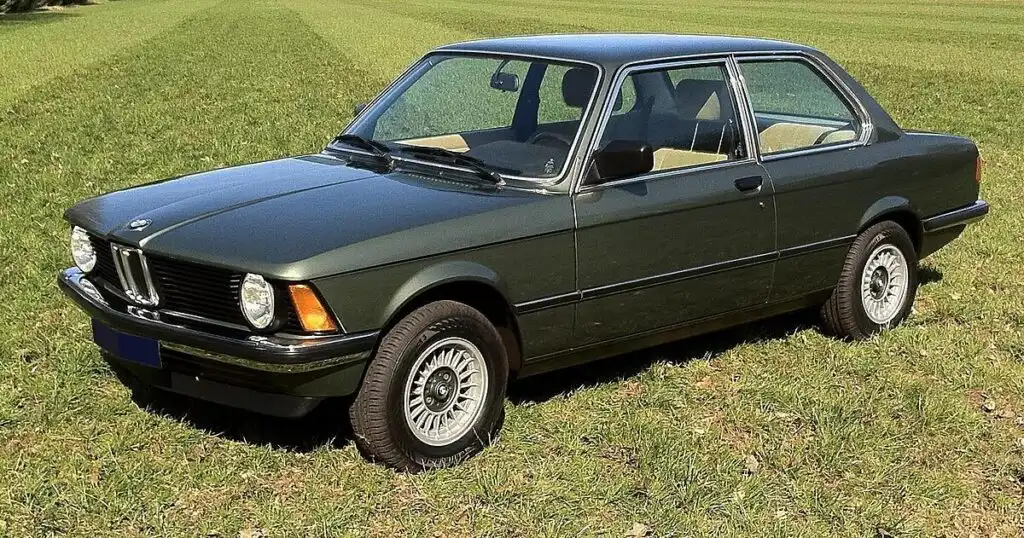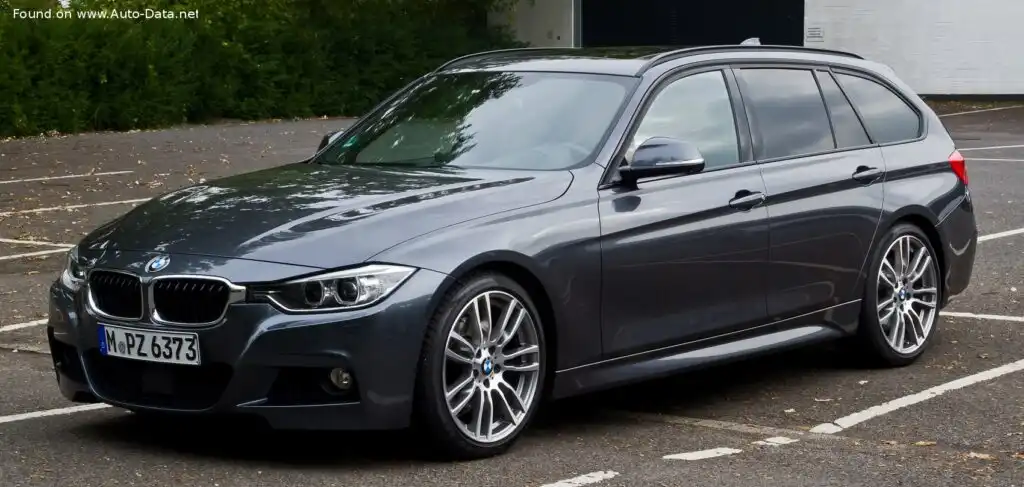
The BMW 3 Series Touring (F31) 316i Steptronic, produced from 2013 to 2015, represents an entry point into the premium compact executive estate (wagon) market. Positioned within the broader F31 3 Series Touring range, which spanned from efficient diesels to high-performance M variants, the 316i offered a balance of practicality, comfort, and the BMW driving experience, albeit with a focus on fuel economy rather than outright speed. This variant was primarily aimed at buyers seeking a versatile family vehicle with the prestige of the BMW badge, without the higher price tag associated with more powerful engine options.
Technical Specifications
| Brand | BMW |
| Model | 3 Series |
| Generation | 3 Series Touring (F31) |
| Type (Engine) | 316i (136 Hp) Steptronic |
| Start of production | 2013 |
| End of production | 2015 |
| Powertrain Architecture | Internal Combustion engine |
| Body type | Station wagon (estate) |
| Seats | 5 |
| Doors | 5 |
| Fuel consumption (urban) | 7.6-7.9 l/100 km (30.9 – 29.8 US mpg, 37.2 – 35.8 UK mpg, 13.2 – 12.7 km/l) |
| Fuel consumption (extra urban) | 4.9-5.1 l/100 km (48 – 46.1 US mpg, 57.6 – 55.4 UK mpg, 20.4 – 19.6 km/l) |
| Fuel consumption (combined) | 5.9-6.2 l/100 km (39.9 – 37.9 US mpg, 47.9 – 45.6 UK mpg, 16.9 – 16.1 km/l) |
| CO2 emissions | 138-143 g/km |
| Fuel Type | Petrol (Gasoline) |
| Acceleration 0 – 100 km/h | 9.3 sec |
| Acceleration 0 – 62 mph | 9.3 sec |
| Acceleration 0 – 60 mph | 8.8 sec |
| Maximum speed | 210 km/h (130.49 mph) |
| Emission standard | Euro 5 |
| Weight-to-power ratio | 10.8 kg/Hp, 92.5 Hp/tonne |
| Weight-to-torque ratio | 6.7 kg/Nm, 149.7 Nm/tonne |
| Power | 136 Hp @ 4350 rpm |
| Power per litre | 85.1 Hp/l |
| Torque | 220 Nm @ 1350 rpm (162.26 lb.-ft. @ 1350 rpm) |
| Engine layout | Front, Longitudinal |
| Engine Model/Code | N13B16A |
| Engine displacement | 1598 cm3 (97.52 cu. in.) |
| Number of cylinders | 4 |
| Engine configuration | Inline |
| Cylinder Bore | 77 mm (3.03 in.) |
| Piston Stroke | 85.8 mm (3.38 in.) |
| Compression ratio | 10.5:1 |
| Number of valves per cylinder | 4 |
| Fuel injection system | Direct injection |
| Engine aspiration | Twin-power turbo, Intercooler |
| Engine oil capacity | 4.2 l (4.44 US qt | 3.7 UK qt) |
| Coolant | 6.7 l (7.08 US qt | 5.9 UK qt) |
| Kerb Weight | 1470 kg (3240.8 lbs.) |
| Max. weight | 2020 kg (4453.34 lbs.) |
| Max load | 550 kg (1212.54 lbs.) |
| Trunk (boot) space – minimum | 495 l (17.48 cu. ft.) |
| Trunk (boot) space – maximum | 1500 l (52.97 cu. ft.) |
| Fuel tank capacity | 60 l (15.85 US gal | 13.2 UK gal) |
| Max. roof load | 75 kg (165.35 lbs.) |
| Permitted trailer load with brakes (12%) | 1500 kg (3306.93 lbs.) |
| Permitted trailer load without brakes | 695 kg (1532.21 lbs.) |
| Permitted towbar download | 75 kg (165.35 lbs.) |
| Length | 4624 mm (182.05 in.) |
| Width | 1811 mm (71.3 in.) |
| Height | 1429 mm (56.26 in.) |
| Wheelbase | 2810 mm (110.63 in.) |
| Front track | 1543 mm (60.75 in.) |
| Rear (Back) track | 1583 mm (62.32 in.) |
| Ride height (ground clearance) | 140 mm (5.51 in.) |
| Drag coefficient (Cd) | 0.31 |
| Minimum turning circle (turning diameter) | 11.3 m (37.07 ft.) |
| Drivetrain Architecture | The Internal combustion engine (ICE) drives the rear wheels of the vehicle. |
| Drive wheel | Rear wheel drive |
| Number of gears and type of gearbox | 8 gears, automatic transmission Steptronic |
| Front suspension | Independent coil spring |
| Rear suspension | Independent multi-link suspension |
| Front brakes | Ventilated discs |
| Rear brakes | Disc |
| Assisting systems | ABS (Anti-lock braking system) |
| Steering type | Steering rack and pinion |
| Power steering | Electric Steering |
| Tires size | 205/60 R16 92H; 225/55 R16; 225/50 R17; 255/45 R17; 225/45 R18; 255/40; 225/40 R19; 255/35 R19 |
| Wheel rims size | 7J x 16; 7.5J x 16; 7.5J x 17; 8.5J x 17; 8J x 18; 8.5J x 18; 8J x 19; 8.5J x 19 |
Powertrain & Engine Architecture
The 316i Touring utilized BMW’s N13B16A 1.6-liter inline-four cylinder engine. This engine is a member of BMW’s modular engine family, characterized by its compact design and advanced technologies. It features direct fuel injection, a twin-scroll turbocharger, and variable valve timing (VANOS) on both the intake and exhaust camshafts. The N13 engine was designed to deliver a balance of performance and efficiency, and the 316i’s output of 136 horsepower at 4350 rpm and 220 Nm (162 lb-ft) of torque at 1350 rpm reflects this. The engine’s turbocharger provides a relatively flat torque curve, aiding in everyday drivability. Paired with the engine is BMW’s 8-speed Steptronic automatic transmission. This transmission is known for its smooth shifts and efficiency, offering both automatic and manual shift modes. The transmission’s wide gear ratio spread helps to optimize fuel economy and provides adequate acceleration.
Driving Characteristics
The 316i Steptronic, while not a performance-oriented variant, offered a comfortable and refined driving experience. Acceleration from 0-60 mph took approximately 8.8 seconds, and top speed was limited to 130.49 mph. The automatic transmission, while smooth, could sometimes feel hesitant during quick overtaking maneuvers. Compared to the more powerful 320i or 328i models, the 316i lacked the same level of urgency. However, the engine’s torque delivery made it well-suited for everyday driving, providing sufficient power for merging onto highways and navigating city streets. The rear-wheel-drive configuration contributed to the BMW’s characteristic balanced handling, although the 316i’s tires and suspension were tuned more for comfort than outright sportiness.
Equipment & Trim Levels
The 316i Touring typically came standard with features such as automatic climate control, a multi-function steering wheel, power windows and mirrors, and a basic audio system. Upholstery was generally cloth, although leather options were available. Optional extras included a sunroof, navigation system, upgraded audio, parking sensors, and various driver assistance systems. Trim levels varied depending on the market, but generally, the 316i served as the entry-level Touring model, with higher trims offering more luxurious appointments and additional features. The interior design followed the typical BMW aesthetic of the time, with a driver-focused layout and high-quality materials.
Chassis & Braking
The F31 3 Series Touring featured a sophisticated chassis design. The front suspension utilized independent coil springs, while the rear employed an independent multi-link setup. This configuration provided a good balance of ride comfort and handling precision. The 316i typically came equipped with ventilated disc brakes at the front and solid disc brakes at the rear. ABS (Anti-lock Braking System) was standard. The suspension tuning was generally softer than that of the higher-performance models, prioritizing ride comfort over aggressive handling. Stabilizer bars were fitted front and rear to reduce body roll during cornering.
Market Reception & Comparison
The 316i Touring was generally well-received by critics as a practical and efficient family vehicle. However, some reviewers noted that the engine could feel underpowered, particularly when fully loaded with passengers and luggage. Compared to the 320i, which offered a more powerful engine, the 316i provided better fuel economy but sacrificed some performance. The 316i’s fuel economy figures of around 39.9-37.9 US mpg combined were a key selling point, making it an attractive option for buyers prioritizing efficiency. Reliability was generally good, although, like all turbocharged engines, the N13 could be susceptible to issues with the turbocharger or fuel injectors if not properly maintained.
Legacy
The F31 316i Touring, while not the most sought-after variant of the F31 generation, remains a relatively common sight on the used car market. Its reputation for reliability and fuel efficiency, combined with the practicality of the estate body style, makes it a sensible choice for buyers seeking an affordable and versatile family vehicle. The N13 engine, while not without its potential issues, is generally considered to be a durable unit when properly maintained. Today, these vehicles represent a relatively affordable entry point into BMW ownership, offering a taste of the brand’s driving experience and build quality.