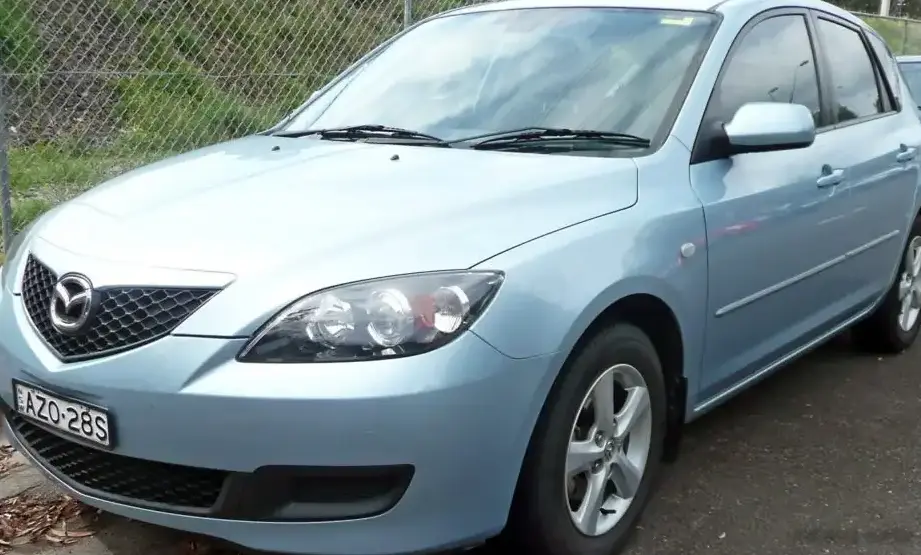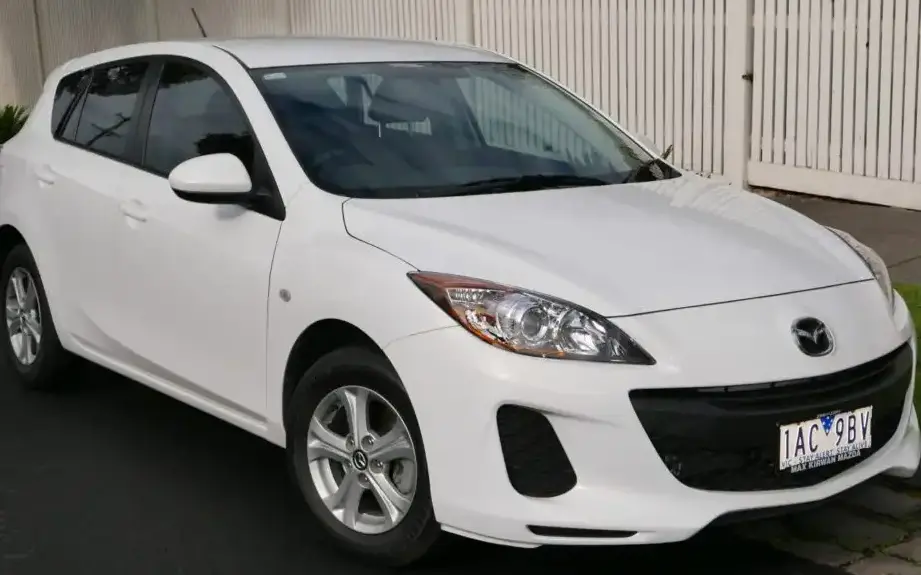
The Mazda 3 II Hatchback, specifically the 1.6i variant with an automatic transmission, was a key offering in Mazda’s lineup from 2011 to 2013. This model, part of the BL series following the 2009 facelift, aimed to provide an accessible entry point into the compact hatchback segment, balancing fuel efficiency with everyday usability. Positioned as a mid-range trim, it sat below the more powerful 2.0-liter engine options and the diesel variants, targeting buyers prioritizing affordability and ease of driving over outright performance. The 1.6i Automatic was primarily sold in European and Asian markets, where compact hatchbacks are highly popular, and represented a significant portion of the second-generation Mazda 3 sales.
Technical Specifications
| Brand | Mazda |
| Model | 3 |
| Generation | II Hatchback (BL, facelift 2011) |
| Type (Engine) | 1.6i (105 Hp) Automatic |
| Start of production | 2011 |
| End of production | 2013 |
| Powertrain Architecture | Internal Combustion engine |
| Body type | Hatchback |
| Seats | 5 |
| Doors | 5 |
| Fuel consumption (urban) | 10.2 l/100 km (23.1 US mpg, 27.7 UK mpg, 9.8 km/l) |
| Fuel consumption (extra urban) | 6.1 l/100 km (38.6 US mpg, 46.3 UK mpg, 16.4 km/l) |
| Fuel consumption (combined) | 7.6 l/100 km (30.9 US mpg, 37.2 UK mpg, 13.2 km/l) |
| CO2 emissions | 176 g/km |
| Fuel Type | Petrol (Gasoline) |
| Acceleration 0 – 100 km/h | 13.1 sec |
| Acceleration 0 – 62 mph | 13.1 sec |
| Acceleration 0 – 60 mph | 12.4 sec |
| Maximum speed | 173 km/h (107.5 mph) |
| Emission standard | Euro 5 |
| Weight-to-power ratio | 11.7 kg/Hp, 85.7 Hp/tonne |
| Weight-to-torque ratio | 8.4 kg/Nm, 118.4 Nm/tonne |
| Power | 105 Hp @ 6000 rpm |
| Power per litre | 65.7 Hp/l |
| Torque | 145 Nm @ 4000 rpm (106.95 lb.-ft. @ 4000 rpm) |
| Engine layout | Front, Transverse |
| Engine Model/Code | Z668, Z682 |
| Engine displacement | 1598 cm3 (97.52 cu. in.) |
| Number of cylinders | 4 |
| Engine configuration | Inline |
| Cylinder Bore | 78 mm (3.07 in.) |
| Piston Stroke | 83.6 mm (3.29 in.) |
| Compression ratio | 10:1 |
| Number of valves per cylinder | 4 |
| Fuel injection system | Multi-port manifold injection |
| Engine aspiration | Naturally aspirated engine |
| Valvetrain | DOHC |
| Engine oil capacity | 3.9 l (4.12 US qt | 3.43 UK qt) |
| Coolant | 6 l (6.34 US qt | 5.28 UK qt) |
| Kerb Weight | 1225 kg (2700.66 lbs.) |
| Max. weight | 1790 kg (3946.27 lbs.) |
| Max load | 565 kg (1245.61 lbs.) |
| Trunk (boot) space – minimum | 340 l (12.01 cu. ft.) |
| Trunk (boot) space – maximum | 1360 l (48.03 cu. ft.) |
| Fuel tank capacity | 55 l (14.53 US gal | 12.1 UK gal) |
| Permitted trailer load without brakes | 550 kg (1212.54 lbs.) |
| Length | 4460 mm (175.59 in.) |
| Width | 1755 mm (69.09 in.) |
| Width including mirrors | 2002 mm (78.82 in.) |
| Height | 1470 mm (57.87 in.) |
| Wheelbase | 2640 mm (103.94 in.) |
| Front track | 1535 mm (60.43 in.) |
| Rear (Back) track | 1530 mm (60.24 in.) |
| Ride height (ground clearance) | 155 mm (6.1 in.) |
| Drag coefficient (Cd) | 0.29 |
| Minimum turning circle | 10.4 m (34.12 ft.) |
| Drivetrain Architecture | ICE, Front wheel drive |
| Number of gears and type of gearbox | 4 gears, automatic transmission |
| Front suspension | Independent, McPherson with coil spring and anti-roll bar |
| Rear suspension | Independent multi-link suspension |
| Front brakes | Ventilated discs |
| Rear brakes | Disc |
| Assisting systems | ABS (Anti-lock braking system) |
| Steering type | Steering rack and pinion |
| Power steering | Electric Steering |
| Tires size | 195/65 R15 |
| Wheel rims size | 15 |
Powertrain & Engine Architecture
The heart of the 1.6i Automatic Mazda 3 is the Z668 or Z682 engine, a 1.6-liter inline-four cylinder gasoline engine. This engine utilizes a naturally aspirated configuration and multi-point fuel injection. The engine’s double overhead camshaft (DOHC) valvetrain, with four valves per cylinder, contributes to its relatively efficient operation. The 105 horsepower output is achieved at 6000 rpm, while peak torque of 145 Nm (106.95 lb-ft) arrives at 4000 rpm. The engine’s compression ratio is 10:1. Paired with this engine is a four-speed automatic transmission. While not the most modern transmission by today’s standards, it provided smooth, if not particularly quick, gear changes. The transmission was chosen for its ease of use and appeal to drivers prioritizing comfort over sporty performance.
Driving Characteristics
The 1.6i Automatic Mazda 3 offered a comfortable, but not particularly exhilarating, driving experience. Acceleration from 0-60 mph took around 12.4 seconds, and 0-100 km/h in 13.1 seconds. The four-speed automatic transmission, while smooth, lacked the responsiveness of a manual gearbox or a more modern automatic with more gears. The gear ratios were tuned for fuel economy rather than performance, resulting in a noticeable delay during overtaking maneuvers. Compared to the 2.0-liter variants, the 1.6i felt noticeably slower, but it offered a more relaxed driving experience, particularly in urban environments. The automatic transmission also made it more accessible to drivers unfamiliar with manual gearboxes.
Equipment & Trim Levels
The 1.6i Automatic trim typically included standard features such as air conditioning, power windows, power door locks, and a basic audio system with CD player. Safety features included ABS (Anti-lock Braking System) and front airbags. Higher trim levels offered options like alloy wheels, a more advanced audio system, and climate control. Interior upholstery was typically cloth, with a functional, if somewhat basic, dashboard layout. Optional extras included a sunroof, fog lights, and parking sensors.
Chassis & Braking
The Mazda 3 II Hatchback featured an independent suspension system, with a McPherson strut setup at the front and a multi-link setup at the rear. This provided a good balance between ride comfort and handling. The front brakes were ventilated discs, while the rear brakes were solid discs. The electric power steering offered light and easy steering, making it ideal for city driving. The 15-inch wheels were fitted with 195/65 R15 tires, providing adequate grip for everyday driving conditions.
Market Reception & Comparison
The 1.6i Automatic Mazda 3 was generally well-received as an affordable and practical hatchback. Critics praised its fuel efficiency and comfortable ride, but noted its lack of outright performance. Compared to the 2.0-liter variants, the 1.6i offered significantly lower running costs, but at the expense of driving enjoyment. The diesel variants provided even better fuel economy, but were typically more expensive to purchase. The 1.6i Automatic appealed to buyers who prioritized value for money and ease of use over sporty performance.
Legacy
The Z668/Z682 engine, while not known for being particularly groundbreaking, proved to be relatively reliable. Common issues were typically related to routine maintenance items such as spark plugs, air filters, and oil leaks. The four-speed automatic transmission, while dated, also proved to be reasonably durable with proper servicing. Today, the 1.6i Automatic Mazda 3 can be found on the used car market at very affordable prices. It represents a practical and economical option for buyers seeking a reliable and fuel-efficient hatchback, although potential buyers should be aware of its limited performance and the age-related wear and tear that may be present.