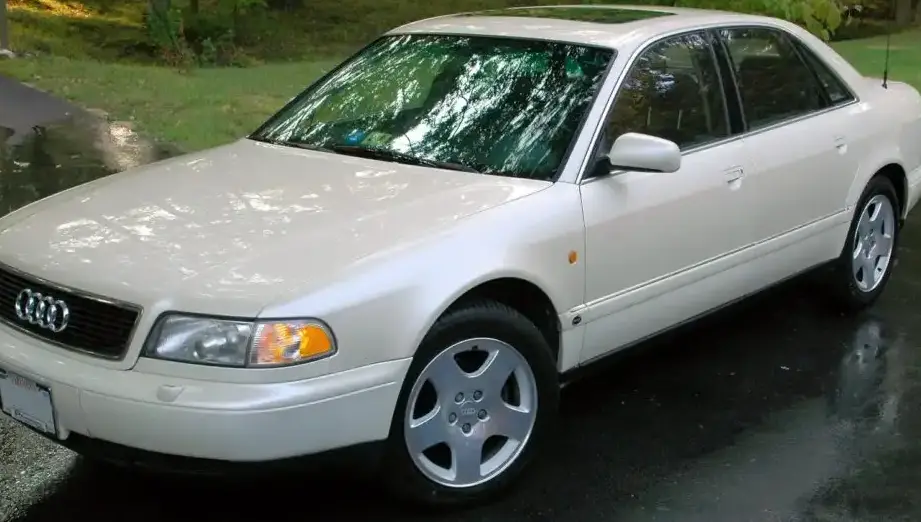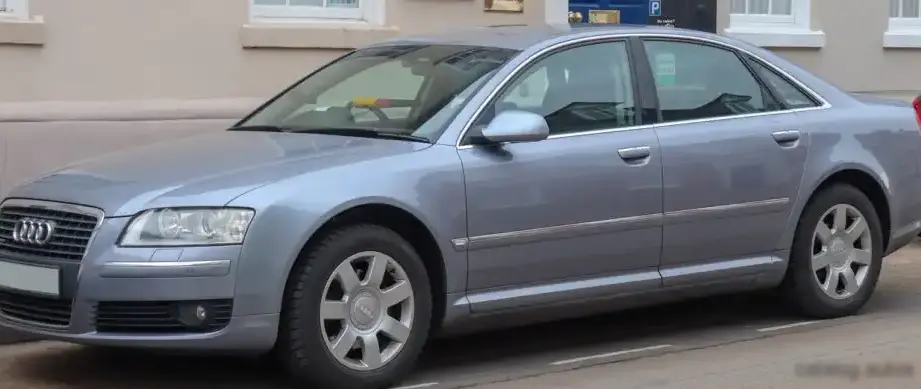
The Audi A8 (D3/4E) facelift of 2005, specifically the 4.2 FSI V8 variant with the quattro all-wheel drive system and Tiptronic automatic transmission, represented a significant evolution of Audi’s flagship sedan. Produced from 2006 to 2007, this model sat at the top of the A8 range, offering a blend of luxury, performance, and advanced technology. It was positioned as a direct competitor to the BMW 7 Series and Mercedes-Benz S-Class, aiming to deliver a more sporting driving experience within the luxury segment. This iteration of the A8 built upon the foundation of the D3 platform (internally designated 4E after the facelift), incorporating Audi’s signature quattro all-wheel drive and a sophisticated automatic transmission.
Technical Specifications
| Brand | Audi |
| Model | A8 |
| Generation | A8 (D3, 4E, facelift 2005) |
| Type (Engine) | 4.2 FSI V8 (350 Hp) quattro Tiptronic |
| Start of production | 2006 |
| End of production | 2007 |
| Powertrain Architecture | Internal Combustion engine |
| Body type | Sedan |
| Seats | 5 |
| Doors | 4 |
| Fuel consumption (economy) – urban (NEDC) | 15.7 l/100 km (15 US mpg, 18 UK mpg, 6.4 km/l) |
| Fuel consumption (economy) – extra urban (NEDC) | 8.2 l/100 km (28.7 US mpg, 34.4 UK mpg, 12.2 km/l) |
| Fuel consumption (economy) – combined (NEDC) | 10.9 l/100 km (21.6 US mpg, 25.9 UK mpg, 9.2 km/l) |
| CO2 emissions (NEDC) | 259 g/km |
| Fuel Type | Petrol (Gasoline) |
| Acceleration 0 – 100 km/h | 6.1 sec |
| Acceleration 0 – 62 mph | 6.1 sec |
| Acceleration 0 – 60 mph | 5.9 sec |
| Maximum speed | 250 km/h (155.34 mph), Electronically limited |
| Emission standard | Euro 4 |
| Weight-to-power ratio | 5.6 kg/Hp, 179.9 Hp/tonne |
| Weight-to-torque ratio | 4.4 kg/Nm, 226.2 Nm/tonne |
| Power | 350 Hp @ 6800 rpm |
| Power per litre | 84.1 Hp/l |
| Torque | 440 Nm @ 3500 rpm (324.53 lb.-ft. @ 3500 rpm) |
| Engine layout | Front, Longitudinal |
| Engine Model/Code | BVJ |
| Engine displacement | 4163 cm3 (254.04 cu. in.) |
| Number of cylinders | 8 |
| Engine configuration | V-engine |
| Cylinder Bore | 84.5 mm (3.33 in.) |
| Piston Stroke | 92.8 mm (3.65 in.) |
| Compression ratio | 12.5:1 |
| Number of valves per cylinder | 4 |
| Fuel injection system | Direct injection |
| Engine aspiration | Naturally aspirated engine |
| Valvetrain | DOHC |
| Engine oil capacity | 8.4 l (8.88 US qt | 7.39 UK qt) |
| Coolant | 12 l (12.68 US qt | 10.56 UK qt) |
| Kerb Weight | 1945 kg (4287.99 lbs.) |
| Trunk (boot) space – minimum | 413 l (14.58 cu. ft.) |
| Fuel tank capacity | 90 l (23.78 US gal | 19.8 UK gal) |
| Length | 5062 mm (199.29 in.) |
| Width | 1894 mm (74.57 in.) |
| Width including mirrors | 2028 mm (79.84 in.) |
| Height | 1444 mm (56.85 in.) |
| Wheelbase | 2944 mm (115.91 in.) |
| Front track | 1629 mm (64.13 in.) |
| Rear (Back) track | 1615 mm (63.58 in.) |
| Ride height (ground clearance) | 120 mm (4.72 in.) |
| Drag coefficient (Cd) | 0.27 |
| Minimum turning circle (turning diameter) | 12.5 m (41.01 ft.) |
| Drivetrain Architecture | The Internal combustion engine (ICE) drives permanently the four wheels of the vehicle. |
| Drive wheel | All wheel drive (4×4) |
| Number of gears and type of gearbox | 6 gears, automatic transmission Tiptronic |
| Front suspension | Air suspension |
| Rear suspension | Air suspension |
| Front brakes | Ventilated discs, 360×34 mm |
| Rear brakes | Ventilated discs, 310×22 mm |
| Assisting systems | ABS (Anti-lock braking system) |
| Steering type | Steering rack and pinion |
| Power steering | Electric Steering |
| Tires size | 235/55 R17; 235/50 R18; 255/45 R18; 255/40 R19; 275/35 R20 |
| Wheel rims size | 8J x 17; 8J x 18; 8.5J x 18; 8.5J x 19; 9J x 20 |
Powertrain & Engine Architecture
The heart of this A8 variant is the 4.2-liter BVJ engine, a naturally aspirated V8 featuring Audi’s FSI (Fuel Stratified Injection) direct injection technology. This system allowed for precise fuel delivery, enhancing both power and efficiency. The engine produced 350 horsepower at 6800 rpm and 440 Nm (324.53 lb-ft) of torque at 3500 rpm. The engine utilized a double overhead camshaft (DOHC) valvetrain with four valves per cylinder, contributing to its high-revving nature. Paired with this engine was the six-speed Tiptronic automatic transmission, a torque converter-based unit offering both fully automatic operation and manual gear selection via steering wheel-mounted paddles or the gear selector. The Tiptronic transmission was specifically tuned to complement the V8’s power delivery, providing smooth shifts and responsive performance.
Driving Characteristics
The 4.2 FSI with Tiptronic delivered a refined and capable driving experience. While not as overtly sporty as some of its rivals, the A8 offered strong acceleration – 0 to 60 mph in around 5.9 seconds – and a comfortable ride thanks to the standard air suspension. The Tiptronic transmission, while smooth, wasn’t as quick-shifting as some dual-clutch transmissions that emerged later. The quattro all-wheel drive system provided excellent traction in all weather conditions, enhancing stability and confidence. Compared to the 3.2-liter V6 A8, the 4.2 offered significantly more power and torque, resulting in a more effortless driving experience, particularly during highway overtaking. It also felt more substantial and planted than the diesel variants, like the 3.0 TDI, though the diesel offered superior fuel economy.
Equipment & Trim Levels
The 4.2 FSI quattro Tiptronic typically came well-equipped, reflecting its position as the range-topping model. Standard features included leather upholstery, power-adjustable and heated front seats, a premium audio system, automatic climate control, and a sunroof. Optional extras included adaptive cruise control, a navigation system, rear seat entertainment, and upgraded leather packages. The interior design emphasized luxury and sophistication, with high-quality materials and a clean, understated aesthetic. Dashboard configuration was generally consistent across the A8 range, but the 4.2 often featured unique trim accents and badging.
Chassis & Braking
The A8’s chassis was designed to provide a balance of comfort and handling. The standard air suspension offered adjustable ride height and damping, allowing drivers to tailor the ride to their preferences. The 4.2 FSI models were equipped with larger brakes than the lower-trim levels, featuring ventilated discs at all four corners. Front brakes measured 360x34mm, while rear brakes were 310x22mm. Anti-lock braking system (ABS) was standard, along with electronic stability control. The suspension geometry was optimized to minimize body roll and provide precise steering response.
Market Reception & Comparison
Critics generally praised the A8 4.2 FSI for its refined engine, comfortable ride, and luxurious interior. However, some noted that the Tiptronic transmission wasn’t as engaging as other options, and fuel economy was relatively poor compared to its competitors. Compared to the BMW 7 Series, the A8 was often seen as offering a more understated and technologically advanced experience. Against the Mercedes-Benz S-Class, it was considered a more driver-focused alternative. The 4.2 FSI’s higher price point and fuel consumption limited its appeal to a smaller segment of the luxury car market.
Legacy
The 4.2 FSI V8 engine, while powerful, has proven to be relatively reliable, though preventative maintenance is crucial. Common issues include carbon buildup on the intake valves (a characteristic of direct injection engines) and potential oil leaks. The Tiptronic transmission, if properly maintained, is generally durable, but rebuilds can be expensive. Today, the A8 4.2 FSI represents a compelling value in the used luxury car market, offering a significant amount of performance and features for the price. However, potential buyers should be prepared for higher maintenance costs compared to the more common V6 or diesel variants. Its blend of luxury, performance, and technology continues to make it a desirable choice for enthusiasts seeking a sophisticated and capable grand tourer.