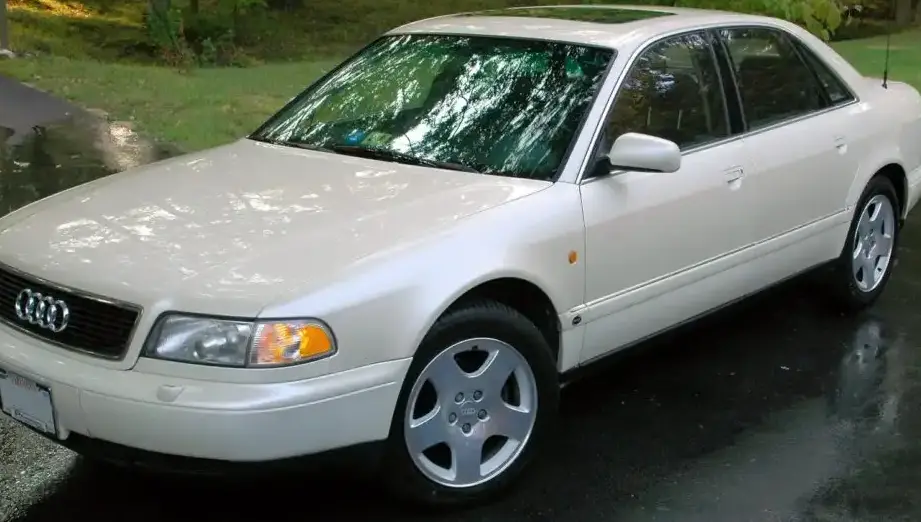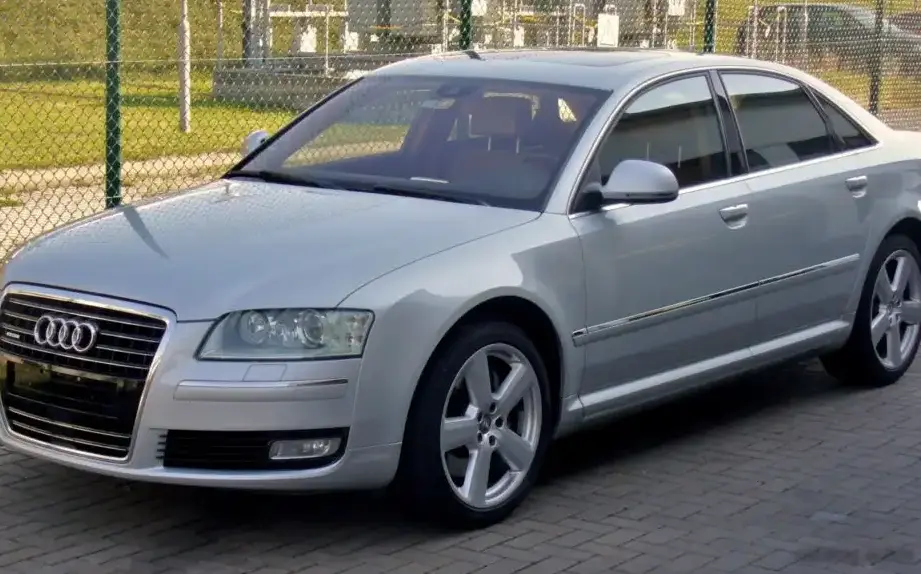
The Audi A8 (D3/4E) facelift of 2007, specifically the 2.8 FSI e V6 variant paired with the Multitronic continuously variable transmission (CVT), represented a key offering in Audi’s flagship sedan lineup. Produced from September 2008 to August 2010, this model aimed to provide a balance of performance, efficiency, and luxury within the A8 range. It sat as a mid-range option, positioned below the more powerful 3.0 TDI and 4.2 FSI models, and above any base engine offerings in certain markets. The D3/4E generation A8, launched in 2003, was a significant step forward for Audi, introducing all-aluminum construction (Audi Space Frame) and advanced technology, and the 2007 facelift refined the design and powertrain options.
Technical Specifications
| Brand | Audi |
| Model | A8 |
| Generation | A8 (D3, 4E, facelift 2007) |
| Type (Engine) | 2.8 FSI e V6 (210 Hp) Multitronic |
| Start of production | September, 2008 |
| End of production | August, 2010 |
| Powertrain Architecture | Internal Combustion engine |
| Body type | Sedan |
| Seats | 5 |
| Doors | 4 |
| Fuel consumption (urban) | 11.8 l/100 km (19.9 US mpg, 23.9 UK mpg, 8.5 km/l) |
| Fuel consumption (extra urban) | 6.3 l/100 km (37.3 US mpg, 44.8 UK mpg, 15.9 km/l) |
| Fuel consumption (combined) | 8.3 l/100 km (28.3 US mpg, 34 UK mpg, 12 km/l) |
| CO2 emissions | 199 g/km |
| Fuel Type | Petrol (Gasoline) |
| Acceleration 0 – 100 km/h | 8 sec |
| Acceleration 0 – 62 mph | 8 sec |
| Acceleration 0 – 60 mph | 7.6 sec |
| Maximum speed | 238 km/h (147.89 mph) |
| Emission standard | Euro 4 |
| Weight-to-power ratio | 8 kg/Hp, 124.3 Hp/tonne |
| Weight-to-torque ratio | 6 kg/Nm, 165.7 Nm/tonne |
| Power | 210 Hp @ 5500-6800 rpm |
| Power per litre | 75.7 Hp/l |
| Torque | 280 Nm @ 3000-5000 rpm (206.52 lb.-ft. @ 3000-5000 rpm) |
| Engine layout | Front, Longitudinal |
| Engine Model/Code | BDX |
| Engine displacement | 2773 cm3 (169.22 cu. in.) |
| Number of cylinders | 6 |
| Engine configuration | V-engine |
| Cylinder Bore | 84.5 mm (3.33 in.) |
| Piston Stroke | 82.4 mm (3.24 in.) |
| Compression ratio | 12.5:1 |
| Number of valves per cylinder | 4 |
| Fuel injection system | Direct injection |
| Engine aspiration | Naturally aspirated engine |
| Valvetrain | DOHC |
| Engine oil capacity | 6.2 l (6.55 US qt | 5.46 UK qt) |
| Coolant | 12 l (12.68 US qt | 10.56 UK qt) |
| Kerb Weight | 1690 kg (3725.81 lbs.) |
| Max. weight | 2290 kg (5048.59 lbs.) |
| Max load | 600 kg (1322.77 lbs.) |
| Trunk (boot) space – minimum | 500 l (17.66 cu. ft.) |
| Fuel tank capacity | 90 l (23.78 US gal | 19.8 UK gal) |
| Max. roof load | 100 kg (220.46 lbs.) |
| Permitted towbar download | 95 kg (209.44 lbs.) |
| Length | 5062 mm (199.29 in.) |
| Width | 1894 mm (74.57 in.) |
| Height | 1444 mm (56.85 in.) |
| Wheelbase | 2944 mm (115.91 in.) |
| Front track | 1622 mm (63.86 in.) |
| Rear (Back) track | 1609 mm (63.35 in.) |
| Drag coefficient (Cd) | 0.27 |
| Minimum turning circle | 12.1 m (39.7 ft.) |
| Drivetrain Architecture | The Internal combustion engine (ICE) drives the front wheels of the vehicle. |
| Drive wheel | Front wheel drive |
| Number of gears and type of gearbox | automatic transmission Multitronic |
| Front suspension | Independent multi-link suspension |
| Rear suspension | Independent on trapezoidal lever |
| Front brakes | Ventilated discs |
| Rear brakes | Ventilated discs |
| Assisting systems | ABS (Anti-lock braking system) |
| Steering type | Steering rack and pinion |
| Power steering | Hydraulic Steering |
| Tires size | 235/55 R17 |
| Wheel rims size | 8J x 17 |
Powertrain & Engine Architecture
The 2.8 FSI e V6 engine, designated as the BDX engine code, is a 2.8-liter (2773 cc) naturally aspirated V6. “FSI” stands for Fuel Stratified Injection, Audi’s direct injection technology. This system injects fuel directly into the combustion chamber, allowing for more precise fuel control, higher compression ratios (12.5:1 in this case), and improved efficiency. The engine features a double overhead camshaft (DOHC) valvetrain with four valves per cylinder. The ‘e’ designation indicated a version optimized for reduced emissions. The Multitronic transmission is a continuously variable transmission (CVT) offering smooth, stepless gear changes. Unlike traditional automatic transmissions with fixed gear ratios, the Multitronic uses a chain-driven system to provide an infinite number of ratios within its range, optimizing engine efficiency and responsiveness.
Driving Characteristics
The 210 horsepower and 280 Nm (206.52 lb-ft) of torque delivered by the 2.8 FSI engine, coupled with the Multitronic transmission, provided a comfortable and refined driving experience. Acceleration from 0 to 60 mph took approximately 7.6 seconds, and 0-100 km/h in 8 seconds, making it adequately quick for everyday driving. However, it wasn’t as sporty or responsive as the higher-output 3.0 TDI or 4.2 FSI variants. The Multitronic transmission, while smooth, sometimes lacked the immediate response of a traditional automatic or manual gearbox. The CVT’s programming prioritized fuel efficiency, which could result in a slightly less engaging driving experience. The gear ratios were optimized for cruising and fuel economy, rather than aggressive acceleration.
Equipment & Trim Levels
The 2.8 FSI e Multitronic A8 typically came standard with a generous array of features, reflecting its luxury positioning. These included leather upholstery, power-adjustable front seats with memory function, dual-zone automatic climate control, a premium audio system, and parking sensors. Optional extras included a sunroof, upgraded leather packages, a rear seat entertainment system, adaptive cruise control, and advanced navigation systems. The interior trim could be customized with various wood or aluminum inlays. Exterior options included different wheel designs and metallic paint finishes.
Chassis & Braking
The A8’s chassis featured an independent multi-link suspension at the front and an independent trapezoidal lever suspension at the rear, providing a comfortable ride and good handling characteristics. The 2.8 FSI model typically came equipped with ventilated disc brakes on all four wheels, along with ABS (Anti-lock Braking System). The suspension was tuned for comfort, prioritizing a smooth ride over aggressive cornering. Stabilizer bars were fitted front and rear to reduce body roll.
Market Reception & Comparison
The 2.8 FSI e Multitronic A8 was generally well-received by critics as a comfortable and refined luxury sedan. It offered a good balance of performance and fuel economy, making it an attractive option for buyers who didn’t require the outright power of the larger engines. However, some reviewers noted that the Multitronic transmission could feel less responsive than traditional automatics, and the engine lacked the punch of its more powerful siblings. Compared to the 3.0 TDI, the 2.8 FSI offered less torque and slightly lower fuel economy, but it was quieter and smoother. The 4.2 FSI provided significantly more power but came at a higher price and with increased fuel consumption.
Legacy
The BDX 2.8 FSI engine, when paired with the Multitronic transmission, has proven to be reasonably reliable, although the Multitronic transmission itself is known to require more diligent maintenance than a traditional automatic. Regular fluid changes are crucial to prevent premature wear. The direct injection system can be susceptible to carbon buildup over time, potentially affecting performance. In the used car market, the 2.8 FSI A8 represents a more affordable entry point into A8 ownership, offering a good level of luxury and refinement at a competitive price. However, potential buyers should be aware of the maintenance requirements of the Multitronic transmission and the potential for carbon buildup in the engine.