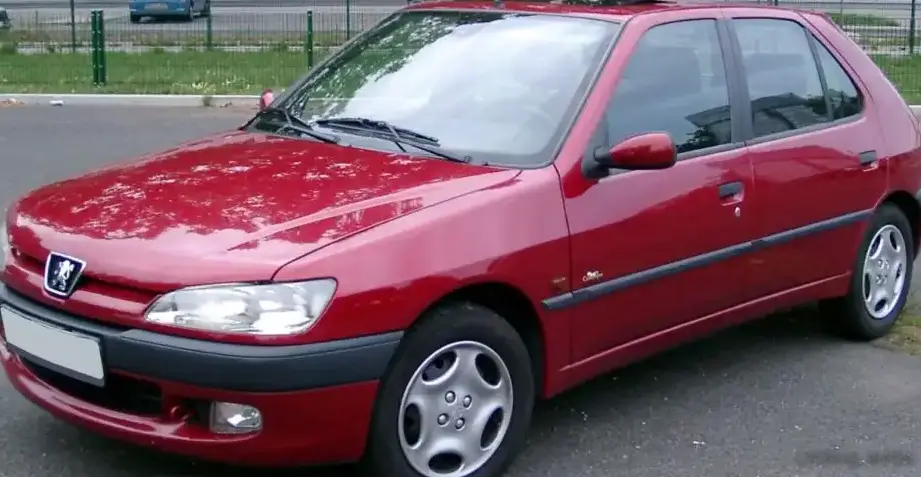
The Peugeot 306, particularly the facelifted model introduced in 1997, represented a significant step forward for the French automaker in the competitive compact hatchback segment. Production of the 1.6i (98 hp) variant ran from 2000 to 2002, and it occupied a crucial position in the 306 lineup as an accessible, economical option for buyers prioritizing practicality and affordability. This model was part of the broader 306 series, which spanned from 1993 to 2002 and became a mainstay for Peugeot, known for its comfortable ride and relatively spacious interior. The 1.6i served as a gateway into the 306 range, appealing to a wider audience than the more performance-oriented or diesel-powered versions.
Technical Specifications
| Brand | Peugeot |
| Model | 306 |
| Generation | 306 Hatchback (facelift 1997) |
| Type (Engine) | 1.6i (98 Hp) |
| Start of production | 2000 |
| End of production | 2002 |
| Powertrain Architecture | Internal Combustion engine |
| Body type | Hatchback |
| Seats | 5 |
| Doors | 5 |
| Fuel consumption (urban) | 10.5 l/100 km (22.4 US mpg, 26.9 UK mpg, 9.5 km/l) |
| Fuel consumption (extra urban) | 5.9 l/100 km (39.9 US mpg, 47.9 UK mpg, 16.9 km/l) |
| Fuel consumption (combined) | 7.6 l/100 km (30.9 US mpg, 37.2 UK mpg, 13.2 km/l) |
| Fuel Type | Petrol (Gasoline) |
| Acceleration 0 – 100 km/h | 10.3 sec |
| Acceleration 0 – 62 mph | 10.3 sec |
| Acceleration 0 – 60 mph | 9.8 sec |
| Maximum speed | 183 km/h (113.71 mph) |
| Weight-to-power ratio | 11.1 kg/Hp, 89.9 Hp/tonne |
| Weight-to-torque ratio | 7.9 kg/Nm, 126.6 Nm/tonne |
| Power | 98 Hp @ 5700 rpm |
| Power per litre | 61.8 Hp/l |
| Torque | 138 Nm @ 3250 rpm (101.78 lb.-ft. @ 3250 rpm) |
| Engine layout | Front, Transverse |
| Engine Model/Code | NFT TU5JP |
| Engine displacement | 1587 cm3 (96.84 cu. in.) |
| Number of cylinders | 4 |
| Engine configuration | Inline |
| Cylinder Bore | 78.5 mm (3.09 in.) |
| Piston Stroke | 82 mm (3.23 in.) |
| Compression ratio | 9.6:1 |
| Number of valves per cylinder | 2 |
| Fuel injection system | Multi-port manifold injection |
| Engine aspiration | Naturally aspirated engine |
| Valvetrain | SOHC |
| Engine oil capacity | 3.2 l (3.38 US qt | 2.82 UK qt) |
| Coolant capacity | 6.1 l (6.45 US qt | 5.37 UK qt) |
| Kerb Weight | 1090 kg (2403.04 lbs.) |
| Max. weight | 1555 kg (3428.19 lbs.) |
| Max load | 465 kg (1025.15 lbs.) |
| Trunk (boot) space – minimum | 338 l (11.94 cu. ft.) |
| Trunk (boot) space – maximum | 1146 l (40.47 cu. ft.) |
| Fuel tank capacity | 60 l (15.85 US gal | 13.2 UK gal) |
| Length | 4030 mm (158.66 in.) |
| Width | 1689 mm (66.5 in.) |
| Height | 1380 mm (54.33 in.) |
| Wheelbase | 2580 mm (101.57 in.) |
| Front track | 1454 mm (57.24 in.) |
| Rear track | 1423 mm (56.02 in.) |
| Ride height (ground clearance) | 120 mm (4.72 in.) |
| Drag coefficient (Cd) | 0.33 |
| Minimum turning circle | 11.0 m (36.09 ft.) |
| Drivetrain Architecture | Front wheel drive |
| Number of gears | 5 |
| Gearbox type | Manual transmission |
| Front suspension | Trailing arm |
| Rear suspension | Trailing arm |
| Front brakes | Ventilated discs |
| Rear brakes | Drum |
| Assisting systems | ABS (Anti-lock braking system) |
| Steering type | Steering rack and pinion |
| Tires size | 195/55 R15 H |
| Wheel rims size | 15 |
Powertrain & Engine Architecture
The heart of the 306 1.6i was the Peugeot NFT (TU5JP) engine, a 1.6-liter inline-four cylinder petrol engine. This engine was a staple in many Peugeot and Citroën vehicles of the era. It featured a single overhead camshaft (SOHC) valvetrain operating two valves per cylinder. Fuel delivery was handled by a multi-port fuel injection system, providing a balance between efficiency and performance. The engine produced 98 horsepower at 5700 rpm and 138 Nm (101.78 lb-ft) of torque at 3250 rpm. The engine’s design prioritized reliability and ease of maintenance. The 5-speed manual transmission was the standard offering, chosen for its efficiency and driver engagement. The transmission’s gear ratios were tuned for everyday driving, offering a good balance between acceleration and fuel economy.
Driving Characteristics
The 306 1.6i offered a comfortable and predictable driving experience. While not particularly sporty, the 98 hp engine provided adequate power for typical urban and highway driving. Acceleration from 0 to 60 mph took around 9.8 seconds, and the top speed was approximately 113.71 mph. The manual transmission allowed for precise gear changes, and the engine’s torque curve provided reasonable responsiveness. Compared to the more powerful 2.0-liter versions of the 306, the 1.6i felt less eager to rev, but it also offered better fuel economy. The suspension, featuring trailing arms at both the front and rear, provided a comfortable ride, absorbing bumps and imperfections in the road effectively.
Equipment & Trim Levels
The 1.6i trim level typically included basic amenities such as power steering, central locking, and an adjustable steering column. Interior upholstery was usually cloth, and the dashboard featured a straightforward layout with easy-to-read gauges. Optional extras included air conditioning, electric windows, and a radio/cassette player. The 306 1.6i was often seen as a practical and well-equipped vehicle for its price point, making it a popular choice for families and first-time car buyers.
Chassis & Braking
The 306 1.6i utilized a front-wheel-drive chassis with a MacPherson strut front suspension and a trailing arm rear suspension. The front brakes were ventilated discs, providing good stopping power, while the rear brakes were drums. An Anti-lock Braking System (ABS) was often included as standard equipment, enhancing safety. The suspension setup was tuned for comfort, prioritizing ride quality over sporty handling. The 195/55 R15 tires provided adequate grip in most driving conditions.
Market Reception & Comparison
The Peugeot 306 1.6i was generally well-received by automotive critics as a practical and affordable hatchback. It was praised for its comfortable ride, spacious interior, and fuel efficiency. However, some critics noted that the engine lacked the punch of the more powerful versions. Compared to rivals such as the Volkswagen Golf and Ford Focus, the 306 1.6i offered a competitive package in terms of price and features. Fuel economy was a strong point, with combined figures around 30.9 US mpg. Reliability was generally good, although some owners reported minor issues with the electrical system.
Legacy
The Peugeot 306 1.6i remains a popular choice among used car buyers looking for an affordable and reliable hatchback. The NFT (TU5JP) engine is known for its durability, and parts are readily available. While not a particularly collectible model, the 306 1.6i represents a significant chapter in Peugeot’s history, demonstrating the automaker’s commitment to producing practical and well-engineered vehicles. Today, well-maintained examples can still provide years of reliable service, making them a sensible option for budget-conscious drivers.