
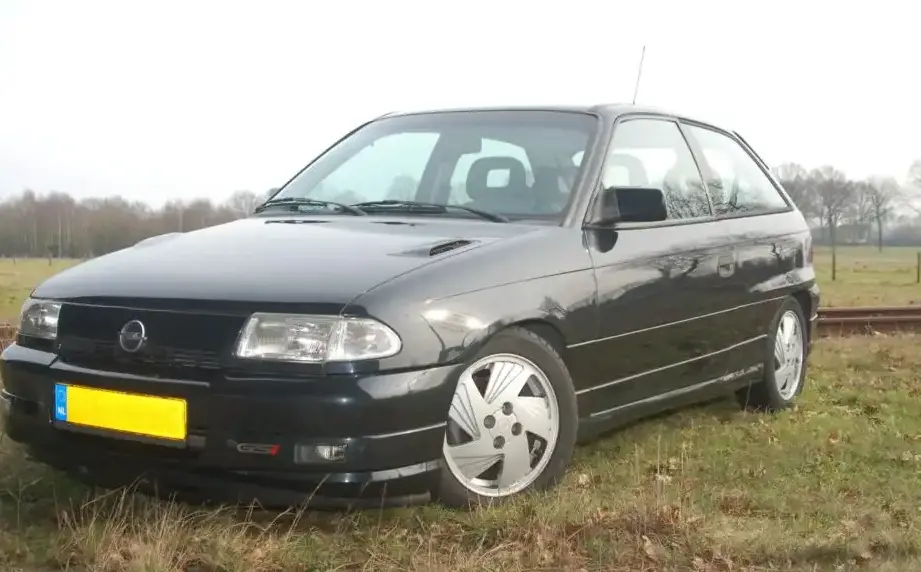
The Opel Astra F 2.0i (115 hp) was a variant of the Astra F, produced between October 1991 and March 1993. Positioned as a mid-range offering within the Astra F lineup, it provided a step up in performance from the base 1.4 and 1.6-liter models, while remaining more accessible than the later, more powerful 2.0 16V versions. The Astra F, launched in 1991, represented a significant leap forward for Opel, built upon the GM T-platform (also known as the 1HX0/A3 platform) and offering improved styling, safety, and technology compared to its predecessor, the Astra GTE. This 2.0i model aimed to balance performance with practicality, appealing to buyers seeking a comfortable and capable family hatchback.
Technical Specifications
| Brand | Opel |
| Model | Astra |
| Generation | Astra F |
| Type (Engine) | 2.0i (115 Hp) |
| Start of production | October, 1991 |
| End of production | March, 1993 |
| Powertrain Architecture | Internal Combustion engine |
| Body type | Hatchback |
| Seats | 5 |
| Doors | 3-5 |
| Fuel consumption (combined) | 8 l/100 km |
| Fuel consumption (US mpg) | 29.4 US mpg |
| Fuel consumption (UK mpg) | 35.3 UK mpg |
| Fuel consumption (km/l) | 12.5 km/l |
| CO2 emissions | 190 g/km |
| Fuel Type | Petrol (Gasoline) |
| Acceleration 0 – 100 km/h | 9.5 sec |
| Acceleration 0 – 62 mph | 9.5 sec |
| Acceleration 0 – 60 mph | 9 sec |
| Maximum speed | 200 km/h (124.27 mph) |
| Emission standard | Euro 1 |
| Weight-to-power ratio | 9 kg/Hp, 110.6 Hp/tonne |
| Weight-to-torque ratio | 6.1 kg/Nm, 163.5 Nm/tonne |
| Power | 115 Hp @ 5400 rpm |
| Power per litre | 57.6 Hp/l |
| Torque | 170 Nm @ 2600 rpm (125.39 lb.-ft. @ 2600 rpm) |
| Engine layout | Front, Transverse |
| Engine Model/Code | C20NE |
| Engine displacement | 1998 cm3 (121.93 cu. in.) |
| Number of cylinders | 4 |
| Engine configuration | Inline |
| Cylinder Bore | 86 mm (3.39 in.) |
| Piston Stroke | 86 mm (3.39 in.) |
| Compression ratio | 9.2:1 |
| Number of valves per cylinder | 2 |
| Fuel injection system | Multi-port manifold injection |
| Engine aspiration | Naturally aspirated engine |
| Valvetrain | SOHC |
| Engine oil capacity | 4 l (4.23 US qt | 3.52 UK qt) |
| Coolant capacity | 7 l (7.4 US qt | 6.16 UK qt) |
| Kerb Weight | 1040/1060 kg (2292.81 lbs.) |
| Max. weight | 1555 kg (3428.19 lbs.) |
| Max load | 495-515 kg (1091.29 – 1135.38 lbs.) |
| Trunk (boot) space – minimum | 360 l (12.71 cu. ft.) |
| Trunk (boot) space – maximum | 1200 l (42.38 cu. ft.) |
| Fuel tank capacity | 52 l (13.74 US gal | 11.44 UK gal) |
| Length | 4051 mm (159.49 in.) |
| Width | 1688 mm (66.46 in.) |
| Width including mirrors | 1795 mm (70.67 in.) |
| Height | 1410 mm (55.51 in.) |
| Wheelbase | 2517 mm (99.09 in.) |
| Front track | 1424 mm (56.06 in.) |
| Rear (Back) track | 1423 mm (56.02 in.) |
| Ride height (ground clearance) | 135 mm (5.31 in.) |
| Drag coefficient (Cd) | 0.32 |
| Minimum turning circle | 10.5 m (34.45 ft.) |
| Drivetrain Architecture | The Internal combustion engine (ICE) drives the front wheels of the vehicle. |
| Drive wheel | Front wheel drive |
| Number of gears and type of gearbox | 5 gears, manual transmission |
| Front brakes | Ventilated discs |
| Rear brakes | Drum |
| Steering type | Steering rack and pinion |
| Tires size | 185/60 R14 82S |
| Wheel rims size | 5.5J x 14 ET49 |
Powertrain & Engine Architecture
The heart of the Astra F 2.0i was the C20NE engine, an 1,998 cc (121.93 cu. in.) inline-four cylinder gasoline engine. This engine featured a single overhead camshaft (SOHC) valvetrain operating two valves per cylinder. It utilized Bosch Motronic multi-port fuel injection, a system that improved fuel efficiency and reduced emissions compared to earlier carbureted Opel engines. The C20NE was known for its relatively simple and robust design, contributing to its longevity. The engine produced 115 horsepower at 5,400 rpm and 170 Nm (125.39 lb-ft) of torque at 2,600 rpm. The five-speed manual transmission was the standard offering, providing a direct connection between the engine and the front wheels. The transmission’s gear ratios were tuned for a balance of acceleration and fuel economy, though it wasn’t particularly sporty compared to the later 16-valve versions.
Driving Characteristics
The 2.0i Astra F offered a noticeable improvement in performance over the lower-displacement models. Acceleration to 60 mph took approximately 9.5 seconds, and it could achieve a top speed of around 124 mph. While not a sports car, the 2.0i provided sufficient power for comfortable highway cruising and overtaking. The manual transmission allowed for good driver control, but the gear ratios weren’t optimized for aggressive driving. Compared to the 1.8-liter models, the 2.0i offered a more relaxed driving experience, with more torque available at lower engine speeds. However, it lacked the high-revving excitement of the 2.0 16V engines. The suspension provided a comfortable ride, but body roll was noticeable during cornering.
Equipment & Trim Levels
The Astra F 2.0i typically came equipped with features such as power steering, central locking, and electric front windows. Interior upholstery was generally cloth, with a simple and functional dashboard layout. Optional extras included a sunroof, alloy wheels, and upgraded audio systems. The trim level varied depending on the market, but generally, the 2.0i sat in the mid-range of the Astra F lineup, offering a good balance of features and affordability. Higher trim levels added features like air conditioning and more luxurious interior appointments.
Chassis & Braking
The Astra F utilized a MacPherson strut front suspension and a torsion beam rear suspension. The front brakes were ventilated discs, providing adequate stopping power, while the rear brakes were drums. This configuration was typical for vehicles in this class during the early 1990s. The chassis was relatively lightweight, contributing to the car’s agility. Stabilizer bars were fitted to both the front and rear axles to reduce body roll. The steering was a rack and pinion system, providing precise and responsive handling.
Market Reception & Comparison
The Astra F 2.0i was generally well-received by automotive critics. It was praised for its comfortable ride, spacious interior, and improved safety features. However, some critics noted that the engine lacked the refinement of some of its competitors. Compared to the 1.8-liter versions, the 2.0i offered better performance but at a slightly higher price point. Fuel economy was reasonable for the time, averaging around 29.4 mpg. Reliability was generally good, although the C20NE engine was known to be susceptible to oil leaks as it aged.
Legacy
The Opel Astra F 2.0i remains a popular choice among classic car enthusiasts. The C20NE engine is known for its durability and relatively simple maintenance requirements. Parts availability is generally good, although some components may be becoming increasingly difficult to find. Today, these Astras are often sought after as affordable and reliable classic hatchbacks, offering a nostalgic driving experience. The Astra F, in general, played a crucial role in establishing Opel as a major player in the European compact car market, and the 2.0i variant offered a compelling combination of performance, practicality, and affordability.
