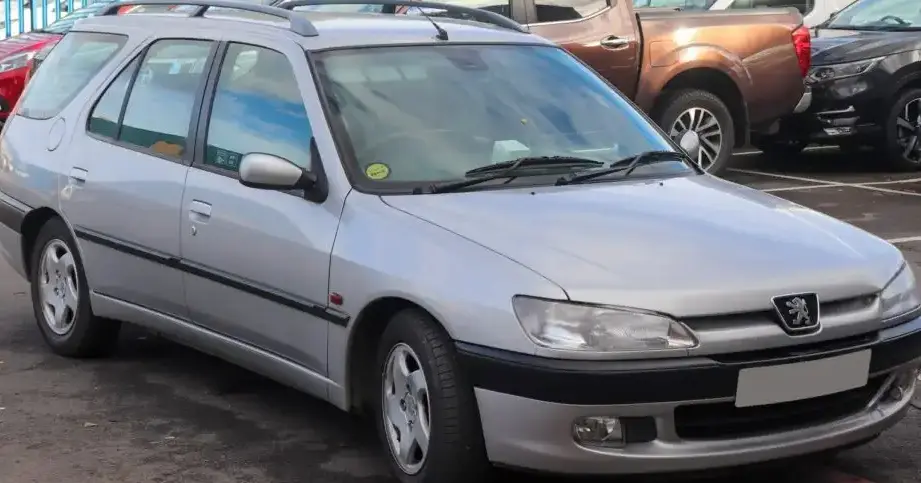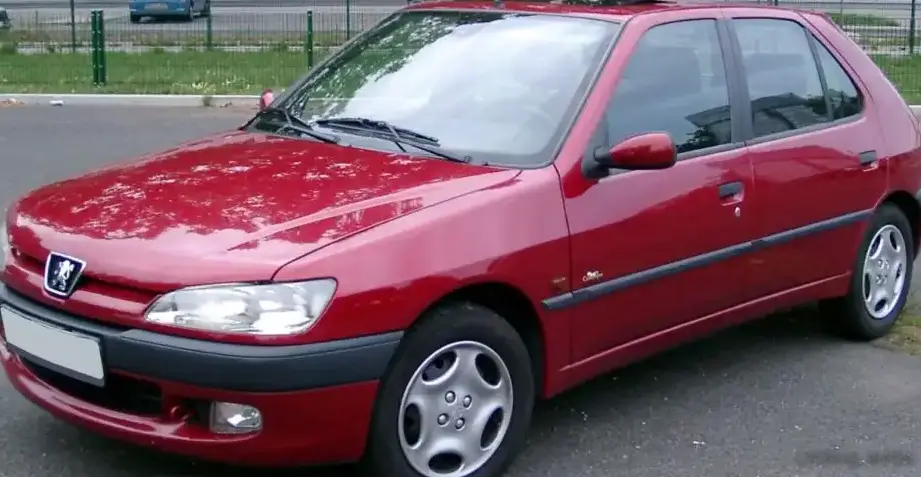
The Peugeot 306, produced from 1993 to 2002, was a small family car designed and manufactured by the French automaker Peugeot. The facelifted version introduced in 1997 brought revised styling and mechanical updates. Among the various engine and transmission combinations offered, the 1.8-liter (110 horsepower) 3-door hatchback represented a popular mid-range option, particularly in European markets. This variant aimed to balance performance with affordability, appealing to buyers seeking a practical and reasonably spirited vehicle.
Technical Specifications
| Brand | Peugeot |
| Model | 306 |
| Generation | 306 Hatchback (facelift 1997) |
| Type (Engine) | 1.8 (110 Hp) 3d |
| Start of production | 1997 |
| End of production | 2002 |
| Powertrain Architecture | Internal Combustion engine |
| Body type | Hatchback |
| Seats | 5 |
| Doors | 3 |
| Fuel consumption (urban) | 12 l/100 km (19.6 US mpg) |
| Fuel consumption (extra urban) | 6.3 l/100 km (37.3 US mpg) |
| Fuel Type | Petrol (Gasoline) |
| Acceleration 0 – 100 km/h | 11.2 sec |
| Acceleration 0 – 62 mph | 11.2 sec |
| Acceleration 0 – 60 mph | 10.6 sec |
| Maximum speed | 192 km/h (119.3 mph) |
| Weight-to-power ratio | 9.9 kg/Hp |
| Weight-to-torque ratio | 7 kg/Nm |
| Power | 110 Hp @ 5500 rpm |
| Torque | 155 Nm @ 4250 rpm (114.32 lb.-ft. @ 4250 rpm) |
| Engine layout | Front, Transverse |
| Engine Model/Code | LFY XU7JP4 |
| Engine displacement | 1761 cm3 (107.46 cu. in.) |
| Number of cylinders | 4 |
| Engine configuration | Inline |
| Cylinder Bore | 83 mm (3.27 in.) |
| Piston Stroke | 81.4 mm (3.2 in.) |
| Compression ratio | 10:1 |
| Number of valves per cylinder | 4 |
| Fuel injection system | Multi-port manifold injection |
| Engine aspiration | Naturally aspirated engine |
| Valvetrain | DOHC |
| Engine oil capacity | 4.3 l (4.54 US qt | 3.78 UK qt) |
| Coolant | 7.5 l (7.93 US qt | 6.6 UK qt) |
| Kerb Weight | 1085 kg (2392.02 lbs.) |
| Max. weight | 1560 kg (3439.21 lbs.) |
| Max load | 475 kg (1047.2 lbs.) |
| Trunk (boot) space – minimum | 340 l (12.01 cu. ft.) |
| Trunk (boot) space – maximum | 640 l (22.6 cu. ft.) |
| Fuel tank capacity | 60 l (15.85 US gal | 13.2 UK gal) |
| Length | 4030 mm (158.66 in.) |
| Width | 1690 mm (66.54 in.) |
| Height | 1350 mm (53.15 in.) |
| Wheelbase | 2580 mm (101.57 in.) |
| Front track | 1460 mm (57.48 in.) |
| Rear (Back) track | 1430 mm (56.3 in.) |
| Drivetrain Architecture | The Internal combustion engine (ICE) drives the front wheels of the vehicle. |
| Drive wheel | Front wheel drive |
| Number of gears and type of gearbox | 5 gears, manual transmission |
| Front suspension | Wishbone |
| Rear suspension | Trailing arm |
| Front brakes | Disc |
| Rear brakes | Drum |
| Assisting systems | ABS (Anti-lock braking system) |
| Steering type | Steering rack and pinion |
| Power steering | Hydraulic Steering |
| Tires size | 185/65 R14 |
Powertrain & Engine Architecture
The 1.8-liter engine, designated LFY and belonging to the XU7JP4 family, was a naturally aspirated, inline-four cylinder powerplant. It featured a double overhead camshaft (DOHC) valvetrain with four valves per cylinder, contributing to its relatively high output for its displacement. The engine utilized multi-port fuel injection, a common technology in the 1990s, for precise fuel delivery. The XU7JP4 engine was known for its robustness and relatively simple design, making it easier to maintain compared to more complex contemporary engines. The 306 1.8 typically came equipped with a five-speed manual transmission, providing a good balance between fuel efficiency and performance. The engine’s 10:1 compression ratio was a standard figure for the time, optimizing for both power and economy.
Driving Characteristics
The 110 horsepower output of the 1.8-liter engine provided adequate performance for everyday driving. Acceleration from 0 to 60 mph took around 10.6 seconds, and it could reach a top speed of approximately 119 mph. While not a sports car, the 1.8 offered a noticeable step up in performance compared to the base 1.4-liter models. The five-speed manual transmission allowed drivers to keep the engine in its optimal power band, providing responsive acceleration. Compared to the more powerful 2.0-liter 16V versions, the 1.8 felt less eager to rev, but it offered better fuel economy and a more relaxed driving experience. The 3-door configuration of this model contributed to a slightly lighter weight, enhancing its agility compared to the 5-door variant.
Equipment & Trim Levels
The 306 1.8 3-door typically came with a reasonable level of standard equipment. This included power steering, central locking, electric front windows, and an adjustable steering column. Interior upholstery was usually cloth, with a relatively simple dashboard layout. Optional extras included air conditioning, alloy wheels, a sunroof, and upgraded audio systems. The trim level often dictated the availability of these options, with higher trims offering more features as standard. The 1.8 model often sat in a middle ground, offering more comfort and features than the base models but lacking the premium appointments of the higher-spec versions.
Chassis & Braking
The 306 utilized a front-wheel-drive layout with a MacPherson strut front suspension and a trailing arm rear suspension. This setup provided a comfortable ride and predictable handling. The front brakes were typically ventilated discs, while the rear brakes were drums. Anti-lock Braking System (ABS) was often included as standard equipment, enhancing safety. The suspension was tuned for a balance between comfort and handling, making it suitable for both city driving and longer journeys. The 1.8 model’s weight was relatively well-distributed, contributing to its balanced handling characteristics.
Market Reception & Comparison
The Peugeot 306 1.8 was generally well-received by automotive critics as a practical and affordable family car. It was praised for its comfortable ride, decent performance, and relatively low running costs. Compared to rivals like the Volkswagen Golf and Ford Focus, the 306 offered a distinctive French flair and a comfortable interior. Fuel economy was considered good for its class, and the engine proved to be reliable. However, some critics noted that the interior plastics felt somewhat low-quality compared to some competitors. The 1.8-liter engine offered a good compromise between performance and economy, making it a popular choice for buyers who didn’t need the extra power of the 2.0-liter models.
Legacy
The Peugeot 306 1.8-liter engine, particularly the XU7JP4 variant, has proven to be a durable and reliable unit. Many examples are still on the road today, testament to its robust construction. While maintenance costs can increase with age, parts availability remains relatively good. In the used car market, the 306 1.8 is often sought after as an affordable and practical classic. Its simple mechanical design makes it relatively easy to maintain for DIY enthusiasts. The 306, in general, holds a nostalgic appeal for many drivers who remember it as a stylish and comfortable family car from the 1990s.