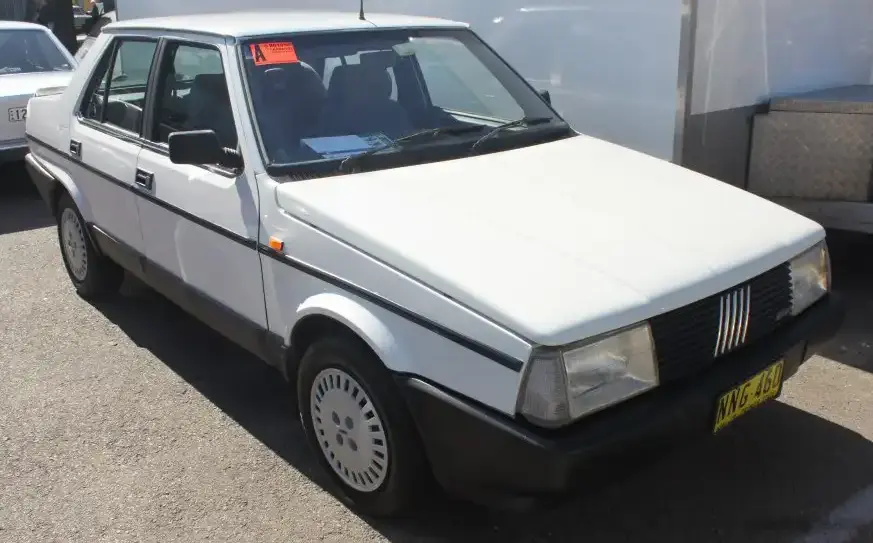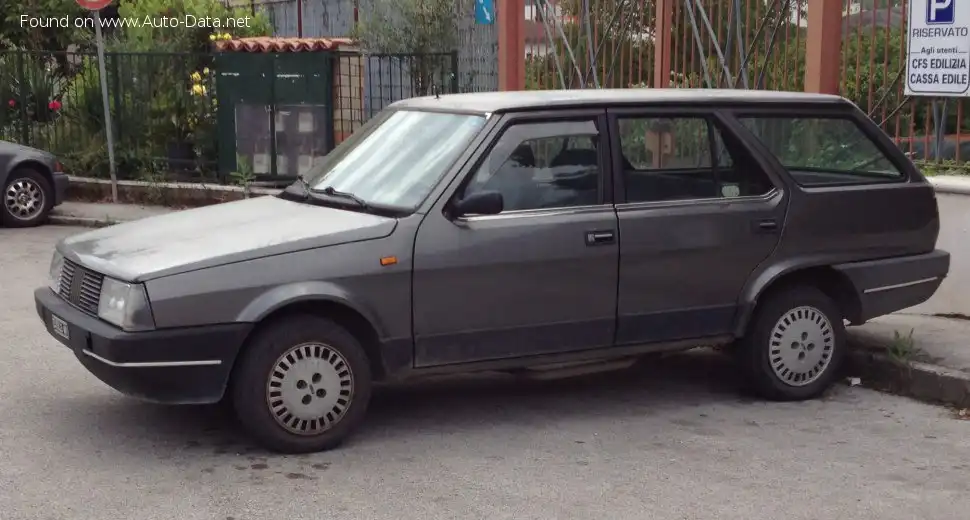
The Fiat Regata Weekend 80 Turbo Diesel 1.9, produced between 1986 and 1989, represented a practical and relatively efficient offering within the broader Fiat Regata lineup. The Regata, itself a replacement for the Strada, aimed to provide a modern, comfortable, and versatile vehicle for European families. The Weekend variant, a station wagon (estate) body style, specifically targeted buyers needing increased cargo capacity. This 80 horsepower turbocharged diesel version occupied a middle ground in the Regata Weekend range, offering a balance between fuel economy, usable performance, and affordability. It was positioned as a step up from the naturally aspirated diesel models, appealing to those who frequently travelled longer distances or required more pulling power.
Technical Specifications
| Brand | Fiat |
| Model | Regata |
| Generation | Regata Weekend |
| Type (Engine) | 80 Turbo Diesel 1.9 (80 Hp) |
| Start of production | 1986 |
| End of production | 1989 |
| Powertrain Architecture | Internal Combustion engine |
| Body type | Station wagon (estate) |
| Fuel Type | Diesel |
| Power | 80 Hp |
| Engine Model/Code | 831 D1.000 |
| Engine aspiration | Turbocharger |
| Engine oil capacity | 5 l (5.28 US qt | 4.4 UK qt) |
| Coolant capacity | 7.5 l (7.93 US qt | 6.6 UK qt) |
| Length | 4267 mm (167.99 in.) |
| Width | 1650 mm (64.96 in.) |
| Height | 1450 mm (57.09 in.) |
| Wheelbase | 2455 mm (96.65 in.) |
Powertrain & Engine Architecture
The heart of the Regata Weekend 80 Turbo Diesel was the Fiat 831 D1.000 engine, a 1.9-liter inline-four cylinder diesel. This engine was a significant step forward for Fiat, incorporating a turbocharger to boost power output. The turbocharger, a Garrett unit in many examples, forced more air into the cylinders, allowing for increased fuel combustion and a resulting power increase over the naturally aspirated versions of the same engine. The engine utilized indirect injection, a common diesel technology of the era, where fuel was sprayed into the pre-chamber before entering the main combustion chamber. This system contributed to quieter operation compared to direct injection diesels, but generally resulted in slightly lower efficiency. The engine featured a single overhead camshaft operating two valves per cylinder. While not particularly sophisticated by modern standards, this configuration proved reliable and relatively easy to maintain. The transmission paired with this engine was typically a four-speed automatic, although a five-speed manual was also available. The automatic transmission, while offering convenience, was known to slightly reduce fuel economy and responsiveness compared to the manual.
Driving Characteristics
The Regata Weekend 80 Turbo Diesel, with its automatic transmission, offered a comfortable, if not particularly sporty, driving experience. The 80 horsepower output, while modest, provided adequate power for cruising on highways and carrying a full load. Acceleration was not brisk, and overtaking required careful planning. The automatic transmission featured relatively widely spaced gear ratios, prioritizing fuel economy over rapid acceleration. The turbocharger did provide a noticeable boost in power once it spooled up, typically around 2000-2500 rpm, offering a surge of torque useful for climbing hills or passing slower vehicles. Compared to the naturally aspirated diesel Regata Weekends, the 80 Turbo Diesel offered a significantly improved driving experience, particularly at higher speeds and when loaded with passengers or cargo. However, it lacked the responsiveness and driver engagement of the manual transmission versions or the more powerful gasoline-powered Regatas.
Equipment & Trim Levels
The Regata Weekend 80 Turbo Diesel typically came equipped with a reasonable level of standard features for its time. These included cloth upholstery, a basic stereo system, and manual windows and door locks. Power steering was often included, but air conditioning was typically an optional extra. Interior trim was generally functional and durable, prioritizing practicality over luxury. The dashboard layout was straightforward and easy to use, with clearly marked gauges and controls. Optional extras included upgraded stereo systems, alloy wheels, and a sunroof. The trim level often dictated the availability of these options, with higher trims offering more standard features and a wider range of available extras. The Weekend trim itself focused on practicality, with features like a large cargo area, folding rear seats, and a durable interior designed to withstand the rigors of family life.
Chassis & Braking
The Regata Weekend featured a relatively conventional chassis design, with independent front suspension using MacPherson struts and a solid rear axle with leaf springs. This setup provided a comfortable ride, but handling was not particularly sharp. The suspension was tuned for comfort and stability, rather than sporty handling. Braking was typically accomplished with disc brakes on the front wheels and drum brakes on the rear. This configuration was common for vehicles in this price range during the 1980s. Stabilizer bars were often included, helping to reduce body roll during cornering. The braking system was adequate for normal driving conditions, but lacked the stopping power of more modern braking systems.
Market Reception & Comparison
The Fiat Regata Weekend 80 Turbo Diesel was generally well-received by European buyers seeking a practical and fuel-efficient station wagon. Critics praised its spacious interior, comfortable ride, and relatively low running costs. However, some criticized its lack of performance and somewhat dated interior design. Compared to other station wagons in its class, such as the Ford Sierra Estate or the Opel Ascona Caravan, the Regata Weekend offered a competitive level of practicality and fuel economy. The 80 Turbo Diesel variant offered a noticeable performance advantage over the naturally aspirated diesel models, but was less powerful than the gasoline-powered versions. Fuel economy was a key selling point, with the diesel engine offering significantly better mileage than its gasoline counterparts. Reliability was generally good, although the automatic transmission could be prone to issues if not properly maintained.
Legacy
The Fiat Regata Weekend 80 Turbo Diesel, while not a particularly iconic vehicle, remains a fondly remembered example of 1980s European automotive design. The 831 D1.000 engine proved to be a durable and reliable powerplant, and many examples are still on the road today. In the used car market, these vehicles are often sought after by enthusiasts and collectors looking for a classic European station wagon. The combination of practicality, fuel efficiency, and relative affordability has ensured its continued appeal. While maintenance can be challenging due to the age of the vehicle and the potential scarcity of parts, the Regata Weekend 80 Turbo Diesel represents a unique and charming piece of automotive history.