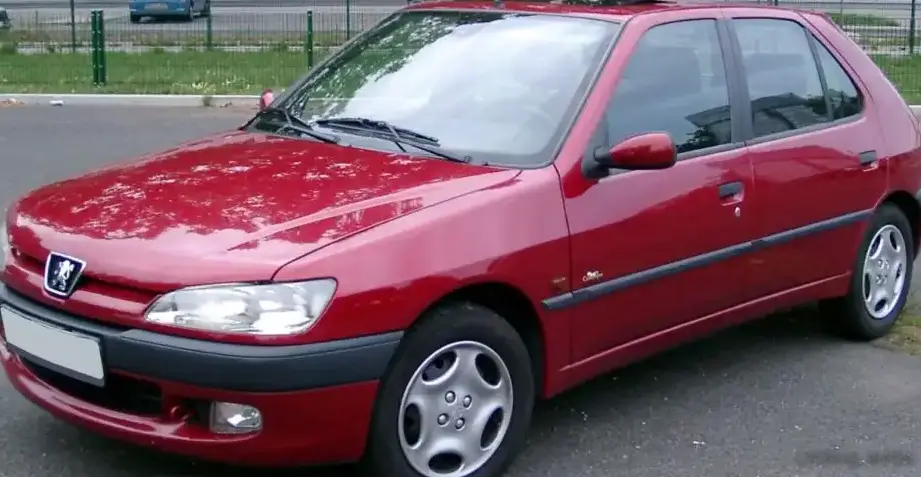
The Peugeot 306, produced from 1993 to 2002, was a small family car designed and manufactured by the French automaker Peugeot. The facelifted version introduced in 1997 brought revised styling and mechanical updates. Among the various engine and transmission combinations offered, the 1.8-liter (110 horsepower) five-door hatchback represented a mid-range option, balancing performance with affordability. Production of this specific variant ran from 1997 through 2002, finding a solid niche in the European market as a practical and relatively efficient family vehicle.
Technical Specifications
| Brand | Peugeot |
| Model | 306 |
| Generation | 306 Hatchback (facelift 1997) |
| Type (Engine) | 1.8 (110 Hp) 5d |
| Start of production | 1997 |
| End of production | 2002 |
| Powertrain Architecture | Internal Combustion engine |
| Body type | Hatchback |
| Seats | 5 |
| Doors | 5 |
| Fuel consumption (urban) | 10 l/100 km (23.5 US mpg) |
| Fuel consumption (extra urban) | 6.3 l/100 km (37.3 US mpg) |
| Fuel consumption (combined) | 8.1 l/100 km (29 US mpg) |
| Fuel Type | Petrol (Gasoline) |
| Acceleration 0 – 100 km/h | 11.2 sec |
| Acceleration 0 – 62 mph | 11.2 sec |
| Acceleration 0 – 60 mph | 10.6 sec |
| Maximum speed | 192 km/h (119.3 mph) |
| Emission standard | Euro 2 |
| Weight-to-power ratio | 9.9 kg/Hp |
| Weight-to-torque ratio | 7 kg/Nm |
| Power | 110 Hp @ 5500 rpm |
| Torque | 155 Nm @ 4250 rpm (114.32 lb.-ft. @ 4250 rpm) |
| Engine layout | Front, Transverse |
| Engine Model/Code | LFY XU7JP4 |
| Engine displacement | 1761 cm3 (107.46 cu. in.) |
| Number of cylinders | 4 |
| Engine configuration | Inline |
| Cylinder Bore | 83 mm (3.27 in.) |
| Piston Stroke | 81.4 mm (3.2 in.) |
| Compression ratio | 10:1 |
| Number of valves per cylinder | 4 |
| Fuel injection system | Multi-port manifold injection |
| Engine aspiration | Naturally aspirated engine |
| Valvetrain | DOHC |
| Engine oil capacity | 4.3 l (4.54 US qt | 3.78 UK qt) |
| Coolant capacity | 7.5 l (7.93 US qt | 6.6 UK qt) |
| Kerb Weight | 1085 kg (2392.02 lbs.) |
| Max. weight | 1560 kg (3439.21 lbs.) |
| Max load | 475 kg (1047.2 lbs.) |
| Trunk (boot) space – minimum | 340 l (12.01 cu. ft.) |
| Trunk (boot) space – maximum | 640 l (22.6 cu. ft.) |
| Fuel tank capacity | 60 l (15.85 US gal | 13.2 UK gal) |
| Length | 4030 mm (158.66 in.) |
| Width | 1690 mm (66.54 in.) |
| Height | 1350 mm (53.15 in.) |
| Wheelbase | 2580 mm (101.57 in.) |
| Front track | 1460 mm (57.48 in.) |
| Rear track | 1430 mm (56.3 in.) |
| Drivetrain Architecture | Front wheel drive |
| Number of gears | 5 |
| Gearbox type | Manual transmission |
| Front suspension | Wishbone |
| Rear suspension | Trailing arm |
| Front brakes | Disc |
| Rear brakes | Disc |
| Steering type | Steering rack and pinion |
| Power steering | Hydraulic |
| Tires size | 195/55 R15 |
| Wheel rims size | 15 |
INTRODUCTION
The 1.8-liter, 110 horsepower Peugeot 306 hatchback, introduced with the 1997 facelift, occupied a sweet spot in the 306 lineup. It wasn’t the most affordable, nor the highest performing, but it offered a compelling blend of practicality, reasonable running costs, and acceptable performance for everyday driving. Built on the Peugeot 306 platform (T1 platform), this variant aimed to appeal to families and individuals seeking a versatile and reliable hatchback. It was a common sight on European roads, offering a step up in refinement and power compared to the base 1.4-liter models.
Powertrain & Engine Architecture
The heart of this 306 variant is the XU7JP4 engine, a 1761cc inline-four cylinder petrol engine. This engine, often referred to by its engine code LFY, is a naturally aspirated unit featuring a double overhead camshaft (DOHC) valvetrain with four valves per cylinder. Fuel delivery is managed by a multi-port fuel injection system, providing precise fuel metering for optimal combustion. The XU7JP4 engine is known for its relative durability and straightforward design. The engine’s 110 horsepower peak is achieved at 5500 rpm, while its 155 Nm (114 lb-ft) of torque is available at 4250 rpm. This engine was paired with a five-speed manual transmission, offering a balance between fuel efficiency and driver control. The transmission’s gear ratios were tuned for everyday usability, prioritizing smooth shifts and adequate acceleration.
Driving Characteristics
The 1.8-liter 306 offered a noticeable improvement in performance over the lower-displacement engines. While not a sports car, it provided sufficient power for comfortable highway cruising and overtaking maneuvers. Acceleration from 0 to 60 mph took around 10.6 seconds, and it had a top speed of approximately 119 mph. The five-speed manual transmission allowed drivers to keep the engine in its optimal power band, maximizing efficiency and responsiveness. Compared to the more powerful 2.0-liter 16V models, the 1.8 felt less eager to rev, but it offered a more relaxed and refined driving experience. The gear ratios were well-matched to the engine’s torque curve, providing decent in-gear acceleration.
Equipment & Trim Levels
The 1.8-liter 306 typically came equipped with a reasonable level of standard features. These included central locking, power steering, electric front windows, and an adjustable steering column. Interior upholstery was usually cloth, with a relatively simple but functional dashboard layout. Optional extras included air conditioning, alloy wheels, a sunroof, and upgraded audio systems. Trim levels varied depending on the market, but generally, the 1.8-liter model sat in the mid-range of the 306 lineup, offering a step up in comfort and convenience compared to the base models.
Chassis & Braking
The 306’s chassis featured independent front suspension with wishbones and a trailing arm rear suspension. This setup provided a comfortable ride quality, absorbing bumps and imperfections in the road surface effectively. The 1.8-liter models were equipped with disc brakes on all four wheels, providing adequate stopping power for everyday driving. Hydraulic power steering made maneuvering easy, particularly in urban environments. The suspension was tuned for a balance between comfort and handling, offering a stable and predictable driving experience.
Market Reception & Comparison
The 1.8-liter 306 was generally well-received by automotive critics. It was praised for its comfortable ride, decent performance, and reasonable fuel economy. Compared to the base 1.4-liter models, the 1.8 offered a significant improvement in drivability, making it a more appealing option for those who frequently drove on highways or carried passengers. However, it wasn’t as sporty or engaging as the higher-performance 2.0-liter 16V models. Fuel economy was respectable for its time, averaging around 29 US mpg in combined driving. Reliability was generally good, although routine maintenance was essential to keep the engine running smoothly.
Legacy
The Peugeot 306 1.8-liter remains a relatively common sight on used car markets today. The XU7JP4 engine is known for its durability, and with proper maintenance, it can provide many years of reliable service. While not a particularly collectible model, it represents a solid and practical choice for those seeking an affordable and dependable hatchback. Parts availability is generally good, and the 306’s relatively simple mechanical design makes it relatively easy to maintain and repair. The 1.8-liter variant continues to be appreciated for its balance of performance, economy, and practicality, cementing its place as a popular choice among 306 enthusiasts and budget-conscious car buyers.