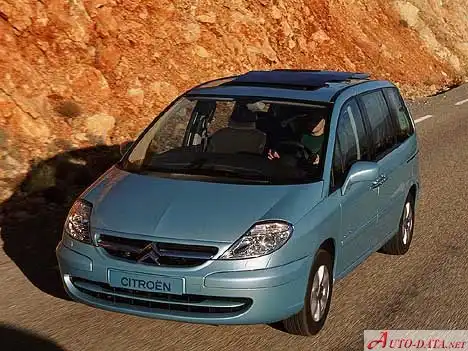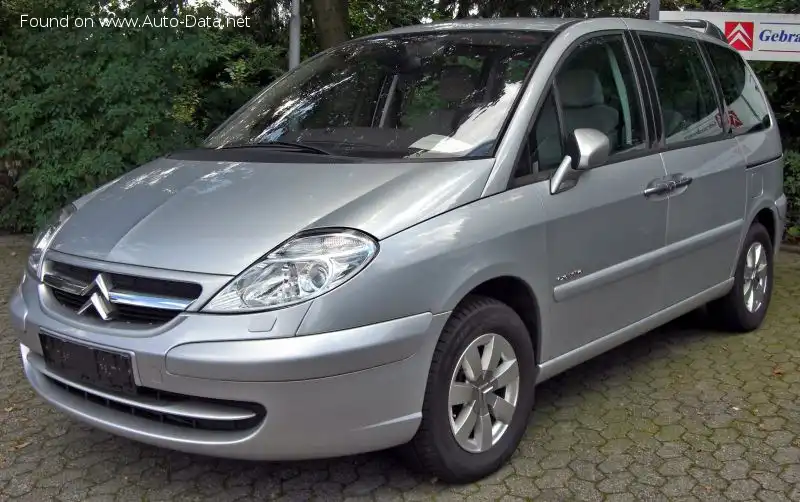
The Citroën C8 2.0i 16V, produced during the Phase II refresh from 2008 to 2009, represents a mid-range offering within the second generation of Citroën’s large MPV (Multi-Purpose Vehicle). Part of the U6 platform shared with the Peugeot 807 and Fiat Ulysse, the C8 aimed to provide spacious and comfortable family transport. This particular variant, equipped with the 140 horsepower 2.0-liter petrol engine and a manual transmission, was positioned as a balance between affordability and practicality, appealing to buyers who didn’t require the larger engines or more luxurious trim levels available in the range. The Phase II update brought subtle styling revisions and improvements to interior materials compared to the original C8 launched in 2002.
Technical Specifications
| Brand | Citroen |
| Model | C8 |
| Generation | C8 (Phase II, 2008) |
| Type (Engine) | 2.0i 16V (140 Hp) |
| Start of production | 2008 |
| End of production | 2009 |
| Powertrain Architecture | Internal Combustion engine |
| Body type | Minivan, MPV |
| Seats | 7 |
| Doors | 5 |
| Fuel consumption (urban) | 12 l/100 km (19.6 US mpg, 23.5 UK mpg, 8.3 km/l) |
| Fuel consumption (extra urban) | 7.3 l/100 km (32.2 US mpg, 38.7 UK mpg, 13.7 km/l) |
| Fuel consumption (combined) | 9 l/100 km (26.1 US mpg, 31.4 UK mpg, 11.1 km/l) |
| CO2 emissions | 213 g/km |
| Fuel Type | Petrol (Gasoline) |
| Acceleration 0 – 100 km/h | 11.6 sec |
| Acceleration 0 – 62 mph | 11.6 sec |
| Acceleration 0 – 60 mph | 11 sec |
| Maximum speed | 188 km/h (116.82 mph) |
| Emission standard | Euro 4 |
| Weight-to-power ratio | 13.4 kg/Hp, 74.7 Hp/tonne |
| Weight-to-torque ratio | 9.4 kg/Nm, 106.7 Nm/tonne |
| Power | 140 Hp @ 6000 rpm |
| Power per litre | 70.1 Hp/l |
| Torque | 200 Nm @ 4000 rpm (147.51 lb.-ft. @ 4000 rpm) |
| Engine layout | Front, Transverse |
| Engine Model/Code | RFJ EW10A |
| Engine displacement | 1997 cm3 (121.86 cu. in.) |
| Number of cylinders | 4 |
| Engine configuration | Inline |
| Cylinder Bore | 85 mm (3.35 in.) |
| Piston Stroke | 88 mm (3.46 in.) |
| Compression ratio | 10.8:1 |
| Number of valves per cylinder | 4 |
| Fuel injection system | Multi-port manifold injection |
| Engine aspiration | Naturally aspirated engine |
| Engine oil capacity | 5 l (5.28 US qt | 4.4 UK qt) |
| Coolant | 7 l (7.4 US qt | 6.16 UK qt) |
| Kerb Weight | 1875 kg (4133.67 lbs.) |
| Max. weight | 2405 kg (5302.12 lbs.) |
| Max load | 530 kg (1168.45 lbs.) |
| Trunk (boot) space – minimum | 225 l (7.95 cu. ft.) |
| Trunk (boot) space – maximum | 2948 l (104.11 cu. ft.) |
| Fuel tank capacity | 80 l (21.13 US gal | 17.6 UK gal) |
| Max. roof load | 100 kg (220.46 lbs.) |
| Permitted trailer load with brakes (12%) | 1700 kg (3747.86 lbs.) |
| Permitted trailer load without brakes | 750 kg (1653.47 lbs.) |
| Permitted towbar download | 76 kg (167.55 lbs.) |
| Length | 4727 mm (186.1 in.) |
| Width | 1854 mm (72.99 in.) |
| Width including mirrors | 2194 mm (86.38 in.) |
| Height | 1752-1856 mm (68.98 – 73.07 in.) |
| Wheelbase | 2823 mm (111.14 in.) |
| Front track | 1570 mm (61.81 in.) |
| Rear (Back) track | 1548 mm (60.94 in.) |
| Front overhang | 1013 mm (39.88 in.) |
| Rear overhang | 891 mm (35.08 in.) |
| Minimum turning circle (turning diameter) | 11.71 m (38.42 ft.) |
| Drivetrain Architecture | The Internal combustion engine (ICE) drives the front wheels of the vehicle. |
| Drive wheel | Front wheel drive |
| Number of gears and type of gearbox | 5 gears, manual transmission |
| Front suspension | Independent, type McPherson with coil spring and anti-roll bar |
| Rear suspension | Semi-independent, coil spring |
| Front brakes | Ventilated discs |
| Rear brakes | Disc |
| Assisting systems | ABS (Anti-lock braking system) |
| Steering type | Steering rack and pinion |
| Power steering | Hydraulic Steering |
| Tires size | 205/65 R15 |
| Wheel rims size | 6.5J x 15 |
Powertrain & Engine Architecture
The C8 2.0i 16V utilizes the PSA Group’s EW10A engine, specifically the RFJ variant. This is a naturally aspirated, inline-four cylinder petrol engine with a displacement of 1997cc. It features a multi-point fuel injection system and a double overhead camshaft (DOHC) valvetrain with four valves per cylinder. The engine’s design prioritizes smooth operation and reasonable fuel economy over outright performance. The 16-valve configuration aids in breathing and contributes to the engine’s 140 horsepower output at 6000 rpm and 200 Nm (147.51 lb-ft) of torque at 4000 rpm. The engine is transversely mounted at the front of the vehicle. The five-speed manual transmission was the standard offering for this variant, providing a direct connection between the engine and the front wheels. While an automatic transmission was available on other C8 models, it wasn’t typically paired with this specific engine.
Driving Characteristics
The 2.0i 16V C8 offers adequate, but not exhilarating, performance. Acceleration from 0-60 mph takes around 11 seconds, and the top speed is approximately 117 mph. The engine feels relatively strained when fully loaded with passengers and luggage, particularly on inclines. The manual transmission allows for better control and engine braking compared to the automatic options found on other C8 trims. Gear ratios are fairly conventional, prioritizing fuel efficiency over rapid acceleration. Compared to the more powerful 2.2-liter petrol or 2.0-liter HDi diesel engines available in the C8 range, the 2.0i 16V feels noticeably less responsive. However, it provides a more engaging driving experience than the automatic transmissions offered with the larger engines.
Equipment & Trim Levels
The 2.0i 16V C8 typically came equipped with a reasonable level of standard features. These included air conditioning, power windows, central locking, and an RDS stereo system. Safety features such as ABS brakes and front airbags were also standard. Interior upholstery was typically cloth, with a functional, if somewhat basic, dashboard layout. Optional extras included rear parking sensors, alloy wheels, and a more advanced audio system. Higher trim levels, such as the Exclusive, added features like leather upholstery, automatic climate control, and a sunroof, but were not typically offered with the 2.0i engine.
Chassis & Braking
The C8 utilizes a McPherson strut front suspension and a semi-independent coil spring rear suspension. This setup prioritizes ride comfort over sporty handling. The suspension is tuned to absorb bumps and provide a smooth ride, making it well-suited for long journeys. Braking duties are handled by ventilated discs at the front and solid discs at the rear. ABS (Anti-lock Braking System) is standard, providing enhanced braking performance in emergency situations. The steering is rack and pinion with hydraulic power assistance, offering light and easy steering feel.
Market Reception & Comparison
The Citroën C8 2.0i 16V was generally well-received as a practical and affordable MPV. Critics praised its spacious interior, comfortable ride, and reasonable fuel economy. However, the engine was often criticized for being underpowered, especially when the vehicle was fully loaded. Compared to the diesel variants, the 2.0i 16V offered lower purchase price but higher running costs due to its greater fuel consumption. The diesel models also provided significantly more torque, making them better suited for towing or carrying heavy loads. Against competitors like the Renault Espace and Volkswagen Sharan, the C8 offered a competitive package in terms of space and practicality, but the 2.0i engine lacked the refinement and performance of some of its rivals.
Legacy
The Citroën C8 2.0i 16V, while not the most powerful or technologically advanced version of the C8, has proven to be a relatively reliable and durable vehicle. The EW10A engine is known for its longevity, provided it is properly maintained. Common issues include occasional problems with the electronic power steering and the air conditioning system. On the used car market, the 2.0i 16V C8 represents a budget-friendly option for those seeking a spacious and practical MPV. Its lower purchase price and relatively simple mechanicals make it an attractive choice for families or individuals who prioritize affordability and practicality over performance and luxury.