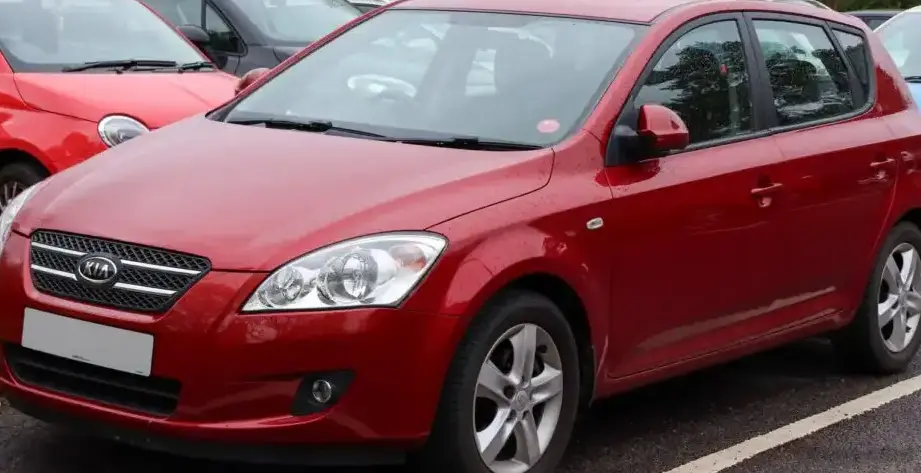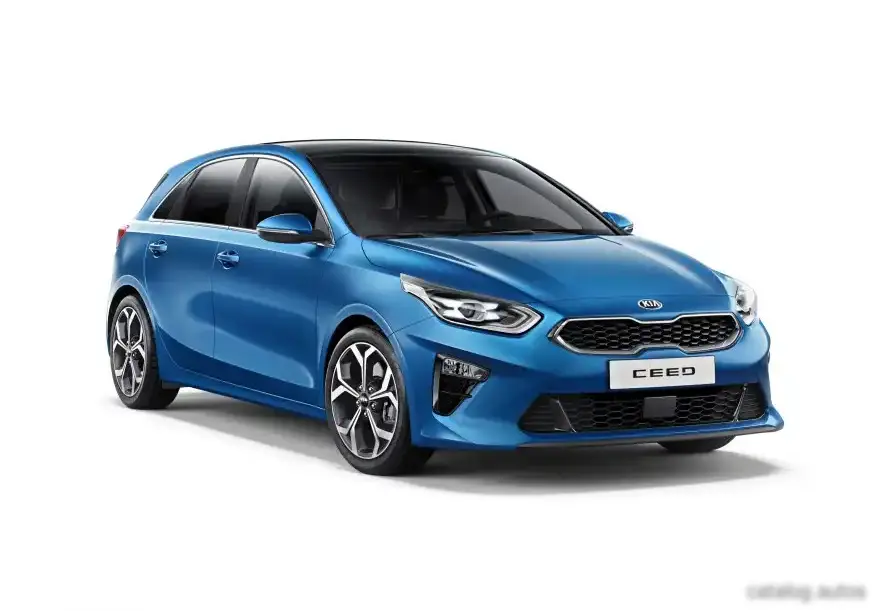
The Kia Ceed III 1.6 CRDi (136 Hp) represents a significant iteration in Kia’s compact hatchback lineup, produced from June 2018 to September 2021. Positioned as a mid-range offering within the third generation Ceed (designated the AD series), this variant aimed to balance fuel efficiency with respectable performance, appealing to buyers seeking a practical and economical daily driver. It was a key model for Kia in the European market, where the Ceed competed directly with established rivals like the Volkswagen Golf, Ford Focus, and Opel Astra. The Ceed III benefited from Kia’s increasingly sophisticated engineering and design, offering a more refined experience than its predecessors. This specific engine and transmission combination was popular for its blend of usability and running costs.
Technical Specifications
| Brand | Kia |
| Model | Ceed |
| Generation | Ceed III |
| Type (Engine) | 1.6 CRDi (136 Hp) |
| Start of production | June, 2018 |
| End of production | September, 2021 |
| Powertrain Architecture | Internal Combustion engine |
| Body type | Hatchback |
| Seats | 5 |
| Doors | 5 |
| Fuel consumption (urban) | 4.7 l/100 km (50 US mpg, 60.1 UK mpg, 21.3 km/l) |
| Fuel consumption (extra urban) | 4 l/100 km (58.8 US mpg, 70.6 UK mpg, 25 km/l) |
| Fuel consumption (combined) | 4.3 l/100 km (54.7 US mpg, 65.7 UK mpg, 23.3 km/l) |
| CO2 emissions | 111 g/km |
| Fuel Type | Diesel |
| Acceleration 0 – 100 km/h | 10.2 sec |
| Acceleration 0 – 62 mph | 10.2 sec |
| Acceleration 0 – 60 mph | 9.7 sec |
| Maximum speed | 200 km/h (124.27 mph) |
| Emission standard | Euro 6 d |
| Weight-to-power ratio | 9.7 kg/Hp, 103.6 Hp/tonne |
| Weight-to-torque ratio | 4.7 kg/Nm, 213.3 Nm/tonne |
| Power | 136 Hp @ 4000 rpm |
| Power per litre | 85.1 Hp/l |
| Torque | 280 Nm @ 1500-3000 rpm (206.52 lb.-ft. @ 1500-3000 rpm) |
| Engine layout | Front, Transverse |
| Engine Model/Code | D4FE |
| Engine displacement | 1598 cm3 (97.52 cu. in.) |
| Number of cylinders | 4 |
| Engine configuration | Inline |
| Cylinder Bore | 77 mm (3.03 in.) |
| Piston Stroke | 85.8 mm (3.38 in.) |
| Compression ratio | 15.9:1 |
| Number of valves per cylinder | 4 |
| Fuel injection system | Diesel Commonrail |
| Engine aspiration | Turbocharger, Intercooler |
| Engine oil capacity | 4.4 l (4.65 US qt | 3.87 UK qt) |
| Coolant | 7.7 l (8.14 US qt | 6.78 UK qt) |
| Kerb Weight | 1313 kg (2894.67 lbs.) |
| Max. weight | 1880 kg (4144.69 lbs.) |
| Max load | 567 kg (1250.02 lbs.) |
| Trunk (boot) space – minimum | 395 l (13.95 cu. ft.) |
| Trunk (boot) space – maximum | 1291 l (45.59 cu. ft.) |
| Fuel tank capacity | 50 l (13.21 US gal | 11 UK gal) |
| Max. roof load | 80 kg (176.37 lbs.) |
| Permitted trailer load with brakes (12%) | 1500 kg (3306.93 lbs.) |
| Permitted trailer load without brakes | 650 kg (1433 lbs.) |
| Permitted towbar download | 75 kg (165.35 lbs.) |
| Length | 4310 mm (169.69 in.) |
| Width | 1800 mm (70.87 in.) |
| Width including mirrors | 2055 mm (80.91 in.) |
| Height | 1447 mm (56.97 in.) |
| Wheelbase | 2650 mm (104.33 in.) |
| Front track | 1559-1573 mm (61.38 – 61.93 in.) |
| Rear (Back) track | 1567-1581 mm (61.69 – 62.24 in.) |
| Front overhang | 880 mm (34.65 in.) |
| Rear overhang | 780 mm (30.71 in.) |
| Minimum turning circle | 10.6 m (34.78 ft.) |
| Drivetrain Architecture | Front wheel drive |
| Number of gears and type of gearbox | 6 gears, manual transmission |
| Front suspension | Independent type McPherson |
| Rear suspension | Independent multi-link suspension |
| Front brakes | Ventilated discs |
| Rear brakes | Disc |
| Assisting systems | ABS (Anti-lock braking system) |
| Steering type | Steering rack and pinion |
| Power steering | Electric Steering |
| Tires size | 195/65 R15; 205/55 R16; 225/45 R17 |
| Wheel rims size | 6.0J x 15; 6.5J x 16; 7.0J x 17 |
Powertrain & Engine Architecture
The heart of the Ceed III 1.6 CRDi is the D4FE engine, a four-cylinder diesel powerplant. This engine utilizes a common-rail direct injection system, delivering fuel directly into the cylinders at extremely high pressure for optimized combustion. The D4FE is a turbocharged engine, employing a variable geometry turbocharger (VGT) to enhance low-end torque and overall responsiveness. An intercooler is also present, cooling the compressed intake air to further improve efficiency and power output. The engine’s 15.9:1 compression ratio is typical for a modern diesel, contributing to its thermal efficiency. The 6-speed manual transmission was the standard offering, providing a good balance between fuel economy and driver engagement. The transmission’s gear ratios were tuned to maximize the engine’s torque output, providing adequate acceleration in everyday driving situations.
Driving Characteristics
The 1.6 CRDi with 136 horsepower offered a practical and economical driving experience. While not particularly sporty, it provided sufficient power for everyday commuting and highway cruising. Acceleration from 0-60 mph took around 9.7 seconds, which was competitive within its class. The engine’s peak torque of 280 Nm (206.52 lb-ft) available from 1500-3000 rpm meant that the car felt responsive in most driving situations, with minimal need for downshifting. Compared to higher-output versions of the Ceed, such as those with more powerful diesel engines or the gasoline GT models, this variant prioritized fuel efficiency over outright performance. The manual transmission offered a more engaging driving experience than an automatic, allowing for greater control over gear selection and engine speed.
Equipment & Trim Levels
The 1.6 CRDi (136 Hp) typically came equipped as a mid-range trim level, often designated as ‘2’ or ‘3’ depending on the specific market. Standard features generally included air conditioning, a touchscreen infotainment system with Bluetooth connectivity, alloy wheels, and a suite of safety features such as ABS, ESC (Electronic Stability Control), and multiple airbags. Optional extras could include features like a panoramic sunroof, leather upholstery, heated seats, and advanced driver-assistance systems (ADAS) such as lane departure warning and automatic emergency braking. Interior upholstery was typically cloth, with a functional and durable design. The dashboard layout was clean and modern, with a focus on usability.
Chassis & Braking
The Ceed III utilized a McPherson strut front suspension and a multi-link rear suspension, providing a comfortable and controlled ride. The suspension was tuned to prioritize ride comfort over sporty handling, making it well-suited for everyday driving. Braking duties were handled by ventilated discs at the front and solid discs at the rear. ABS (Anti-lock Braking System) was standard, enhancing braking performance and stability. The steering was electrically assisted, providing a light and precise feel.
Market Reception & Comparison
The Kia Ceed III 1.6 CRDi (136 Hp) was generally well-received by automotive critics. It was praised for its fuel efficiency, comfortable ride, and spacious interior. However, some reviewers noted that the engine could be somewhat noisy under hard acceleration. Compared to other trims in the Ceed lineup, this variant offered a compelling balance between price, performance, and economy. The 1.6 CRDi was often seen as a more sensible choice than the more powerful diesel engines, particularly for drivers who primarily used the car for commuting or family transportation. Its fuel economy was competitive with rivals like the Volkswagen Golf 1.6 TDI and the Ford Focus 1.5 EcoBlue.
Legacy
The D4FE engine, while not without its quirks, proved to be a relatively reliable powerplant. Common issues, if any, typically involved the diesel particulate filter (DPF) requiring regeneration, particularly on vehicles used primarily for short journeys. The Ceed III 1.6 CRDi remains a popular choice on the used car market, offering a practical and affordable option for buyers seeking a fuel-efficient hatchback. Its reputation for reliability and low running costs has helped to maintain its value over time. The Ceed III, in general, marked a significant step forward for Kia in terms of quality and refinement, solidifying its position as a major player in the European automotive market.