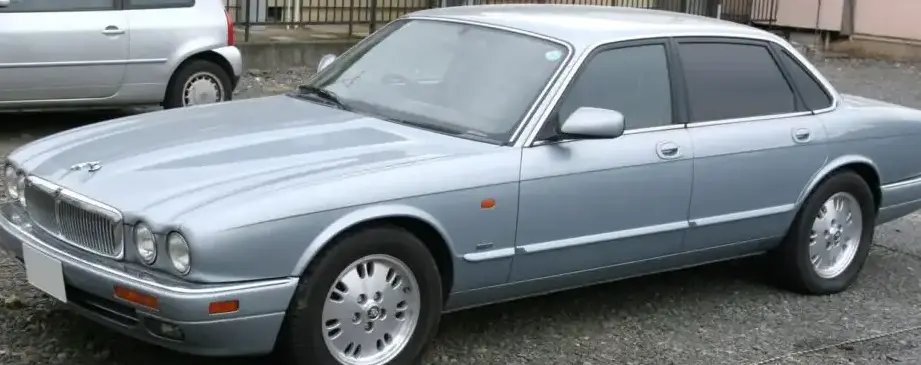
The Jaguar XJ X300 6.0 V12 Lang, produced between 1994 and 1997, represents the final evolution of the XJ40 series, and the last of the traditionally styled, pre-Ford Jaguar saloons. Positioned as the flagship of the X300 range, the 6.0 V12 Long Wheelbase (Lang) model offered the ultimate in luxury, performance, and refinement. It served as a statement of Jaguar’s engineering prowess during a period of transition for the company. The X300 platform was a significant update to the XJ40, addressing many of the criticisms leveled at its predecessor, particularly regarding electrical systems and build quality. This variant was primarily aimed at the luxury car market, competing with vehicles like the BMW 7 Series and Mercedes-Benz S-Class.
Technical Specifications
| Brand | Jaguar |
| Model | XJ |
| Generation | XJ (X300) |
| Type | 6.0 V12 Lang (311 Hp) Automatic |
| Start of production | 1994 |
| End of production | 1997 |
| Powertrain Architecture | Internal Combustion engine |
| Body type | Sedan |
| Seats | 5 |
| Doors | 4 |
| Fuel consumption (combined) | 15.7 l/100 km (15 US mpg, 18 UK mpg, 6.4 km/l) |
| Fuel Type | Petrol (Gasoline) |
| Acceleration 0 – 100 km/h | 7.2 sec |
| Acceleration 0 – 62 mph | 7.2 sec |
| Acceleration 0 – 60 mph | 6.8 sec |
| Maximum speed | 254 km/h (157.83 mph) |
| Weight-to-power ratio | 6.4 kg/Hp, 157.5 Hp/tonne |
| Weight-to-torque ratio | 4.2 kg/Nm, 240.5 Nm/tonne |
| Power | 311 Hp @ 5350 rpm |
| Power per litre | 51.9 Hp/l |
| Torque | 475 Nm @ 2850 rpm (350.34 lb.-ft. @ 2850 rpm) |
| Engine layout | Front, Longitudinal |
| Engine displacement | 5993 cm3 (365.72 cu. in.) |
| Number of cylinders | 12 |
| Engine configuration | V-engine |
| Cylinder Bore | 90 mm (3.54 in.) |
| Piston Stroke | 78.5 mm (3.09 in.) |
| Compression ratio | 11:1 |
| Number of valves per cylinder | 2 |
| Fuel injection system | Multi-port manifold injection |
| Engine aspiration | Naturally aspirated engine |
| Valvetrain | OHC |
| Kerb Weight | 1975 kg (4354.13 lbs.) |
| Max. weight | 2395 kg (5280.07 lbs.) |
| Max load | 420 kg (925.94 lbs.) |
| Trunk (boot) space – minimum | 430 l (15.19 cu. ft.) |
| Fuel tank capacity | 86 l (22.72 US gal | 18.92 UK gal) |
| Length | 5149 mm (202.72 in.) |
| Width | 1798 mm (70.79 in.) |
| Height | 1314 mm (51.73 in.) |
| Wheelbase | 2995 mm (117.91 in.) |
| Front track | 1500 mm (59.06 in.) |
| Rear (Back) track | 1498 mm (58.98 in.) |
| Drivetrain Architecture | The Internal combustion engine (ICE) drives the rear wheels of the vehicle. |
| Drive wheel | Rear wheel drive |
| Number of gears and type of gearbox | 4 gears, automatic transmission |
| Front suspension | Double wishbone |
| Rear suspension | Coil spring |
| Front brakes | Ventilated discs |
| Rear brakes | Ventilated discs |
| Assisting systems | ABS (Anti-lock braking system), Hydraulic Steering |
| Tires size | 225/55 R16 |
Powertrain & Engine Architecture
The heart of the X300 6.0 V12 is the 5.993-liter naturally aspirated V12 engine, designated as the 77R3. This engine represents a significant refinement of the AJ6 inline-six architecture, effectively doubling the cylinder count. It features a 60-degree V-angle, providing a compact engine bay footprint. The engine utilizes a multi-port fuel injection system and overhead camshafts (OHC) operating two valves per cylinder. The V12 produces 311 horsepower at 5350 rpm and 475 Nm (350 lb-ft) of torque at 2850 rpm. The engine is paired with a 4-speed automatic transmission, a Chrysler-sourced unit (42RE) adapted for Jaguar’s specifications. This transmission was chosen for its robustness and smoothness, complementing the V12’s power delivery.
Driving Characteristics
The X300 6.0 V12 offers a distinctly grand touring experience. The automatic transmission, while not offering the latest gear counts, provides smooth and refined shifts. Acceleration is brisk, with 0-60 mph times around 6.8 seconds, and a top speed of 157.83 mph. The long wheelbase and sophisticated suspension – double wishbones at the front and a coil spring setup at the rear – contribute to a comfortable and composed ride. Compared to the inline-six and supercharged variants of the X300, the V12 offers a more relaxed and effortless power delivery. The inline-six models were more nimble, while the supercharged versions prioritized outright acceleration. The V12’s strength lies in its smooth, quiet operation and abundant torque, making it ideal for long-distance cruising.
Equipment & Trim Levels
The 6.0 V12 Lang was the most luxurious X300 variant. Standard equipment included Connolly leather upholstery, burled walnut veneer trim, electric front seats with memory function, climate control, a premium sound system, and a trip computer. The “Lang” designation indicates a lengthened wheelbase, providing increased rear legroom. Optional extras included a sunroof, upgraded sound systems, and various bespoke interior trim options. The interior was designed to provide a serene and opulent environment, emphasizing comfort and craftsmanship.
Chassis & Braking
The X300 chassis was a significant improvement over the XJ40, featuring increased rigidity and improved refinement. The suspension system, as mentioned, utilizes double wishbones at the front and a coil spring setup at the rear. All four wheels are equipped with ventilated disc brakes, providing ample stopping power. An anti-lock braking system (ABS) was standard. The steering is hydraulic power-assisted, offering a balanced feel between assistance and feedback. The X300 6.0 V12 typically rode on 225/55 R16 tires, providing a good balance of comfort and grip.
Market Reception & Comparison
The X300 6.0 V12 was well-received by critics for its refinement, performance, and luxurious appointments. However, its high price tag limited its appeal to a relatively small segment of the market. Fuel economy, at 15.7 l/100 km (15 US mpg), was predictably poor for a V12 engine. Compared to the X300 4.0-liter inline-six, the V12 offered significantly more power and a smoother driving experience, but at a considerable cost premium. The supercharged X300 offered even greater performance, but lacked the V12’s inherent smoothness and refinement. Reliability was generally good, although the complex V12 engine and associated systems required diligent maintenance.
Legacy
The Jaguar X300 6.0 V12 Lang represents a high point in Jaguar’s traditional luxury saloon lineage. It is remembered for its elegant styling, powerful V12 engine, and luxurious interior. Today, well-maintained examples are highly sought after by collectors and enthusiasts. While the V12 engine requires careful maintenance, its robust construction and relatively simple design (compared to later Jaguar V12s) contribute to its long-term reliability. The X300 6.0 V12 remains a testament to Jaguar’s commitment to building luxurious and refined automobiles, and a desirable classic in the used car market.