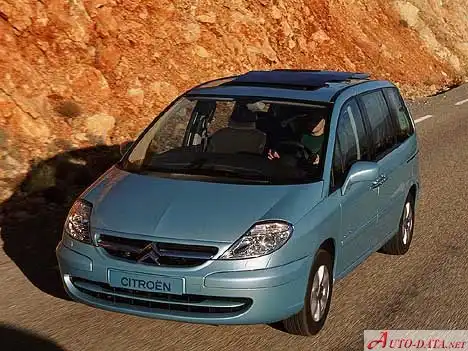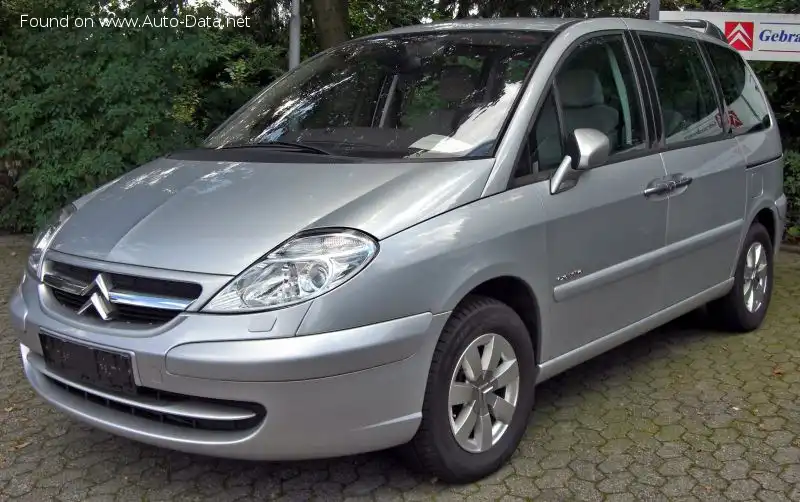
The Citroen C8, specifically the Phase II model produced between 2008 and 2009 with the 2.0i 16V (140 hp) engine paired with an automatic transmission, represents a mid-cycle refresh of Citroen’s large MPV offering. Positioned as a mainstream option within the C8 range, this variant aimed to provide a balance of practicality, comfort, and affordability for families. The C8 itself was part of a joint venture with Peugeot and Fiat, resulting in the shared platform and mechanical components found in the Peugeot 807 and Fiat Ulysse. This second phase brought styling updates and minor mechanical refinements to the original C8, which debuted in 2002. It competed directly with other large MPVs like the Renault Espace, Volkswagen Sharan, and Ford Galaxy in the European market.
Technical Specifications
| Brand | Citroen |
| Model | C8 |
| Generation | C8 (Phase II, 2008) |
| Type (Engine) | 2.0i 16V (140 Hp) Automatic |
| Start of production | 2008 |
| End of production | 2009 |
| Powertrain Architecture | Internal Combustion engine |
| Body type | Minivan, MPV |
| Seats | 7 |
| Doors | 5 |
| Fuel consumption (urban) | 13.3 l/100 km (17.7 US mpg, 21.2 UK mpg, 7.5 km/l) |
| Fuel consumption (extra urban) | 7.5 l/100 km (31.4 US mpg, 37.7 UK mpg, 13.3 km/l) |
| Fuel consumption (combined) | 9.6 l/100 km (24.5 US mpg, 29.4 UK mpg, 10.4 km/l) |
| CO2 emissions | 229 g/km |
| Fuel Type | Petrol (Gasoline) |
| Acceleration 0 – 100 km/h | 12.9 sec |
| Acceleration 0 – 62 mph | 12.9 sec |
| Acceleration 0 – 60 mph | 12.3 sec |
| Maximum speed | 180 km/h (111.85 mph) |
| Emission standard | Euro 4 |
| Weight-to-power ratio | 13.6 kg/Hp, 73.5 Hp/tonne |
| Weight-to-torque ratio | 9.5 kg/Nm, 105 Nm/tonne |
| Power | 140 Hp @ 6000 rpm |
| Power per litre | 70.1 Hp/l |
| Torque | 200 Nm @ 4000 rpm (147.51 lb.-ft. @ 4000 rpm) |
| Engine layout | Front, Transverse |
| Engine Model/Code | RFJ EW10A |
| Engine displacement | 1997 cm3 (121.86 cu. in.) |
| Number of cylinders | 4 |
| Engine configuration | Inline |
| Cylinder Bore | 85 mm (3.35 in.) |
| Piston Stroke | 88 mm (3.46 in.) |
| Compression ratio | 10.8:1 |
| Number of valves per cylinder | 4 |
| Fuel injection system | Multi-port manifold injection |
| Engine aspiration | Naturally aspirated engine |
| Engine oil capacity | 5 l (5.28 US qt | 4.4 UK qt) |
| Coolant | 7 l (7.4 US qt | 6.16 UK qt) |
| Kerb Weight | 1904 kg (4197.6 lbs.) |
| Max. weight | 2435 kg (5368.26 lbs.) |
| Max load | 531 kg (1170.65 lbs.) |
| Trunk (boot) space – minimum | 225 l (7.95 cu. ft.) |
| Trunk (boot) space – maximum | 2948 l (104.11 cu. ft.) |
| Fuel tank capacity | 80 l (21.13 US gal | 17.6 UK gal) |
| Max. roof load | 100 kg (220.46 lbs.) |
| Permitted trailer load with brakes (12%) | 900 kg (1984.16 lbs.) |
| Permitted trailer load without brakes | 500 kg (1102.31 lbs.) |
| Permitted towbar download | 40 kg (88.18 lbs.) |
| Length | 4727 mm (186.1 in.) |
| Width | 1854 mm (72.99 in.) |
| Width including mirrors | 2194 mm (86.38 in.) |
| Height | 1752-1856 mm (68.98 – 73.07 in.) |
| Wheelbase | 2823 mm (111.14 in.) |
| Front track | 1570 mm (61.81 in.) |
| Rear (Back) track | 1548 mm (60.94 in.) |
| Front overhang | 1013 mm (39.88 in.) |
| Rear overhang | 891 mm (35.08 in.) |
| Minimum turning circle | 11.71 m (38.42 ft.) |
| Drivetrain Architecture | The Internal combustion engine (ICE) drives the front wheels of the vehicle. |
| Drive wheel | Front wheel drive |
| Number of gears and type of gearbox | 4 gears, automatic transmission |
| Front suspension | Independent, type McPherson with coil spring and anti-roll bar |
| Rear suspension | Semi-independent, coil spring |
| Front brakes | Ventilated discs |
| Rear brakes | Disc |
| Assisting systems | ABS (Anti-lock braking system) |
| Steering type | Steering rack and pinion |
| Power steering | Hydraulic Steering |
| Tires size | 205/65 R15 |
| Wheel rims size | 6.5J x 15 |
Powertrain & Engine Architecture
The heart of this C8 variant is the RFJ (also known as EW10A) 2.0-liter inline-four cylinder gasoline engine. This engine, a product of PSA Peugeot Citroën’s development, features a 16-valve configuration (four valves per cylinder) and multi-point fuel injection. The engine’s design prioritized smooth operation and reasonable fuel economy over outright performance. The automatic transmission is a four-speed unit, designed to provide comfortable shifting for everyday driving. While not particularly advanced by modern standards, it was a common and relatively reliable transmission for its time. The engine’s 140 horsepower output at 6000 rpm and 200 Nm (147.51 lb-ft) of torque at 4000 rpm were adequate for moving the relatively heavy C8, but didn’t offer particularly brisk acceleration.
Driving Characteristics
The 2.0i Automatic C8 offered a comfortable, if not exhilarating, driving experience. The automatic transmission, while smooth, contributed to a noticeable lack of responsiveness compared to the manual transmission options. Acceleration from 0-100 km/h (0-62 mph) took around 12.9 seconds, making it slower than the more powerful engine options. The four-speed automatic’s gear ratios were geared towards fuel efficiency and relaxed cruising rather than sporty performance. In real-world conditions, the engine felt strained when fully loaded with passengers and luggage, particularly on inclines. The focus was clearly on providing a practical and comfortable family vehicle, rather than a driver’s car.
Equipment & Trim Levels
The 2.0i 16V Automatic trim typically included features such as air conditioning, power windows, central locking, and an integrated audio system. Higher trim levels, available as options, added features like alloy wheels, rear parking sensors, and upgraded interior upholstery. The interior generally featured durable, family-friendly materials. The C8’s modular seating arrangement allowed for flexible configuration, with individual seats that could be folded or removed to maximize cargo space. Safety features included ABS brakes and front airbags as standard equipment.
Chassis & Braking
The C8 utilized a McPherson strut front suspension and a semi-independent coil spring rear suspension. This setup prioritized ride comfort over sharp handling. The front brakes were ventilated discs, while the rear brakes were solid discs. The suspension was tuned to absorb bumps and provide a stable ride, even when fully loaded. The steering was hydraulic power-assisted, offering reasonable feedback for a vehicle of its size. Stabilizer bars were included front and rear to reduce body roll during cornering, but the C8 was not designed for aggressive driving.
Market Reception & Comparison
The 2.0i Automatic C8 was generally viewed as a sensible choice for families seeking a spacious and comfortable MPV. Critics noted its practicality and flexible interior, but also pointed out its relatively modest performance and fuel economy compared to some competitors. Compared to the more powerful 2.2-liter HDi diesel variants, the 2.0i offered less torque and lower fuel efficiency. However, it avoided the potential maintenance costs associated with diesel particulate filters and turbochargers. Against petrol-powered rivals like the Renault Espace, the C8 offered a competitive level of equipment and space for the price.
Legacy
The 2.0i 16V Automatic C8, while not the most sought-after variant, remains a relatively affordable and practical option in the used car market. The RFJ engine is generally considered reliable, although regular maintenance is crucial. The automatic transmission, if properly maintained, can provide years of service. Common issues include wear and tear on suspension components and electrical glitches. Today, these C8s are often found as budget-friendly family transport, appreciated for their spaciousness and practicality rather than their performance or prestige.