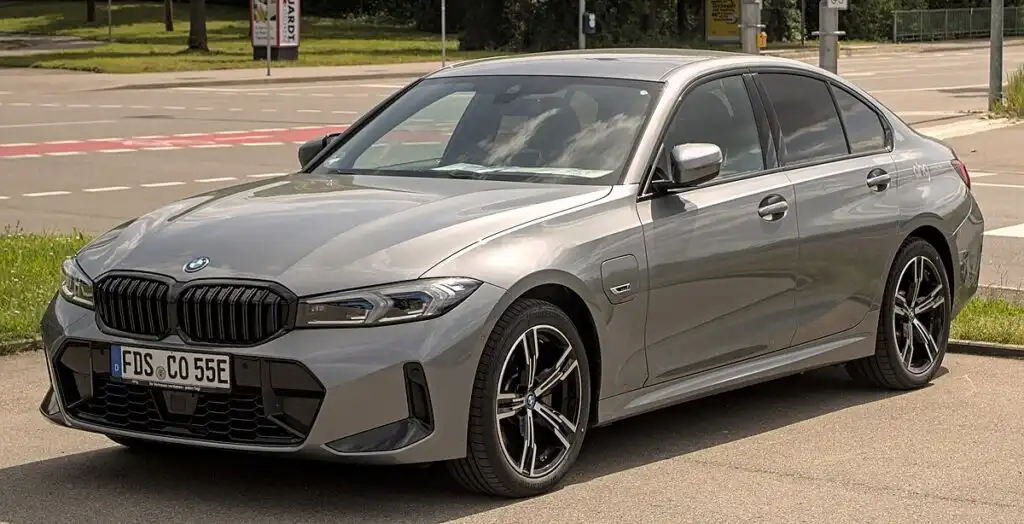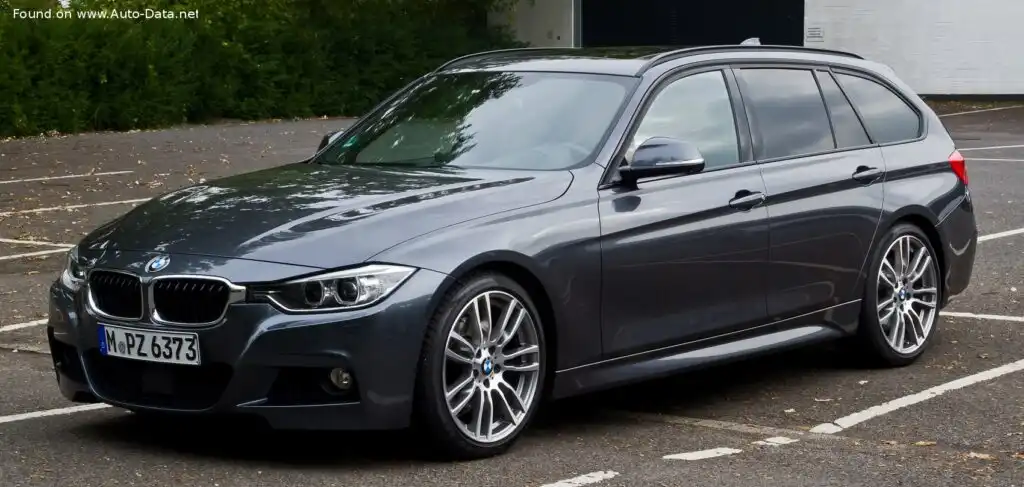
The BMW 3 Series Touring (F31) 320i Steptronic, produced from 2012 to 2015, represents BMW’s entry point into the premium compact executive estate (wagon) market. Positioned within the F31 generation of the 3 Series Touring, this variant offered a balance between fuel efficiency, practicality, and the BMW driving experience. It served as a more accessible alternative to the higher-performance 335i and 328i models, and a more comfortable option than the base 320i with a manual transmission. The F31 chassis, part of the broader F30 3 Series platform, aimed to deliver improved handling and refinement over its E91 predecessor.
Technical Specifications
| Brand | BMW |
| Model | 3 Series |
| Generation | 3 Series Touring (F31) |
| Type (Engine) | 320i (184 Hp) Steptronic |
| Start of production | 2012 |
| End of production | 2015 |
| Powertrain Architecture | Internal Combustion engine |
| Body type | Station wagon (estate) |
| Seats | 5 |
| Doors | 5 |
| Fuel consumption (urban) | 8.3-8.4 l/100 km (28.3 – 28 US mpg) |
| Fuel consumption (extra urban) | 4.9-5.0 l/100 km (48 – 47 US mpg) |
| Fuel consumption (combined) | 6.1-6.2 l/100 km (38.6 – 37.9 US mpg) |
| CO2 emissions | 143-145 g/km |
| Fuel Type | Petrol (Gasoline) |
| Acceleration 0 – 100 km/h | 7.5 sec |
| Acceleration 0 – 62 mph | 7.5 sec |
| Acceleration 0 – 60 mph | 7.1 sec |
| Maximum speed | 228 km/h (141.67 mph) |
| Emission standard | Euro 5 |
| Weight-to-power ratio | 8.1 kg/Hp |
| Weight-to-torque ratio | 5.5 kg/Nm |
| Power | 184 Hp @ 5000 rpm |
| Torque | 270 Nm @ 1250-4500 rpm (199.14 lb.-ft. @ 1250-4500 rpm) |
| Engine layout | Front, Longitudinal |
| Engine Model/Code | N20B20B |
| Engine displacement | 1997 cm3 (121.86 cu. in.) |
| Number of cylinders | 4 |
| Engine configuration | Inline |
| Cylinder Bore | 84 mm (3.31 in.) |
| Piston Stroke | 90.1 mm (3.55 in.) |
| Compression ratio | 11:1 |
| Number of valves per cylinder | 4 |
| Fuel injection system | Direct injection |
| Engine aspiration | Twin-power turbo, Intercooler |
| Engine oil capacity | 5 l (5.28 US qt | 4.4 UK qt) |
| Coolant | 6.7 l (7.08 US qt | 5.9 UK qt) |
| Kerb Weight | 1485 kg (3273.86 lbs.) |
| Max. weight | 2035 kg (4486.41 lbs.) |
| Max load | 550 kg (1212.54 lbs.) |
| Trunk (boot) space – minimum | 495 l (17.48 cu. ft.) |
| Trunk (boot) space – maximum | 1500 l (52.97 cu. ft.) |
| Fuel tank capacity | 60 l (15.85 US gal | 13.2 UK gal) |
| Max. roof load | 75 kg (165.35 lbs.) |
| Permitted trailer load with brakes (12%) | 1600 kg (3527.4 lbs.) |
| Permitted trailer load without brakes | 695 kg (1532.21 lbs.) |
| Permitted towbar download | 75 kg (165.35 lbs.) |
| Length | 4624 mm (182.05 in.) |
| Width | 1811 mm (71.3 in.) |
| Height | 1429 mm (56.26 in.) |
| Wheelbase | 2810 mm (110.63 in.) |
| Front track | 1543 mm (60.75 in.) |
| Rear (Back) track | 1583 mm (62.32 in.) |
| Ride height (ground clearance) | 140 mm (5.51 in.) |
| Drag coefficient (Cd) | 0.32 |
| Minimum turning circle (turning diameter) | 11.3 m (37.07 ft.) |
| Drivetrain Architecture | Rear wheel drive |
| Number of gears and type of gearbox | 8 gears, automatic transmission Steptronic |
| Front suspension | Independent coil spring |
| Rear suspension | McPherson |
| Front brakes | Ventilated discs |
| Rear brakes | Ventilated discs |
| Assisting systems | ABS (Anti-lock braking system) |
| Steering type | Steering rack and pinion |
| Power steering | Electric Steering |
| Tires size | 205/60 R16 92V; 225/55 R16; 225/50 R17; 255/45 R17; 225/45 R18; 255/40 R18; 225/40 R19; 255/35 R19 |
| Wheel rims size | 7J x 16; 7.5J x 16; 7.5J x 17; 8.5J x 17; 8J x 18; 8.5J x 18; 8J x 19; 8.5J x 19 |
Powertrain & Engine Architecture
The 320i Steptronic utilizes the BMW N20B20B engine, a 2.0-liter turbocharged inline-four cylinder petrol engine. This engine is a key component of BMW’s modular engine family, known for its efficiency and performance. The N20 features direct fuel injection, a twin-scroll turbocharger, and variable valve timing (VANOS) and valve lift (Valvetronic) systems. These technologies work in concert to optimize combustion, improve throttle response, and enhance fuel economy. The engine produces 184 horsepower at 5,000 rpm and 270 Nm (199 lb-ft) of torque between 1,250 and 4,500 rpm. The Steptronic transmission is an 8-speed automatic gearbox, offering smooth shifts and contributing to the car’s overall efficiency. It allows for both fully automatic operation and manual gear selection via steering wheel-mounted paddles or the gear selector.
Driving Characteristics
The 320i Steptronic delivers a comfortable and refined driving experience. While not as overtly sporty as the higher-powered 3 Series variants, it provides adequate acceleration for everyday driving. The 0-60 mph sprint takes approximately 7.1 seconds. The 8-speed automatic transmission is well-tuned, providing quick and seamless gear changes. Compared to the 6-speed manual transmission available on the base 320i, the Steptronic offers greater convenience, particularly in urban traffic. However, some driving enthusiasts may find the automatic less engaging than the manual. The engine’s torque curve provides good low-end responsiveness, making it easy to navigate city streets. On the highway, the 320i Steptronic offers relaxed cruising and sufficient power for overtaking.
Equipment & Trim Levels
The 320i Steptronic typically came equipped with a respectable level of standard features. These included automatic climate control, power windows and mirrors, a multi-function steering wheel, and a basic audio system. Upholstery was generally cloth, although leather options were available. Optional extras included a premium sound system, navigation system, sunroof, and various driver-assistance features like parking sensors and lane departure warning. Trim levels varied depending on the market, but generally offered packages that bundled popular options together. The Sport Line package added aesthetic enhancements like sport seats, unique interior trim, and sport suspension.
Chassis & Braking
The F31 320i Steptronic utilizes a MacPherson strut front suspension and a multi-link rear suspension. This setup provides a good balance between ride comfort and handling precision. The steering is precise and well-weighted, offering good feedback to the driver. The braking system consists of ventilated disc brakes on all four wheels, providing ample stopping power. ABS (Anti-lock Braking System) is standard, enhancing safety in emergency braking situations. The chassis is relatively lightweight, contributing to the car’s agility. Stabilizer bars are fitted to both the front and rear axles to reduce body roll during cornering.
Market Reception & Comparison
The 320i Steptronic was generally well-received by automotive critics. It was praised for its fuel efficiency, comfortable ride, and refined interior. However, some reviewers noted that it lacked the outright performance of its more powerful siblings. Compared to the 328i and 335i, the 320i offered a more affordable entry point into the 3 Series range. In terms of fuel economy, the 320i Steptronic outperformed the higher-powered models, achieving combined fuel consumption figures of around 38-39 mpg. Reliability was generally good, although some owners reported minor issues with the turbocharger and fuel injectors.
Legacy
The F31 320i Steptronic remains a popular choice in the used car market. Its combination of practicality, fuel efficiency, and BMW build quality makes it an attractive option for buyers seeking a premium compact executive estate. The N20 engine, while generally reliable, requires regular maintenance, including oil changes and spark plug replacements. The 8-speed Steptronic transmission is known for its durability, but it’s important to check for smooth shifting and any signs of hesitation. Overall, the F31 320i Steptronic represents a well-rounded and capable vehicle that continues to offer a compelling ownership experience.