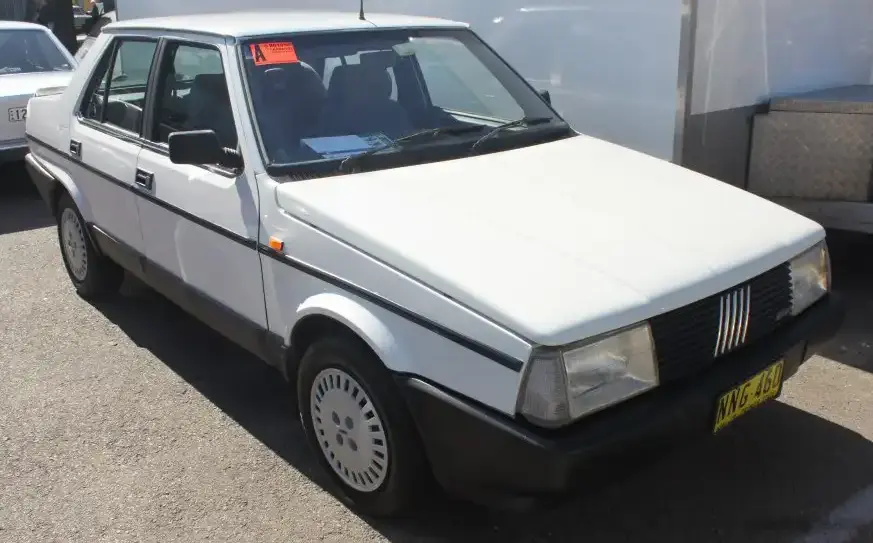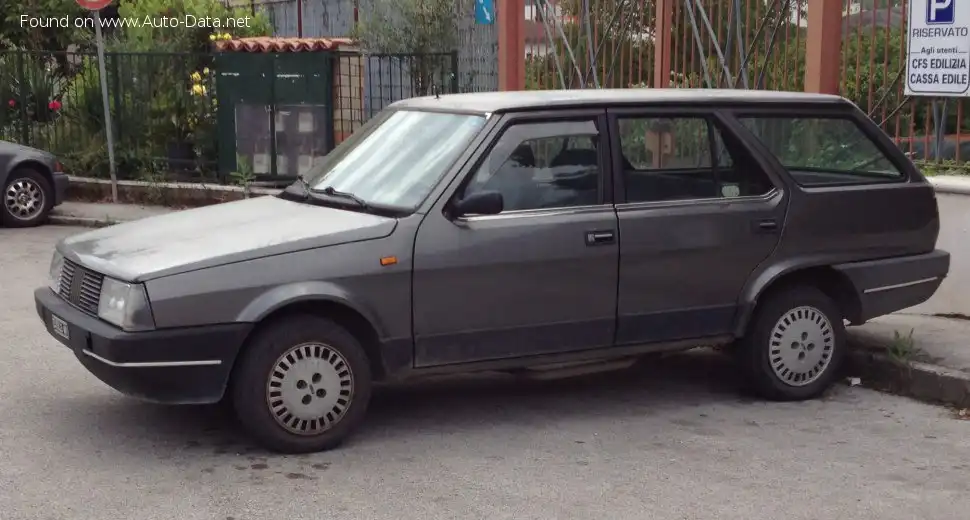
The Fiat Regata Weekend 90 i.e. 1.6, produced between 1987 and 1989, represents a specific variant within the broader Fiat Regata lineup. The Regata, launched in 1983 as a replacement for the Fiat 131, aimed to offer a modern, comfortable, and practical vehicle for European families. The Weekend version, introduced shortly after the initial Regata, was Fiat’s entry into the station wagon (estate) market, providing increased cargo capacity and versatility. The “90 i.e.” designation signifies the 1.6-liter engine equipped with electronic fuel injection, producing 90 horsepower. This trim level positioned itself as a mid-range offering, balancing performance with affordability within the Regata Weekend range.
Technical Specifications
| Brand | Fiat |
| Model | Regata |
| Generation | Regata Weekend |
| Type (Engine) | 90 i.e. 1.6 (90 Hp) |
| Start of production | 1987 |
| End of production | 1989 |
| Powertrain Architecture | Internal Combustion engine |
| Body type | Station wagon (estate) |
| Doors | 4 |
| Fuel Type | Petrol (Gasoline) |
| Power | 90 Hp |
| Engine Model/Code | 149 C2.000 |
| Engine aspiration | Naturally aspirated engine |
| Engine oil capacity | 4.1 l (4.33 US qt | 3.61 UK qt) |
| Coolant capacity | 7 l (7.4 US qt | 6.16 UK qt) |
| Length | 4267 mm (167.99 in.) |
| Width | 1650 mm (64.96 in.) |
| Height | 1450 mm (57.09 in.) |
| Wheelbase | 2455 mm (96.65 in.) |
Powertrain & Engine Architecture
The heart of the Regata Weekend 90 i.e. is the 149 C2.000 engine, a 1.6-liter inline-four cylinder gasoline engine. This engine featured a cast iron block and an aluminum cylinder head. The “i.e.” designation indicates the presence of Bosch electronic fuel injection, a significant upgrade over the carbureted engines found in earlier Regata models. This system improved fuel efficiency, reduced emissions, and provided smoother engine operation. The engine employed a single overhead camshaft (SOHC) valvetrain, operating two valves per cylinder. While not a particularly high-revving engine, it delivered a respectable 90 horsepower at approximately 5800 rpm and 137 Nm (101 lb-ft) of torque at 3600 rpm. The engine was typically paired with a three-speed automatic transmission, although a five-speed manual was also available. The automatic transmission, while offering convenience, was known for its relatively conservative gear ratios, prioritizing fuel economy over outright acceleration.
Driving Characteristics
The Regata Weekend 90 i.e. with the automatic transmission offered a comfortable, if not particularly sporty, driving experience. Acceleration was adequate for everyday driving, but the automatic transmission’s gearing meant that the engine often felt strained when attempting quicker maneuvers or overtaking. Compared to the five-speed manual version, the automatic suffered a noticeable performance deficit. The manual transmission allowed the engine to operate within its optimal power band more effectively. The suspension, consisting of MacPherson struts in the front and a twist-beam axle in the rear, provided a reasonably comfortable ride, absorbing bumps and imperfections in the road surface well. However, the car wasn’t particularly engaging to drive, with somewhat vague steering and noticeable body roll in corners. The focus was clearly on providing a practical and comfortable family vehicle rather than a driver’s car.
Equipment & Trim Levels
The Regata Weekend 90 i.e. typically came equipped with a reasonable level of standard features for its time. These included cloth upholstery, a basic instrument cluster, and manual windows and door locks. Power steering was often an optional extra, as was air conditioning. The interior design was functional and straightforward, prioritizing practicality over luxury. The dashboard layout was simple and easy to use, with clearly labeled controls. Optional extras could include upgraded audio systems, alloy wheels, and a sunroof. The trim level sat in the middle of the Regata Weekend range, offering more features than the base models but lacking the premium appointments of the higher-spec versions.
Chassis & Braking
The Regata Weekend featured a monocoque chassis construction. The front suspension utilized MacPherson struts, coil springs, and an anti-roll bar. The rear suspension employed a twist-beam axle with coil springs. Braking duties were handled by disc brakes on the front wheels and drum brakes on the rear wheels. The braking system was adequate for normal driving conditions, but lacked the stopping power of more modern vehicles. The steering was a recirculating ball system, which provided a relatively light steering feel but lacked precision. Stabilizer bars were fitted to both the front and rear axles to reduce body roll during cornering.
Market Reception & Comparison
The Fiat Regata Weekend 90 i.e. was generally well-received by automotive critics as a practical and affordable family vehicle. However, the automatic transmission was often criticized for its sluggish performance and conservative gearing. Compared to other station wagons available at the time, such as the Ford Sierra Estate or the Opel Ascona Caravan, the Regata Weekend offered a competitive price point and a reasonable level of equipment. The 1.6-liter engine provided adequate performance for most drivers, but those seeking more power often opted for the larger 1.8-liter or 2.0-liter engines. Fuel economy was respectable for the era, averaging around 30-35 mpg in mixed driving conditions. Reliability was generally good, although some owners reported issues with the electrical system.
Legacy
The Fiat Regata Weekend, and specifically the 90 i.e. 1.6 variant, holds a modest place in automotive history. While not a groundbreaking vehicle, it represented a solid and practical choice for European families in the late 1980s. The 149 C2.000 engine proved to be relatively durable and reliable, and many examples are still on the road today. In the used car market, the Regata Weekend 90 i.e. is often sought after by enthusiasts and collectors looking for a classic Italian vehicle. The automatic transmission version, while not as desirable as the manual, remains a viable option for those seeking a comfortable and easy-to-drive classic station wagon. Parts availability can be a challenge, but a dedicated community of Fiat enthusiasts helps to keep these vehicles running.