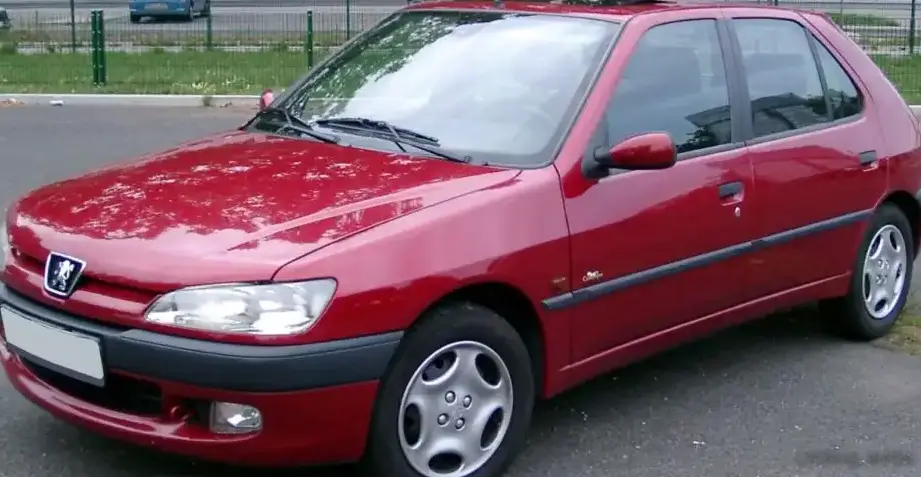
The Peugeot 306, particularly the 1.9 D variant produced from 1998 to 2002, represents a significant entry point into the compact hatchback market for European consumers during the late 1990s and early 2000s. This facelifted version of the 306 (internally designated as the N3/N5 platform) aimed to provide economical and practical transportation, focusing on fuel efficiency and affordability. The 1.9 D model, with its 69 horsepower diesel engine, was positioned as the base trim, appealing to buyers prioritizing low running costs over outright performance. It served as a workhorse for daily commutes and family duties, offering a balance between practicality and Peugeot’s established reputation for build quality.
Technical Specifications
| Brand | Peugeot |
| Model | 306 |
| Generation | 306 Hatchback (facelift 1997) |
| Type (Engine) | 1.9 D (69 Hp) |
| Start of production | 1998 |
| End of production | 2002 |
| Powertrain Architecture | Internal Combustion engine |
| Body type | Hatchback |
| Seats | 5 |
| Doors | 3-5 |
| Fuel consumption (urban) | 8.3 l/100 km (28.3 US mpg, 34 UK mpg, 12 km/l) |
| Fuel consumption (extra urban) | 5 l/100 km (47 US mpg, 56.5 UK mpg, 20 km/l) |
| Fuel Type | Diesel |
| Acceleration 0 – 100 km/h | 19.9 sec |
| Acceleration 0 – 62 mph | 19.9 sec |
| Acceleration 0 – 60 mph | 18.9 sec |
| Maximum speed | 161 km/h (100.04 mph) |
| Weight-to-power ratio | 15.7 kg/Hp, 63.9 Hp/tonne |
| Weight-to-torque ratio | 8.6 kg/Nm, 115.7 Nm/tonne |
| Power | 69 Hp @ 4600 rpm |
| Power per litre | 36.9 Hp/l |
| Torque | 125 Nm @ 2500 rpm (92.2 lb.-ft. @ 2500 rpm) |
| Engine layout | Front, Transverse |
| Engine Model/Code | WJY DW8B |
| Engine displacement | 1868 cm3 (113.99 cu. in.) |
| Number of cylinders | 4 |
| Engine configuration | Inline |
| Cylinder Bore | 82.2 mm (3.24 in.) |
| Piston Stroke | 88 mm (3.46 in.) |
| Compression ratio | 23:1 |
| Number of valves per cylinder | 2 |
| Fuel injection system | Diesel Commonrail |
| Engine aspiration | Naturally aspirated engine |
| Valvetrain | OHC |
| Engine oil capacity | 4.5 l (4.76 US qt | 3.96 UK qt) |
| Coolant | 8.2 l (8.66 US qt | 7.21 UK qt) |
| Kerb Weight | 1080 kg (2380.99 lbs.) |
| Max. weight | 1530 kg (3373.07 lbs.) |
| Max load | 450 kg (992.08 lbs.) |
| Trunk (boot) space – minimum | 338 l (11.94 cu. ft.) |
| Trunk (boot) space – maximum | 1146 l (40.47 cu. ft.) |
| Fuel tank capacity | 60 l (15.85 US gal | 13.2 UK gal) |
| Length | 4030 mm (158.66 in.) |
| Width | 1680 mm (66.14 in.) |
| Height | 1368 mm (53.86 in.) |
| Wheelbase | 2580 mm (101.57 in.) |
| Front track | 1454 mm (57.24 in.) |
| Rear (Back) track | 1423 mm (56.02 in.) |
| Drivetrain Architecture | The Internal combustion engine (ICE) drives the front wheels of the vehicle. |
| Drive wheel | Front wheel drive |
| Number of gears and type of gearbox | 5 gears, manual transmission |
| Front suspension | Wishbone |
| Rear suspension | Trailing arm |
| Front brakes | Disc |
| Rear brakes | Drum |
| Assisting systems | ABS (Anti-lock braking system) |
| Steering type | Steering rack and pinion |
| Power steering | Hydraulic Steering |
| Tires size | 185/65 R14 |
Powertrain & Engine Architecture
The heart of the 306 1.9 D is the WJY DW8B engine, a 1.9-liter inline-four diesel. This engine, a mainstay of Peugeot and Citroën vehicles of the era, is a naturally aspirated, indirect injection diesel. The DW8 engine family is known for its robustness and simplicity. The ‘WJY’ code specifically denotes a version optimized for emissions regulations prevalent in certain European markets. The engine utilizes a Bosch rotary injection pump, delivering fuel to the cylinders at high pressure. The cylinder head features a single overhead camshaft (OHC) operating two valves per cylinder. This configuration, while not particularly sophisticated, contributed to the engine’s reliability and ease of maintenance. The 5-speed manual transmission was the standard offering, chosen for its efficiency and cost-effectiveness. The transmission’s gear ratios were tuned for maximizing fuel economy rather than providing sporty acceleration.
Driving Characteristics
The 306 1.9 D, with its 69 horsepower and 92 lb-ft of torque, wasn’t designed for speed. Acceleration was leisurely, taking nearly 20 seconds to reach 60 mph. However, the engine’s torque characteristics made it reasonably capable in everyday driving situations. The engine felt strongest in the mid-range, providing sufficient power for overtaking maneuvers on open roads, albeit with a need to downshift. The manual transmission, while not particularly precise, was durable and easy to operate. The suspension, tuned for comfort, provided a reasonably smooth ride, absorbing bumps and imperfections in the road surface effectively. However, this came at the expense of handling sharpness, with noticeable body roll during cornering.
Equipment & Trim Levels
The 1.9 D trim level of the 306 was typically the entry-level offering. Standard equipment included power steering, central locking, and basic instrumentation. Interior upholstery was typically cloth, with a functional but unpretentious design. Optional extras included air conditioning, electric windows, and an upgraded audio system. The dashboard layout was straightforward and easy to use, prioritizing practicality over aesthetics. Safety features were limited by the standards of the time, typically including a driver’s airbag and ABS brakes.
Chassis & Braking
The 306 1.9 D utilized a front-wheel-drive layout with a MacPherson strut front suspension and a trailing arm rear suspension. This setup provided a good balance between ride comfort and handling. The front brakes were ventilated discs, while the rear brakes were drums. This configuration was typical for vehicles in this price range during the late 1990s. ABS (Anti-lock Braking System) was standard, enhancing braking performance and stability, particularly on slippery surfaces. The steering was a hydraulic power-assisted rack and pinion system, providing light and easy steering effort.
Market Reception & Comparison
The Peugeot 306 1.9 D was generally well-received as an affordable and economical hatchback. Critics praised its fuel efficiency and reliability, but noted its lack of performance. Compared to higher-trim 306 models, such as the 2.0-liter petrol versions, the 1.9 D offered significantly less power and refinement. However, it also offered substantially lower running costs, making it an attractive option for budget-conscious buyers. Against competitors like the Volkswagen Golf and Ford Focus, the 306 1.9 D offered a comparable level of practicality and economy, often at a lower price point.
Legacy
The Peugeot 306 1.9 D has proven to be a remarkably durable vehicle. Many examples are still on the road today, testament to the robustness of the DW8 engine and the overall build quality of the 306. While not a particularly sought-after model among enthusiasts, the 1.9 D remains a popular choice for those seeking a reliable and economical used car. Parts availability is generally good, and maintenance costs are relatively low. The 306 1.9 D represents a practical and affordable option for those seeking a no-frills, dependable hatchback.