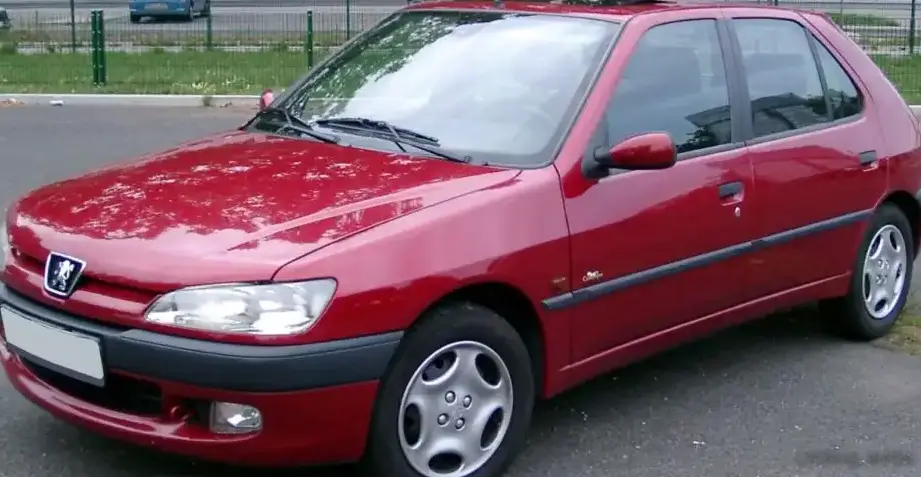
The Peugeot 306, particularly the facelifted version introduced in 1997, represented a significant step forward for the French automaker in the compact hatchback segment. Production of the 2.0 HDi 90 horsepower variant ran from 1999 to 2002, and it occupied a crucial position in the 306 lineup as an efficient and relatively affordable diesel option. This model was primarily aimed at the European market, where diesel engines enjoyed considerable popularity due to their fuel economy and suitability for long-distance driving. The 306, in general, was a popular choice for families and individuals seeking a practical and reliable vehicle, and the 2.0 HDi variant catered to those prioritizing fuel efficiency without sacrificing everyday usability.
Technical Specifications
| Brand | Peugeot |
| Model | 306 |
| Generation | 306 Hatchback (facelift 1997) |
| Type (Engine) | 2.0 HDi (90 Hp) |
| Start of production | 1999 |
| End of production | 2002 |
| Powertrain Architecture | Internal Combustion engine |
| Body type | Hatchback |
| Seats | 5 |
| Doors | 3-5 |
| Fuel consumption (urban) | 8 l/100 km (29.4 US mpg, 35.3 UK mpg, 12.5 km/l) |
| Fuel consumption (extra urban) | 4.7 l/100 km (50 US mpg, 60.1 UK mpg, 21.3 km/l) |
| Fuel consumption (combined) | 6.3 l/100 km (37.3 US mpg, 44.8 UK mpg, 15.9 km/l) |
| Fuel Type | Diesel |
| Acceleration 0 – 100 km/h | 11 sec |
| Acceleration 0 – 62 mph | 11 sec |
| Acceleration 0 – 60 mph | 10.5 sec |
| Maximum speed | 195 km/h (121.17 mph) |
| Weight-to-power ratio | 12.6 kg/Hp, 79.3 Hp/tonne |
| Weight-to-torque ratio | 5.5 kg/Nm, 180.6 Nm/tonne |
| Power | 90 Hp @ 4000 rpm |
| Power per litre | 45.1 Hp/l |
| Torque | 205 Nm @ 1900 rpm (151.2 lb.-ft. @ 1900 rpm) |
| Engine layout | Front, Transverse |
| Engine Model/Code | RHY DW10TD |
| Engine displacement | 1997 cm3 (121.86 cu. in.) |
| Number of cylinders | 4 |
| Engine configuration | Inline |
| Cylinder Bore | 85 mm (3.35 in.) |
| Piston Stroke | 88 mm (3.46 in.) |
| Compression ratio | 18:1 |
| Number of valves per cylinder | 2 |
| Fuel injection system | Diesel Commonrail |
| Engine aspiration | Turbocharger |
| Valvetrain | DOHC |
| Engine oil capacity | 4.3 l (4.54 US qt | 3.78 UK qt) |
| Coolant | 8 l (8.45 US qt | 7.04 UK qt) |
| Kerb Weight | 1135 kg (2502.25 lbs.) |
| Max. weight | 1585 kg (3494.33 lbs.) |
| Max load | 450 kg (992.08 lbs.) |
| Trunk (boot) space – minimum | 340 l (12.01 cu. ft.) |
| Trunk (boot) space – maximum | 640 l (22.6 cu. ft.) |
| Fuel tank capacity | 60 l (15.85 US gal | 13.2 UK gal) |
| Length | 4030 mm (158.66 in.) |
| Width | 1690 mm (66.54 in.) |
| Height | 1350 mm (53.15 in.) |
| Wheelbase | 2580 mm (101.57 in.) |
| Front track | 1460 mm (57.48 in.) |
| Rear (Back) track | 1430 mm (56.3 in.) |
| Drivetrain Architecture | The Internal combustion engine (ICE) drives the front wheels of the vehicle. |
| Drive wheel | Front wheel drive |
| Number of gears and type of gearbox | 5 gears, manual transmission |
| Front suspension | Wishbone |
| Rear suspension | Trailing arm |
| Front brakes | Disc |
| Rear brakes | Disc |
| Assisting systems | ABS (Anti-lock braking system) |
| Steering type | Steering rack and pinion |
| Power steering | Hydraulic Steering |
| Tires size | 195/55 R15 |
| Wheel rims size | 15 |
Powertrain & Engine Architecture
The heart of the 306 2.0 HDi was the DW10TD engine, specifically the RHY variant. This 1997cc, four-cylinder diesel engine utilized a common rail direct injection system, a relatively new technology at the time. Common rail injection allowed for more precise fuel delivery, resulting in improved combustion efficiency, reduced noise, and lower emissions compared to older diesel injection systems. The engine featured a single overhead camshaft (SOHC) design operating two valves per cylinder. A turbocharger with an intercooler was employed to boost power and torque, delivering 90 horsepower at 4000 rpm and a respectable 205 Nm (151.2 lb-ft) of torque at just 1900 rpm. The engine’s robust bottom end and relatively low-revving nature were characteristic of diesel engines of the era. The 306 2.0 HDi was equipped with a five-speed manual transmission, optimized for fuel efficiency and providing adequate acceleration.
Driving Characteristics
The 2.0 HDi 90 hp version of the 306 offered a comfortable and economical driving experience. While not particularly sporty, the engine provided sufficient power for everyday driving and highway cruising. The turbocharger provided a noticeable boost in power once spooled up, but the engine lacked the immediate responsiveness of higher-output gasoline variants. The five-speed manual transmission was well-matched to the engine’s characteristics, with gear ratios designed to maximize fuel efficiency. Compared to the more powerful 2.0-liter 16-valve gasoline engine, the HDi offered significantly better fuel economy but lacked the same level of outright performance. It also felt more refined and quieter than the older naturally aspirated diesel engines previously offered in the 306 range.
Equipment & Trim Levels
The 2.0 HDi 90 typically came with a reasonable level of standard equipment, reflecting its position as a mid-range offering. Standard features often included power steering, central locking, electric front windows, and an anti-lock braking system (ABS). Interior upholstery was typically cloth, and the dashboard featured a functional, if somewhat dated, design. Optional extras could include air conditioning, alloy wheels, a sunroof, and upgraded audio systems. Trim levels varied slightly depending on the market, but generally, the HDi variant was positioned above the base models in terms of features and refinement.
Chassis & Braking
The 306’s chassis featured a MacPherson strut front suspension and a trailing arm rear suspension. This setup provided a good balance between ride comfort and handling. The 2.0 HDi variant, being a heavier engine option, often benefited from slightly stiffer suspension components compared to the lower-powered models. Braking was typically handled by disc brakes on all four wheels, providing adequate stopping power for the vehicle’s weight and performance. The ABS system further enhanced safety by preventing wheel lockup during hard braking.
Market Reception & Comparison
The Peugeot 306 2.0 HDi was generally well-received by automotive critics for its fuel efficiency and refined driving experience. It was often praised for its comfortable ride and relatively quiet engine operation. Compared to other diesel-powered hatchbacks of the time, the 306 HDi offered a competitive combination of performance, economy, and practicality. However, some critics noted that the engine lacked the outright power of some of its rivals. Against the gasoline-powered 306 variants, the HDi offered superior fuel economy but less exciting performance. The 2.0 HDi was a popular choice for drivers covering long distances or those seeking a cost-effective and reliable vehicle.
Legacy
The Peugeot 306 2.0 HDi, and the DW10TD engine in particular, proved to be a reliable and durable powertrain. Many examples are still on the road today, testament to the engine’s robust construction and relatively simple design. While maintenance costs can increase with age, the engine is generally considered to be relatively easy to work on. The 306 HDi has become a popular choice among enthusiasts seeking a classic European hatchback with good fuel economy and a practical character. The introduction of common rail technology in this engine marked a significant step forward in diesel engine development, paving the way for the more advanced diesel engines found in modern vehicles.