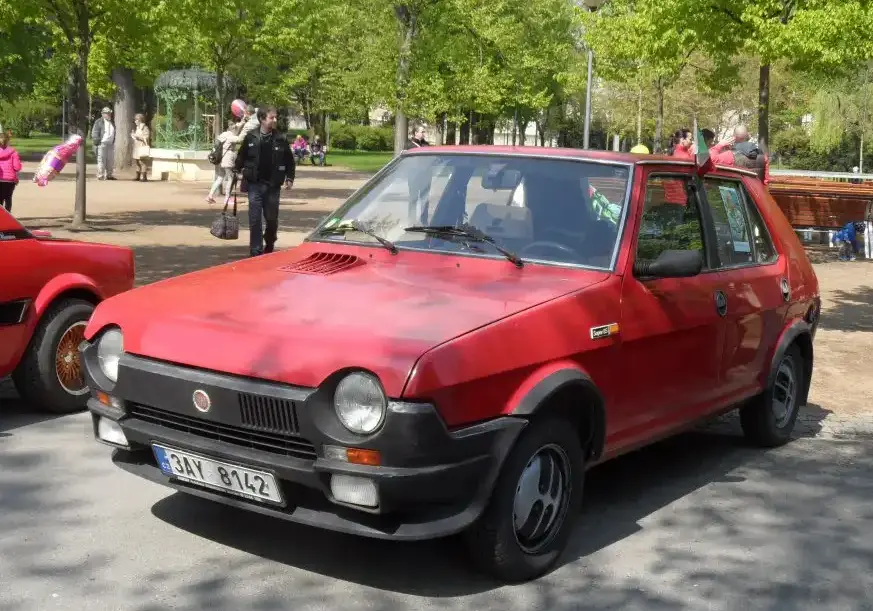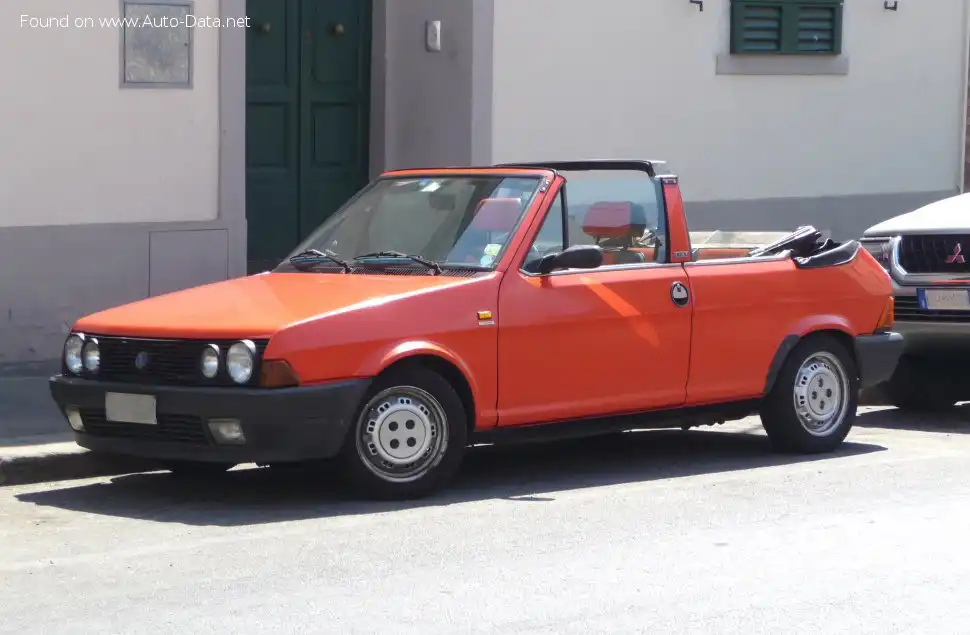
The Fiat Ritmo Bertone Cabriolet, specifically the 50 1.3 variant producing 68 horsepower, represents a unique and relatively short-lived chapter in Fiat’s history. Produced between 1985 and 1987, this open-top version of the Ritmo (also known as the Strade in some markets) was a collaborative effort between Fiat and Bertone, the renowned Italian design house. It aimed to offer an affordable and stylish convertible option to European buyers, capitalizing on the growing demand for leisure vehicles. This particular 1.3-liter engine and automatic transmission combination positioned itself as the entry-level offering within the Bertone Cabriolet range, prioritizing accessibility and ease of use over outright performance.
Technical Specifications
| Brand | Fiat |
| Model | Ritmo |
| Generation | Ritmo Bertone Cabrio I |
| Type (Engine) | 50 1.3 (68 Hp) |
| Start of Production | 1985 |
| End of Production | 1987 |
| Powertrain Architecture | Internal Combustion Engine |
| Body Type | Cabriolet |
| Fuel Type | Petrol (Gasoline) |
| Power | 68 Hp |
| Engine Model/Code | 138 B2.000 |
| Engine Aspiration | Naturally Aspirated |
| Engine Oil Capacity | 4.1 l (4.33 US qt | 3.61 UK qt) |
| Coolant Capacity | 6.5 l (6.87 US qt | 5.72 UK qt) |
Powertrain & Engine Architecture
The heart of the Ritmo Bertone Cabriolet 50 1.3 is the Fiat 138 B2.000 engine, a 1301cc inline-four cylinder unit. This engine, a descendant of Fiat’s long-running ‘100’ series, featured a cast iron block and an aluminum cylinder head. It employed a single overhead camshaft (SOHC) operating two valves per cylinder. Fuel delivery was managed by a Weber 32 ADFA carburetor, a relatively simple system for the time, prioritizing reliability and cost-effectiveness over sophisticated fuel injection. The engine’s modest 68 horsepower output at 6000 rpm and 84 lb-ft of torque at 3600 rpm were adequate for leisurely cruising, but didn’t offer particularly brisk acceleration. The engine was paired with a three-speed automatic transmission, a somewhat unusual choice for a European car of this era, where manual transmissions were far more common. This automatic was designed for smooth operation and ease of driving, further reinforcing the car’s positioning as an accessible and comfortable convertible.
Driving Characteristics
The Ritmo Bertone Cabriolet 50 1.3, with its automatic transmission and relatively low power output, offered a distinctly relaxed driving experience. Acceleration was modest, taking approximately 14-15 seconds to reach 60 mph. The three-speed automatic transmission, while providing convenience, lacked the responsiveness of a manual gearbox and contributed to a noticeable lack of urgency. Gear ratios were optimized for fuel economy and comfortable cruising rather than spirited performance. Compared to the more powerful 1.5 and 2.0-liter versions of the Bertone Cabriolet, the 1.3 felt noticeably slower, particularly when climbing hills or overtaking. However, the automatic transmission made it significantly easier to drive in urban environments than the manual-equipped models. The car’s soft suspension provided a comfortable ride, absorbing bumps and imperfections in the road reasonably well, but also resulted in noticeable body roll during cornering.
Equipment & Trim Levels
The 50 1.3 Bertone Cabriolet represented the base trim level. Standard equipment included cloth upholstery, a basic instrument cluster, and manual windows. The interior was functional and relatively spartan, reflecting the car’s affordable price point. Optional extras included upgraded upholstery materials, a more comprehensive instrument panel, and a radio/cassette player. The exterior featured body-colored bumpers and steel wheels with hubcaps. The convertible top was manually operated, requiring physical effort to raise and lower. While not lavishly equipped, the 50 1.3 offered the essential features for open-air motoring, prioritizing simplicity and affordability.
Chassis & Braking
The Ritmo Bertone Cabriolet utilized a monocoque chassis, providing a reasonable level of structural rigidity for a convertible. The front suspension consisted of independent MacPherson struts, while the rear suspension employed a torsion beam axle. This setup offered a compromise between ride comfort and handling. Braking was provided by disc brakes at the front and drum brakes at the rear. The braking system was adequate for normal driving conditions, but lacked the stopping power of more modern systems. The steering was unassisted, requiring a reasonable amount of effort, particularly at low speeds. Stabilizer bars were fitted to both the front and rear axles to reduce body roll, but their effectiveness was limited by the car’s relatively soft suspension.
Market Reception & Comparison
The Ritmo Bertone Cabriolet 50 1.3 received mixed reviews from automotive critics. While the styling was generally praised, the performance of the 1.3-liter engine and the three-speed automatic transmission were often criticized as being underpowered and sluggish. Compared to other convertibles available at the time, such as the Peugeot 205 Cabriolet and the Volkswagen Golf Cabriolet, the Ritmo Bertone Cabriolet offered a more affordable entry point, but at the expense of performance and refinement. Fuel economy was reasonable for the era, averaging around 30-35 mpg. Reliability was generally good, although the carburetor required periodic adjustment and maintenance. The 1.3 automatic was often seen as a car for drivers who prioritized ease of use and affordability over driving excitement.
Legacy
The Fiat Ritmo Bertone Cabriolet 50 1.3, despite its short production run, holds a certain nostalgic appeal for enthusiasts of Italian cars. The combination of Bertone’s stylish design and Fiat’s engineering resulted in a unique and relatively affordable convertible. Today, surviving examples are relatively rare and are sought after by collectors and enthusiasts. The 1.3-liter engine and automatic transmission, while not particularly powerful, are known for their reliability and relative simplicity. Maintenance costs are generally reasonable, although sourcing parts can sometimes be challenging. The car’s enduring appeal lies in its classic Italian styling, its open-air driving experience, and its status as a relatively affordable entry into the world of classic convertibles. While not a performance icon, the Ritmo Bertone Cabriolet 50 1.3 remains a charming and distinctive reminder of a bygone era in automotive history.