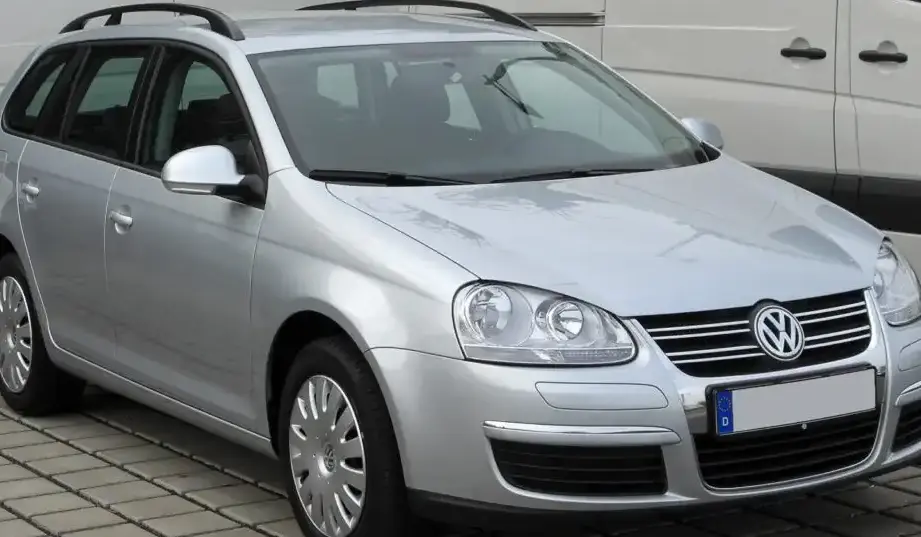
The Volkswagen Golf V Variant 1.4 TSI (140 hp) DSG represents a compelling blend of practicality and performance within the fifth-generation Golf lineup, produced between March 2007 and May 2008. Positioned as a mid-range offering in the Golf Variant (estate) body style, this model aimed to provide a more efficient and technologically advanced alternative to the naturally aspirated engines while offering the convenience of a dual-clutch transmission. It was primarily marketed in Europe, where the station wagon body style remained highly popular, offering a versatile vehicle for families and those requiring increased cargo capacity. This variant was a key part of Volkswagen’s strategy to offer a diverse range of Golf models catering to different customer needs and preferences.
Technical Specifications
| Brand | Volkswagen |
| Model | Golf |
| Generation | Golf V Variant |
| Type (Engine) | 1.4 TSI (140 Hp) DSG |
| Start of production | March, 2007 |
| End of production | May, 2008 |
| Powertrain Architecture | Internal Combustion engine |
| Body type | Station wagon (estate) |
| Seats | 5 |
| Doors | 5 |
| Fuel consumption (urban) | 9.7 l/100 km (24.2 US mpg, 29.1 UK mpg, 10.3 km/l) |
| Fuel consumption (extra urban) | 5.6 l/100 km (42 US mpg, 50.4 UK mpg, 17.9 km/l) |
| Fuel consumption (combined) | 7.1 l/100 km (33.1 US mpg, 39.8 UK mpg, 14.1 km/l) |
| Fuel Type | Petrol (Gasoline) |
| Acceleration 0 – 100 km/h | 9.5 sec |
| Acceleration 0 – 62 mph | 9.5 sec |
| Acceleration 0 – 60 mph | 9 sec |
| Maximum speed | 203 km/h (126.14 mph) |
| Emission standard | Euro 4 |
| Weight-to-power ratio | 9.8 kg/Hp, 101.7 Hp/tonne |
| Weight-to-torque ratio | 6.3 kg/Nm, 159.9 Nm/tonne |
| Power | 140 Hp @ 5600 rpm |
| Power per litre | 100.7 Hp/l |
| Torque | 220 Nm @ 1500-4000 rpm (162.26 lb.-ft. @ 1500-4000 rpm) |
| Engine layout | Front, Transverse |
| Engine Model/Code | BMY |
| Engine displacement | 1390 cm3 (84.82 cu. in.) |
| Number of cylinders | 4 |
| Engine configuration | Inline |
| Cylinder Bore | 76.5 mm (3.01 in.) |
| Piston Stroke | 75.6 mm (2.98 in.) |
| Number of valves per cylinder | 4 |
| Fuel injection system | Direct injection |
| Engine aspiration | Turbocharger, Intercooler |
| Valvetrain | DOHC |
| Engine oil capacity | 3.6 l (3.8 US qt | 3.17 UK qt) |
| Coolant | 5.6 l (5.92 US qt | 4.93 UK qt) |
| Kerb Weight | 1376 kg (3033.56 lbs.) |
| Max. weight | 1980 kg (4365.15 lbs.) |
| Max load | 604 kg (1331.59 lbs.) |
| Trunk (boot) space – minimum | 505 l (17.83 cu. ft.) |
| Trunk (boot) space – maximum | 1495 l (52.8 cu. ft.) |
| Fuel tank capacity | 55 l (14.53 US gal | 12.1 UK gal) |
| Length | 4556 mm (179.37 in.) |
| Width | 1781 mm (70.12 in.) |
| Height | 1504 mm (59.21 in.) |
| Wheelbase | 2578 mm (101.5 in.) |
| Front track | 1535 mm (60.43 in.) |
| Rear (Back) track | 1508 mm (59.37 in.) |
| Minimum turning circle | 10.5 m (34.45 ft.) |
Powertrain & Engine Architecture
At the heart of the Golf V Variant 1.4 TSI DSG lies the BMY engine code, a 1.4-liter inline-four cylinder gasoline engine. This engine utilizes direct fuel injection (FSI) and a turbocharger with an intercooler to deliver a respectable 140 horsepower at 5600 rpm and 220 Nm (162 lb-ft) of torque between 1500 and 4000 rpm. The direct injection system allows for precise fuel delivery, improving efficiency and reducing emissions. The turbocharger provides a significant boost in power, compensating for the relatively small displacement. The engine features a double overhead camshaft (DOHC) valvetrain, optimizing airflow for enhanced performance. Paired with this engine is the 7-speed DSG (Direct-Shift Gearbox), a dual-clutch transmission known for its quick and smooth gear changes. The DSG offers both fully automatic operation and the ability for the driver to manually shift gears via the gear selector or steering wheel-mounted paddles (depending on options).
Driving Characteristics
The 1.4 TSI DSG variant of the Golf V Variant offered a balanced driving experience. While not as overtly sporty as the GTI or models equipped with larger engines, it provided sufficient power for everyday driving and comfortable highway cruising. The DSG transmission played a crucial role in maximizing the engine’s output, providing rapid gear changes that kept the engine within its optimal power band. Acceleration from 0 to 100 km/h (0-62 mph) took approximately 9.5 seconds, and the top speed was rated at 203 km/h (126 mph). Compared to the base 1.6-liter engine, the 1.4 TSI offered a noticeable improvement in performance, while remaining more fuel-efficient than the larger 2.0-liter options. The DSG transmission, while efficient, could sometimes feel slightly hesitant at low speeds, a characteristic common to early DSG units.
Equipment & Trim Levels
The Golf V Variant 1.4 TSI DSG typically came equipped with a reasonable level of standard features. These included air conditioning, power windows, central locking, and an audio system. Safety features such as ABS (Anti-lock Braking System) and front airbags were also standard. Higher trim levels offered options such as alloy wheels, a multi-function steering wheel, automatic climate control, and a sunroof. Interior upholstery was typically cloth, with the option of leather upgrades. The dashboard layout was consistent with other Golf V models, featuring a functional and ergonomic design.
Chassis & Braking
The Golf V Variant 1.4 TSI DSG utilized a MacPherson strut front suspension and a multi-link rear suspension, providing a comfortable and controlled ride. The suspension was tuned to balance handling and comfort, making it suitable for both city driving and longer journeys. Braking systems varied depending on the specific trim level, with lower trims often featuring drum brakes on the rear wheels and higher trims offering disc brakes all around. Stabilizer bars were fitted to both the front and rear axles to reduce body roll during cornering. The steering was power-assisted, providing a light and responsive feel.
Market Reception & Comparison
The Golf V Variant 1.4 TSI DSG was generally well-received by automotive critics. It was praised for its fuel efficiency, smooth-shifting DSG transmission, and overall versatility. However, some critics noted that the engine could feel strained when fully loaded or driving uphill. Compared to the 1.6-liter Golf Variant, the 1.4 TSI offered a significant performance boost, while maintaining competitive fuel economy. Against the more powerful 2.0-liter models, the 1.4 TSI provided a more affordable and economical option, albeit with slightly less performance. Reliability was generally good, although early DSG units were known to require occasional maintenance.
Legacy
The Volkswagen Golf V Variant 1.4 TSI DSG remains a popular choice in the used car market, particularly in Europe. The combination of practicality, fuel efficiency, and the advanced DSG transmission continues to appeal to buyers. The BMY engine, while not without its quirks, has proven to be relatively durable with proper maintenance. However, potential buyers should be aware of the potential maintenance costs associated with the DSG transmission, including fluid changes and potential clutch pack replacements. Overall, the Golf V Variant 1.4 TSI DSG represents a well-rounded and capable vehicle that offers a compelling blend of performance, efficiency, and practicality.