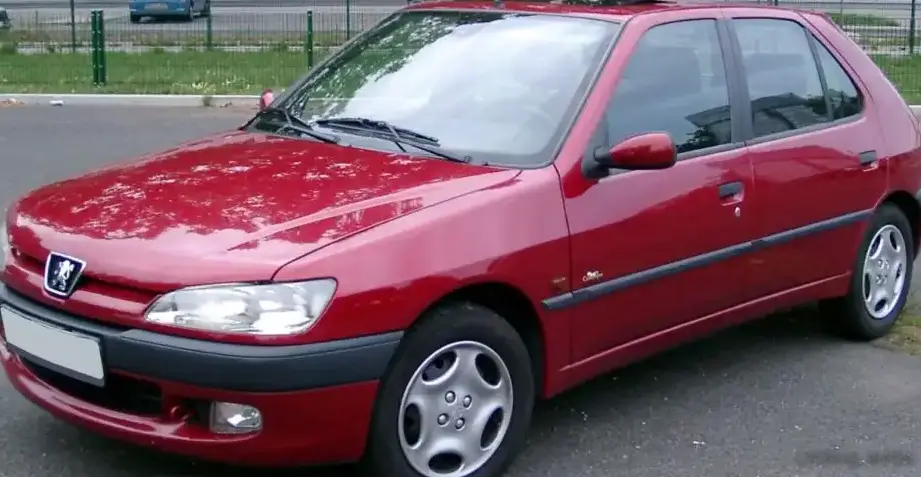
The Peugeot 306, produced from 1993 to 2002, was a small family car designed and manufactured by the French automaker Peugeot. The facelifted version introduced in 1997 brought revised styling and mechanical updates. Among the various engine and transmission combinations offered, the 2.0i 16V model, producing 133 horsepower, represented a performance-oriented option within the 306 range. This variant was typically positioned as a mid-to-high trim level, appealing to drivers seeking a blend of practicality and spirited driving. Production of this specific configuration ran from 1997 through 2002, coinciding with the later years of the 306’s lifecycle.
Technical Specifications
| Brand | Peugeot |
| Model | 306 |
| Generation | 306 Hatchback (facelift 1997) |
| Type (Engine) | 2.0i 16V (133 Hp) |
| Start of production | 1997 |
| End of production | 2002 |
| Powertrain Architecture | Internal Combustion engine |
| Body type | Hatchback |
| Seats | 5 |
| Doors | 3-5 |
| Fuel consumption (urban) | 12.8 l/100 km (18.4 US mpg, 22.1 UK mpg) |
| Fuel consumption (extra urban) | 7 l/100 km (33.6 US mpg, 40.4 UK mpg) |
| Fuel Type | Petrol (Gasoline) |
| Acceleration 0 – 100 km/h | 10.4 sec |
| Acceleration 0 – 62 mph | 10.4 sec |
| Acceleration 0 – 60 mph | 9.9 sec |
| Maximum speed | 201 km/h (124.9 mph) |
| Weight-to-power ratio | 8.7 kg/Hp |
| Weight-to-torque ratio | 6.4 kg/Nm |
| Power | 133 Hp @ 5500 rpm |
| Power per litre | 66.6 Hp/l |
| Torque | 180 Nm @ 4200 rpm (132.76 lb.-ft. @ 4200 rpm) |
| Engine layout | Front, Transverse |
| Engine Model/Code | RFV XU10J4R |
| Engine displacement | 1998 cm3 (121.93 cu. in.) |
| Number of cylinders | 4 |
| Engine configuration | Inline |
| Cylinder Bore | 86 mm (3.39 in.) |
| Piston Stroke | 86 mm (3.39 in.) |
| Compression ratio | 11:1 |
| Number of valves per cylinder | 4 |
| Fuel injection system | Multi-port manifold injection |
| Engine aspiration | Naturally aspirated engine |
| Valvetrain | DOHC |
| Engine oil capacity | 4.5 l (4.76 US qt | 3.96 UK qt) |
| Coolant capacity | 7.5 l (7.93 US qt | 6.6 UK qt) |
| Kerb Weight | 1160 kg (2557.36 lbs.) |
| Max. weight | 1625 kg (3582.51 lbs.) |
| Max load | 465 kg (1025.15 lbs.) |
| Trunk (boot) space – minimum | 338 l (11.94 cu. ft.) |
| Trunk (boot) space – maximum | 1146 l (40.47 cu. ft.) |
| Fuel tank capacity | 60 l (15.85 US gal | 13.2 UK gal) |
| Length | 4030 mm (158.66 in.) |
| Width | 1689 mm (66.5 in.) |
| Height | 1380 mm (54.33 in.) |
| Wheelbase | 2580 mm (101.57 in.) |
| Front track | 1454 mm (57.24 in.) |
| Rear track | 1423 mm (56.02 in.) |
| Ride height (ground clearance) | 120 mm (4.72 in.) |
| Drag coefficient (Cd) | 0.33 |
| Minimum turning circle | 11.0 m (36.09 ft.) |
| Drivetrain Architecture | Front wheel drive |
| Drive wheel | Front wheel drive |
| Number of gears | 5 |
| Gearbox type | Manual transmission |
| Front suspension | Wishbone |
| Rear suspension | Trailing arm |
| Front brakes | Ventilated discs |
| Rear brakes | Disc |
| Assisting systems | ABS (Anti-lock braking system) |
| Steering type | Steering rack and pinion |
| Tires size | 195/55 R15 |
| Wheel rims size | 15 |
Powertrain & Engine Architecture
The heart of the 306 2.0i 16V is the RFV XU10J4R engine, a 1.998-liter inline-four cylinder powerplant. This engine belongs to the XU series, a family of engines developed by Peugeot and Citroën. The “16V” designation indicates a four-valve-per-cylinder configuration, enhancing breathing and contributing to higher power output. The engine utilizes a multi-port fuel injection system, delivering fuel directly to the intake ports for precise fuel metering. The double overhead camshaft (DOHC) valvetrain further optimizes airflow into and out of the cylinders. The XU10J4R engine is known for its robust construction and relatively simple design, making it reasonably reliable. The 5-speed manual transmission paired with this engine was a common configuration, offering precise gear changes and a direct connection to the engine’s power.
Driving Characteristics
The 306 2.0i 16V offered a noticeable step up in performance compared to lower-spec models. With 133 horsepower and 180 Nm of torque, it provided brisk acceleration, reaching 60 mph in approximately 9.9 seconds and a top speed of around 125 mph. The manual transmission allowed drivers to fully exploit the engine’s powerband, while the relatively short gear ratios contributed to responsive acceleration. Compared to the base 1.4 or 1.6-liter engines, the 2.0i 16V felt significantly more capable, particularly when carrying passengers or luggage. While not a sports car, it offered a satisfying driving experience for those seeking a more engaging and dynamic ride than the entry-level models.
Equipment & Trim Levels
The 2.0i 16V trim typically included features such as power steering, central locking, electric front windows, and an upgraded interior trim. Higher-spec versions might have included alloy wheels, a sunroof, and air conditioning. Interior upholstery was generally cloth, with options for upgraded materials. The dashboard layout was typical of the 306, with a functional and straightforward design. Optional extras could include a CD player, upgraded sound system, and metallic paint finishes.
Chassis & Braking
The 306 2.0i 16V utilized a MacPherson strut front suspension and a trailing arm rear suspension. This setup provided a good balance between ride comfort and handling. The front brakes were ventilated discs, offering good stopping power, while the rear brakes were typically solid discs. Anti-lock Braking System (ABS) was often included as standard equipment, enhancing safety. The chassis was relatively lightweight, contributing to the car’s agility. Stabilizer bars were fitted to both the front and rear axles to reduce body roll during cornering.
Market Reception & Comparison
The 306 2.0i 16V was generally well-received by automotive critics, who praised its performance and handling. It was seen as a viable alternative to rivals such as the Volkswagen Golf and Ford Focus. Compared to the diesel-powered 306 models, the 2.0i 16V offered more spirited performance but at the cost of fuel economy. The 2.0i 16V was more expensive than the lower-spec models, but it provided a significant upgrade in terms of driving experience and equipment.
Legacy
The Peugeot 306 2.0i 16V has developed a following among enthusiasts, particularly those who appreciate its simple mechanicals and engaging driving dynamics. The XU10J4R engine is known for its durability, and well-maintained examples can still provide reliable service today. In the used car market, the 2.0i 16V models tend to command a premium over the lower-spec versions, reflecting their desirability among drivers seeking a more rewarding driving experience. While not a rare car, finding a well-preserved example is becoming increasingly challenging, making it a sought-after classic for many Peugeot fans.