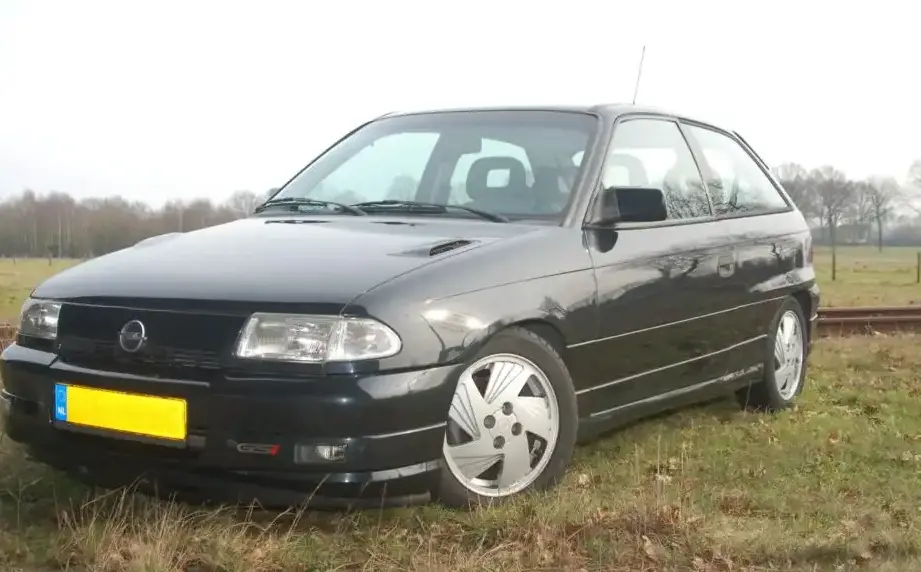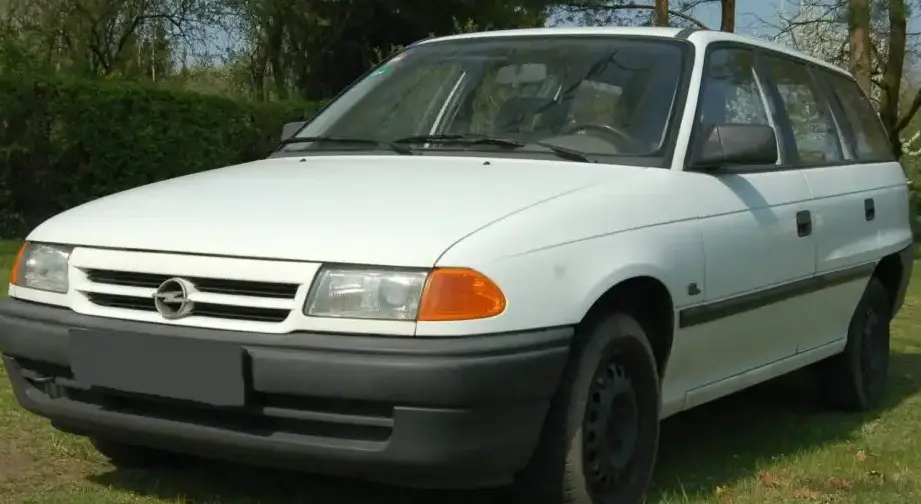
The Opel Astra F Caravan 1.4 Si, produced between 1992 and 1994, represented an entry-level offering within the broader Astra F Caravan (estate) range. Positioned as a practical and affordable family vehicle, it catered to buyers prioritizing fuel economy and space over outright performance. This variant utilized the C14SE engine paired with a four-speed automatic transmission, a configuration that distinguished it from the more common manual gearbox options and the higher-performance Astra variants. The Astra F generation, built on the GM T platform (internally known as 1HX0 for the Caravan), was a significant model for Opel, representing a substantial leap forward in design, safety, and technology compared to its predecessor.
Technical Specifications
| Brand | Opel |
| Model | Astra |
| Generation | Astra F Caravan |
| Type (Engine) | 1.4 Si (82 Hp) |
| Start of production | 1992 |
| End of production | 1994 |
| Powertrain Architecture | Internal Combustion engine |
| Body type | Station wagon (estate) |
| Seats | 5 |
| Doors | 5 |
| Fuel consumption (urban) | 10.7 l/100 km (22 US mpg, 26.4 UK mpg, 9.3 km/l) |
| Fuel consumption (extra urban) | 7.4 l/100 km (31.8 US mpg, 38.2 UK mpg, 13.5 km/l) |
| Fuel consumption (combined) | 7.9 l/100 km (29.8 US mpg, 35.8 UK mpg, 12.7 km/l) |
| Fuel Type | Petrol (Gasoline) |
| Acceleration 0 – 100 km/h | 13.5 sec |
| Acceleration 0 – 62 mph | 13.5 sec |
| Acceleration 0 – 60 mph | 12.8 sec |
| Maximum speed | 170 km/h (105.63 mph) |
| Weight-to-power ratio | 12.3 kg/Hp, 81.6 Hp/tonne |
| Weight-to-torque ratio | 8.8 kg/Nm, 113.4 Nm/tonne |
| Power | 82 Hp @ 5800 rpm |
| Power per litre | 59 Hp/l |
| Torque | 114 Nm @ 3400 rpm (84.08 lb.-ft. @ 3400 rpm) |
| Engine layout | Front, Transverse |
| Engine Model/Code | C14SE |
| Engine displacement | 1389 cm3 (84.76 cu. in.) |
| Number of cylinders | 4 |
| Engine configuration | Inline |
| Cylinder Bore | 77.6 mm (3.06 in.) |
| Piston Stroke | 73.4 mm (2.89 in.) |
| Compression ratio | 9.8:1 |
| Number of valves per cylinder | 2 |
| Fuel injection system | Multi-port manifold injection |
| Engine aspiration | Naturally aspirated engine |
| Valvetrain | SOHC |
| Engine oil capacity | 3.5 l (3.7 US qt | 3.08 UK qt) |
| Coolant capacity | 5.8 l (6.13 US qt | 5.1 UK qt) |
| Kerb Weight | 1005 kg (2215.65 lbs.) |
| Max. weight | 1515 kg (3340 lbs.) |
| Max load | 510 kg (1124.36 lbs.) |
| Trunk (boot) space – minimum | 500 l (17.66 cu. ft.) |
| Trunk (boot) space – maximum | 1630 l (57.56 cu. ft.) |
| Fuel tank capacity | 50 l (13.21 US gal | 11 UK gal) |
| Length | 4278 mm (168.43 in.) |
| Width | 1688 mm (66.46 in.) |
| Width including mirrors | 1795 mm (70.67 in.) |
| Height | 1475 mm (58.07 in.) |
| Wheelbase | 2517 mm (99.09 in.) |
| Front track | 1430 mm (56.3 in.) |
| Rear (Back) track | 1429 mm (56.26 in.) |
| Ride height (ground clearance) | 135 mm (5.31 in.) |
| Drag coefficient (Cd) | 0.34 |
| Minimum turning circle | 10.5 m (34.45 ft.) |
| Drivetrain Architecture | Front wheel drive |
| Number of gears and type of gearbox | 4 gears, automatic transmission |
| Front suspension | Wishbone |
| Rear suspension | Suspension with traction connecting levers |
| Front brakes | Disc |
| Rear brakes | Drum |
| Assisting systems | ABS (Anti-lock braking system) |
| Steering type | Steering rack and pinion |
| Power steering | Hydraulic Steering |
| Tires size | 175/70 R13 82T; 175/65 R14 82T |
| Wheel rims size | 5.5J x 13 ET49; 5.5J x 14 ET49 |
Powertrain & Engine Architecture
The heart of the Astra F Caravan 1.4 Si was the C14SE engine, a 1.4-liter (1389 cc) inline-four cylinder gasoline engine. This engine featured a single overhead camshaft (SOHC) valvetrain with two valves per cylinder. Fuel delivery was managed by a multi-port fuel injection system, a relatively modern feature for its time, contributing to improved fuel efficiency and reduced emissions compared to carbureted engines. The C14SE was known for its simplicity and durability, though it wasn’t a powerhouse. The four-speed automatic transmission, while offering convenience, was not particularly sophisticated. It featured a traditional hydraulic control system and was geared towards smooth, comfortable operation rather than sporty performance. This transmission was a common offering across various Opel and Vauxhall models of the era.
Driving Characteristics
The 1.4 Si automatic was not designed for spirited driving. With only 82 horsepower and 114 Nm (84 lb-ft) of torque, acceleration was leisurely. The 0-60 mph time of around 12.8 seconds reflects this. The automatic transmission, while smooth, contributed to a noticeable loss of power compared to the manual versions. Gear ratios were optimized for fuel economy, resulting in a somewhat sluggish response during overtaking maneuvers. However, for everyday commuting and relaxed cruising, the 1.4 Si automatic provided a comfortable and undemanding driving experience. The automatic transmission did offer a degree of convenience, particularly in urban environments, but at the expense of driver engagement and fuel efficiency compared to the five-speed manual.
Equipment & Trim Levels
The 1.4 Si trim level generally offered a modest level of equipment. Standard features typically included power steering, central locking, and a basic stereo system. Interior upholstery was usually cloth, and the dashboard featured a functional, if somewhat plain, design. Optional extras could include electric windows, a sunroof, and upgraded audio systems. The Caravan body style itself added practicality with its large cargo area, making it a popular choice for families. The 1.4 Si was often seen as a base model, with buyers able to upgrade to higher trims like the 1.6 or 1.8 models for more power and features.
Chassis & Braking
The Astra F Caravan 1.4 Si utilized a relatively simple chassis design. Front suspension consisted of wishbones, while the rear employed a torsion beam setup with traction connecting levers. This configuration prioritized ride comfort and cost-effectiveness over handling precision. Braking was also fairly basic, with disc brakes on the front wheels and drum brakes on the rear. Anti-lock braking system (ABS) was often included as standard equipment, enhancing safety. The suspension was tuned for a comfortable ride, absorbing bumps and imperfections in the road reasonably well. However, the relatively soft suspension and drum brakes on the rear limited its cornering ability.
Market Reception & Comparison
The Astra F Caravan 1.4 Si automatic was generally well-received as a practical and affordable family car. Critics acknowledged its fuel efficiency and spacious interior, but often noted its lack of performance. Compared to the 1.6 and 1.8-liter versions, the 1.4 Si felt noticeably slower and less refined. The manual transmission variants offered better fuel economy and a more engaging driving experience. However, the automatic version appealed to buyers who prioritized convenience and ease of use. Reliability was generally good, with the C14SE engine proving to be a durable unit.
Legacy
The Opel Astra F Caravan 1.4 Si automatic, while not a performance icon, remains a fondly remembered vehicle for many owners. The C14SE engine, despite its modest output, is known for its longevity and relatively low maintenance costs. Today, these cars are increasingly rare and sought after by classic car enthusiasts and collectors. The combination of practicality, affordability, and relative reliability has ensured that the Astra F Caravan 1.4 Si maintains a modest following in the used car market. Parts availability is generally good, making it a viable option for those seeking a classic European estate car.