
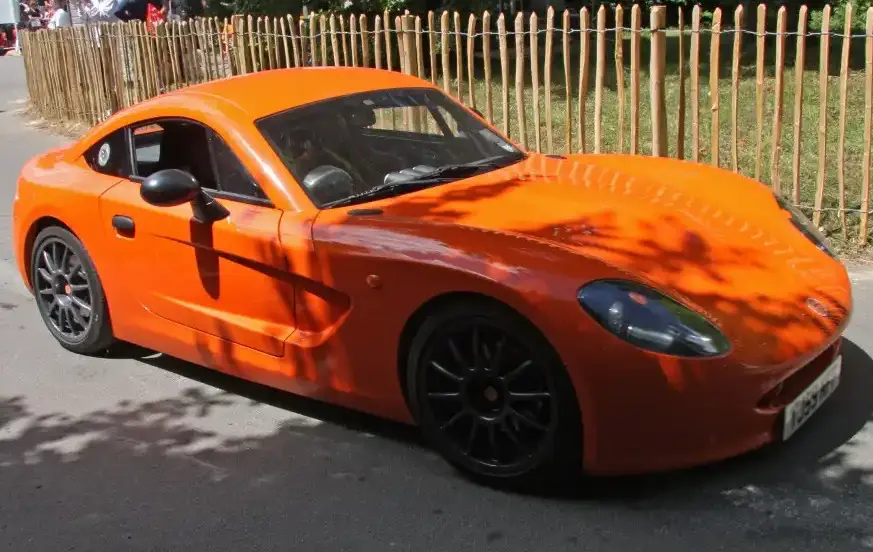
The Ginetta G40 Junior 1.8 (100 hp) is a lightweight, rear-wheel drive sports car produced by British manufacturer Ginetta Cars from 2010 onwards. Positioned as an entry-level model within the broader G40 range, the Junior 1.8 offered an accessible pathway into sports car ownership, particularly for aspiring racers. It represented a continuation of Ginetta’s long-standing tradition of building affordable, kit-car based sports cars, emphasizing driver engagement and handling prowess. The G40 platform itself was a significant step for Ginetta, moving towards a more standardized and readily assembled vehicle compared to their earlier, more heavily kit-based offerings.
Technical Specifications
| Brand | Ginetta |
| Model | G40 |
| Generation | G40 |
| Type | Junior 1.8 (100 Hp) |
| Start of production | 2010 |
| Powertrain Architecture | Internal Combustion engine |
| Body type | Coupe |
| Seats | 2 |
| Doors | 2 |
| Fuel Type | Petrol (Gasoline) |
| Maximum speed | 193 km/h (119.92 mph) |
| Weight-to-power ratio | 8.3 kg/Hp, 120.5 Hp/tonne |
| Power | 100 Hp |
| Power per litre | 55.6 Hp/l |
| Engine displacement | 1800 cm3 (109.84 cu. in.) |
| Number of cylinders | 4 |
| Engine configuration | Inline |
| Cylinder Bore | 80.6 mm (3.17 in.) |
| Piston Stroke | 88 mm (3.46 in.) |
| Compression ratio | 10:1 |
| Fuel injection system | Multi-port manifold injection |
| Engine aspiration | Naturally aspirated engine |
| Valvetrain | DOHC |
| Engine oil capacity | 5 l (5.28 US qt | 4.4 UK qt) |
| Kerb Weight | 830 kg (1829.84 lbs.) |
| Fuel tank capacity | 45 l (11.89 US gal | 9.9 UK gal) |
| Length | 3748 mm (147.56 in.) |
| Width | 1642 mm (64.65 in.) |
| Height | 1045 mm (41.14 in.) |
| Wheelbase | 2250 mm (88.58 in.) |
| Drivetrain Architecture | The Internal combustion engine (ICE) drives the rear wheels of the vehicle. |
| Drive wheel | Rear wheel drive |
| Number of gears and type of gearbox | 5 gears, manual transmission |
| Front brakes | Ventilated discs |
| Rear brakes | Ventilated discs |
| Wheel rims size | 7J x 15 |
Powertrain & Engine Architecture
The Ginetta G40 Junior 1.8 utilized a 1.8-liter inline four-cylinder engine, typically sourced from the Rover Group’s K-series engine family. While often referred to as a Rover engine, Ginetta frequently sourced these units from various suppliers and sometimes made modifications. The 100 hp output was achieved through a combination of a relatively mild camshaft profile, standard intake and exhaust manifolds, and a multi-port fuel injection system. The engine featured a double overhead camshaft (DOHC) valvetrain, contributing to its reasonable power output for its displacement. The engine was mounted longitudinally in the front of the chassis, driving the rear wheels. The transmission was a five-speed manual gearbox, chosen for its simplicity and cost-effectiveness. This powertrain combination, while not exceptionally powerful, was known for its reliability and relatively easy maintenance.
Driving Characteristics
The Ginetta G40 Junior 1.8, despite its modest 100 hp, offered a surprisingly engaging driving experience. Its lightweight construction – tipping the scales at around 830 kg (1829.84 lbs) – played a crucial role in its nimble handling. The rear-wheel drive configuration and well-tuned suspension provided a balanced chassis, allowing for predictable cornering behavior. The five-speed manual gearbox offered a decent spread of ratios, although the engine’s relatively low torque output meant that frequent gear changes were often necessary to maintain momentum. Compared to higher-powered G40 variants, such as those equipped with Ford Zetec engines, the Junior 1.8 felt less urgent in acceleration, but its lighter weight and more forgiving handling characteristics made it a more approachable option for novice drivers or those seeking a pure, analog driving experience. The power delivery was linear, making it easy to modulate the throttle and control the car in various conditions.
Equipment & Trim Levels
The Ginetta G40 Junior 1.8 was typically offered with a fairly basic level of equipment, reflecting its position as the entry-level model. Standard features generally included a simple dashboard layout with basic instrumentation, cloth upholstery, and manually adjustable seats. Power steering was often an optional extra, as were features like a radio/CD player. The interior was functional rather than luxurious, prioritizing weight savings and a driver-focused environment. The G40 was often sold as a kit car, allowing buyers to customize various aspects of the interior and exterior to their preferences. Common options included upgraded seats, different wheel designs, and a range of exterior paint colors. The focus was on providing a blank canvas for enthusiasts to create their ideal sports car.
Chassis & Braking
The Ginetta G40 utilized a space frame chassis constructed from steel tubing, providing a rigid and lightweight platform. The suspension consisted of independent double wishbones at the front and a live axle with trailing arms at the rear. This setup offered a good balance between handling performance and cost-effectiveness. Braking was provided by ventilated disc brakes on all four wheels, offering adequate stopping power for the car’s weight and performance. The relatively narrow tires (typically 195/50R15) contributed to the car’s nimble handling but also limited grip in extreme conditions. The steering was direct and responsive, providing good feedback to the driver.
Market Reception & Comparison
The Ginetta G40 Junior 1.8 was generally well-received by automotive enthusiasts and the motoring press as an affordable and engaging sports car. Critics praised its lightweight construction, balanced handling, and rear-wheel drive configuration. However, some reviewers noted the engine’s lack of outright power and the somewhat spartan interior. Compared to other entry-level sports cars of the time, such as the Mazda MX-5, the Ginetta offered a more raw and visceral driving experience, but lacked the refinement and creature comforts of its Japanese rival. Fuel economy was reasonable for a sports car of this type, typically achieving around 30-35 mpg in mixed driving. Reliability was generally good, although the Rover K-series engine was known to be susceptible to head gasket failures if not properly maintained.
Legacy
The Ginetta G40 Junior 1.8 remains a popular choice among enthusiasts seeking an affordable and engaging sports car. Its simple construction and readily available parts make it relatively easy to maintain and repair. The car has also gained a following in motorsport, with many examples being used in track day events and racing series. In the used car market, the G40 Junior 1.8 typically commands a modest price, making it an accessible entry point into the world of classic and modern sports cars. While not the most powerful or luxurious sports car available, the Ginetta G40 Junior 1.8 offers a unique and rewarding driving experience that continues to appeal to enthusiasts today. The longevity of the G40 platform itself is a testament to Ginetta’s commitment to building fun-to-drive, affordable sports cars.
