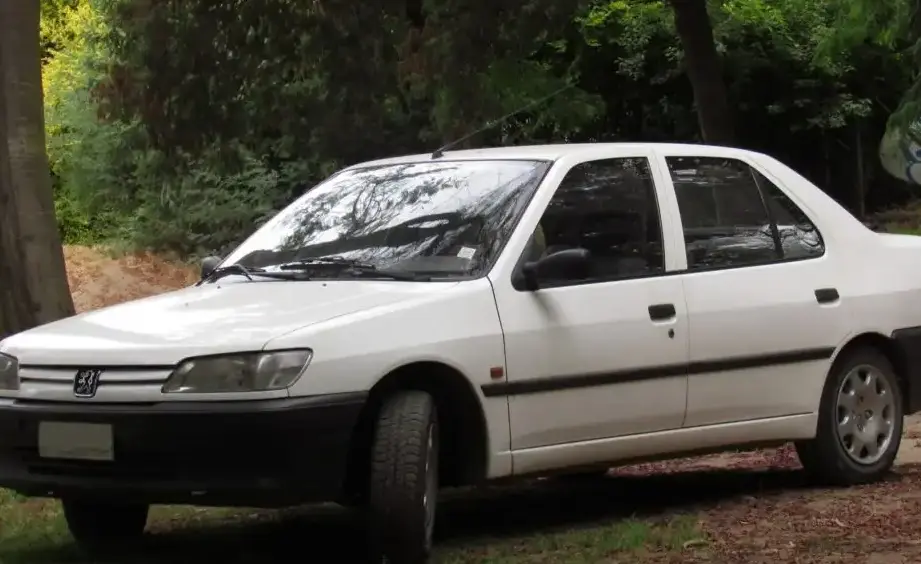
The Peugeot 306 Sedan (7B) 1.1, produced between 1994 and 1997, represented the entry point into the 306 sedan range. Positioned as an affordable and economical family car, it was primarily aimed at buyers in European markets where compact sedans remained popular. The 7B designation refers to the sedan body style within the broader 306 series, which also included hatchback and cabriolet variants. This particular 1.1-liter engine and transmission combination was designed for fuel efficiency and ease of driving, rather than outright performance, and served as a practical option for daily commuting and general transportation.
Technical Specifications
| Brand | Peugeot |
| Model | 306 |
| Generation | 306 Sedan (7B) |
| Type (Engine) | 1.1 (60 Hp) |
| Start of Production | 1994 |
| End of Production | 1997 |
| Powertrain Architecture | Internal Combustion Engine |
| Body Type | Sedan |
| Fuel Type | Petrol (Gasoline) |
| Power | 60 Hp |
| Engine Model/Code | HDZ / TU1M |
| Engine Aspiration | Naturally Aspirated |
| Engine Oil Capacity | 3.2 l (3.38 US qt | 2.82 UK qt) |
| Coolant Capacity | 6.5 l (6.87 US qt | 5.72 UK qt) |
Powertrain & Engine Architecture
The heart of the 306 Sedan 1.1 was the Peugeot HDZ (or TU1M) engine, a 1.1-liter (1124 cc) inline-four cylinder petrol engine. This engine was a mainstay in Peugeot’s lineup during the 1990s, known for its simplicity and reliability. It featured a single overhead camshaft (SOHC) valvetrain with two valves per cylinder. Fuel delivery was managed by a Bosch Mono-Motronic fuel injection system, a single-point injection system that was cost-effective but less sophisticated than multi-point injection. The engine produced 60 horsepower (44 kW) at 5500 rpm and 84 Nm (62 lb-ft) of torque at 3300 rpm. The engine was typically paired with a four-speed automatic transmission, although a five-speed manual gearbox was also available. The automatic transmission was a conventional hydraulic unit, prioritizing smooth shifts over sporty responsiveness. The engine block was constructed from cast iron, contributing to its durability, while the cylinder head was made of aluminum alloy to reduce weight.
Driving Characteristics
The 306 Sedan 1.1 with the automatic transmission offered a comfortable, if uninspiring, driving experience. Acceleration was modest, with a 0-60 mph time estimated around 14-16 seconds. The four-speed automatic transmission, while providing convenience, resulted in relatively wide gear ratios. This meant the engine often operated at higher revs during highway cruising, impacting fuel economy and noise levels. The gear changes were generally smooth, but lacked the quick responsiveness of more modern automatic transmissions. The car was best suited for urban driving and shorter journeys, where its light steering and compact dimensions made it easy to maneuver. Compared to the 1.6-liter and 1.8-liter versions of the 306, the 1.1 offered significantly less power and torque, making it less capable for overtaking or carrying a full load of passengers and luggage. The manual transmission version, while offering better fuel economy and more driver involvement, still didn’t transform the 306 1.1 into a performance car.
Equipment & Trim Levels
The 306 Sedan 1.1 typically came with a basic level of equipment, reflecting its position as the entry-level model. Standard features generally included power steering, central locking, and an adjustable steering column. Interior upholstery was typically cloth, with a simple dashboard layout. Air conditioning, electric windows, and alloy wheels were usually optional extras. Trim levels varied slightly depending on the market, but generally followed a progressive structure. Higher trim levels added features like upgraded upholstery, a radio/cassette player, and body-colored bumpers. Safety features were relatively basic for the time, typically including a driver’s airbag and seatbelts. The overall interior design was functional and practical, prioritizing durability over luxury.
Chassis & Braking
The 306 Sedan 1.1 utilized a MacPherson strut front suspension and a torsion beam rear suspension. This setup provided a reasonable balance between ride comfort and handling. The torsion beam rear suspension was a cost-effective solution, but didn’t offer the same level of sophistication as independent rear suspension found in higher-spec 306 models. Braking was typically accomplished with disc brakes on the front wheels and drum brakes on the rear wheels. Anti-lock Braking System (ABS) was often an optional extra. The car’s relatively light weight, due to the small engine, helped to compensate for the less powerful braking system. Stabilizer bars were fitted to both the front and rear axles to reduce body roll during cornering, although their effectiveness was limited by the car’s overall suspension setup.
Market Reception & Comparison
The Peugeot 306 Sedan 1.1 was generally well-received as an affordable and reliable family car. Critics praised its fuel efficiency and ease of driving, but noted its lack of performance. Compared to rivals like the Renault 19 and Citroën BX, the 306 offered a similar level of practicality and affordability. However, the 306’s styling was often considered more modern and appealing. Within the 306 range, the 1.1-liter version was significantly less popular than the 1.6-liter and 1.8-liter models, which offered better performance and a more refined driving experience. Fuel economy was a key selling point for the 1.1, averaging around 35-40 mpg in mixed driving conditions. Reliability was generally good, although the Mono-Motronic fuel injection system could occasionally require maintenance. The automatic transmission, while convenient, was sometimes criticized for its lack of responsiveness and potential for long-term durability issues.
Legacy
The Peugeot 306 Sedan 1.1, while not a particularly sought-after model today, remains a relatively common sight on European roads. The HDZ/TU1M engine is known for its robustness and longevity, and many examples are still running with high mileage. Parts availability is generally good, and maintenance costs are relatively low. In the used car market, the 306 1.1 represents an extremely affordable entry point into classic Peugeot ownership. However, potential buyers should be aware of the potential for rust, particularly on older examples. The car’s simplicity and reliability make it a popular choice for novice mechanics and those looking for a straightforward, economical vehicle. While it lacks the performance and sophistication of more modern cars, the 306 Sedan 1.1 remains a testament to Peugeot’s commitment to building practical and durable family cars.