
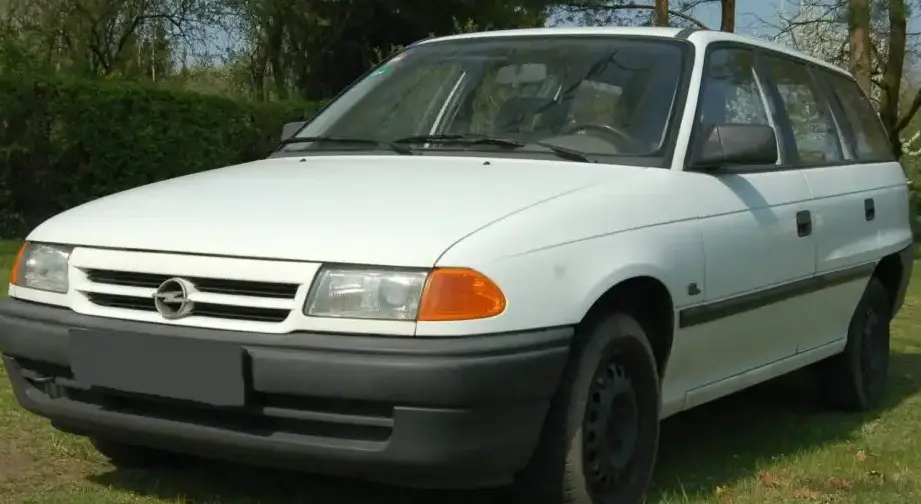
The Opel Astra F Caravan 1.6 Si Automatic, produced between March 1993 and July 1994, represented a practical and accessible entry point into the popular Astra F Caravan (estate) range. Positioned as a mid-range offering, it combined a 1.6-liter gasoline engine with a four-speed automatic transmission, catering to buyers prioritizing comfort and convenience over outright performance. This variant was a key component of the Astra F’s success in the European market, offering a versatile family vehicle with a reasonable price tag. It was built on the GM T platform, also known as the 1HX0/A3 platform, shared with other models like the Vauxhall Vectra and Saab 900.
Technical Specifications
| Brand | Opel |
| Model | Astra |
| Generation | Astra F Caravan |
| Type (Engine) | 1.6 Si (100 Hp) Automatic |
| Start of production | March, 1993 |
| End of production | July, 1994 |
| Powertrain Architecture | Internal Combustion engine |
| Body type | Station wagon (estate) |
| Seats | 5 |
| Doors | 5 |
| Fuel consumption (urban) | 9.6 l/100 km (24.5 US mpg, 29.4 UK mpg, 10.4 km/l) |
| Fuel consumption (extra urban) | 6.5 l/100 km (36.2 US mpg, 43.5 UK mpg, 15.4 km/l) |
| Fuel consumption (combined) | 8.4 l/100 km (28 US mpg, 33.6 UK mpg, 11.9 km/l) |
| Fuel Type | Petrol (Gasoline) |
| Acceleration 0 – 100 km/h | 13 sec |
| Acceleration 0 – 62 mph | 13 sec |
| Acceleration 0 – 60 mph | 12.4 sec |
| Maximum speed | 178 km/h (110.6 mph) |
| Weight-to-power ratio | 10.4 kg/Hp, 96.2 Hp/tonne |
| Weight-to-torque ratio | 7.6 kg/Nm, 130.8 Nm/tonne |
| Power | 100 Hp @ 5600 rpm |
| Power per litre | 62.6 Hp/l |
| Torque | 136 Nm @ 3400 rpm (100.31 lb.-ft. @ 3400 rpm) |
| Engine layout | Front, Transverse |
| Engine Model/Code | C16SE |
| Engine displacement | 1598 cm3 (97.52 cu. in.) |
| Number of cylinders | 4 |
| Engine configuration | Inline |
| Cylinder Bore | 79 mm (3.11 in.) |
| Piston Stroke | 81.5 mm (3.21 in.) |
| Compression ratio | 9.8:1 |
| Number of valves per cylinder | 2 |
| Fuel injection system | Multi-port manifold injection |
| Engine aspiration | Naturally aspirated engine |
| Valvetrain | SOHC |
| Engine oil capacity | 3.5 l (3.7 US qt | 3.08 UK qt) |
| Coolant | 5.7 l (6.02 US qt | 5.02 UK qt) |
| Kerb Weight | 1040 kg (2292.81 lbs.) |
| Max. weight | 1555 kg (3428.19 lbs.) |
| Max load | 515 kg (1135.38 lbs.) |
| Trunk (boot) space – minimum | 500 l (17.66 cu. ft.) |
| Trunk (boot) space – maximum | 1630 l (57.56 cu. ft.) |
| Fuel tank capacity | 50 l (13.21 US gal | 11 UK gal) |
| Length | 4278 mm (168.43 in.) |
| Width | 1688 mm (66.46 in.) |
| Width including mirrors | 1795 mm (70.67 in.) |
| Height | 1475 mm (58.07 in.) |
| Wheelbase | 2517 mm (99.09 in.) |
| Front track | 1430 mm (56.3 in.) |
| Rear (Back) track | 1429 mm (56.26 in.) |
| Ride height (ground clearance) | 135 mm (5.31 in.) |
| Drag coefficient (Cd) | 0.34 |
| Minimum turning circle | 10.5 m (34.45 ft.) |
| Drivetrain Architecture | The Internal combustion engine (ICE) drives the front wheels of the vehicle. |
| Drive wheel | Front wheel drive |
| Number of gears and type of gearbox | 4 gears, automatic transmission |
| Front suspension | Wishbone |
| Rear suspension | Coil spring |
| Front brakes | Ventilated discs |
| Rear brakes | Drum |
| Steering type | Steering rack and pinion |
| Tires size | 175/70 R13 82T; 175/65 R14 82T |
| Wheel rims size | 5.5J x 13 ET49; 5.5J x 14 ET49 |
Powertrain & Engine Architecture
The heart of the Astra F Caravan 1.6 Si Automatic was the C16SE engine, a 1.6-liter inline-four cylinder gasoline engine. This engine featured a single overhead camshaft (SOHC) valvetrain operating two valves per cylinder. Fuel delivery was handled by a multi-port fuel injection system, providing a balance between efficiency and performance. The C16SE was known for its relative simplicity and durability, making it a popular choice for fleet vehicles and everyday drivers. The four-speed automatic transmission, while not offering the sportiness of a manual, provided smooth and effortless gear changes, enhancing the car’s comfort. The transmission’s gear ratios were optimized for fuel economy and relaxed cruising, rather than rapid acceleration.
Driving Characteristics
The 1.6 Si Automatic offered a comfortable, if not particularly exhilarating, driving experience. With 100 horsepower and 136 Nm of torque, acceleration from 0 to 60 mph took around 12.4 seconds, and top speed was around 110 mph. The automatic transmission, while convenient, did sap some power compared to the manual versions. The gear changes were generally smooth, but could feel somewhat sluggish during quick overtaking maneuvers. The suspension provided a comfortable ride, absorbing bumps and imperfections in the road well. However, the car wasn’t particularly engaging to drive, lacking the sharp handling of some of its rivals.
Equipment & Trim Levels
The 1.6 Si Automatic trim level typically included features such as central locking, power steering, and an adjustable steering column. Interior upholstery was usually cloth, with a relatively basic dashboard layout. Optional extras included air conditioning, electric windows, and a sunroof. The Caravan body style itself added practicality with its large cargo area, making it a popular choice for families and those needing to transport larger items. The trim level was a step up from the base models, offering a more comfortable and well-equipped interior.
Chassis & Braking
The Astra F Caravan featured a front-wheel-drive layout with a wishbone front suspension and a coil spring rear suspension. The front brakes were ventilated discs, providing adequate stopping power, while the rear brakes were drums. This configuration was typical for vehicles in this class at the time. The chassis was designed to provide a comfortable ride and reasonable handling, prioritizing practicality over outright performance. Stabilizer bars were included to reduce body roll during cornering, but the car wasn’t designed for aggressive driving.
Market Reception & Comparison
The Astra F Caravan 1.6 Si Automatic was generally well-received by critics as a practical and affordable family car. It offered a good balance of comfort, space, and fuel economy. However, it was often criticized for its lack of performance compared to higher-powered variants, such as the 2.0-liter models. Compared to the 1.4-liter base model, the 1.6 Si offered a noticeable improvement in performance, making it a more suitable choice for those who frequently carried passengers or luggage. Fuel economy was competitive for its class, averaging around 28 US mpg in combined driving.
Legacy
The Opel Astra F Caravan 1.6 Si Automatic has proven to be a relatively reliable vehicle, with many examples still on the road today. The C16SE engine is known for its durability, and the automatic transmission, while not the most sophisticated, is generally dependable. However, like all older vehicles, it’s susceptible to age-related issues such as rust and wear and tear on suspension components. In the used car market, these Astras are often sought after as affordable and practical transportation, particularly by those looking for a classic European estate car. Parts availability is generally good, making maintenance relatively straightforward.

