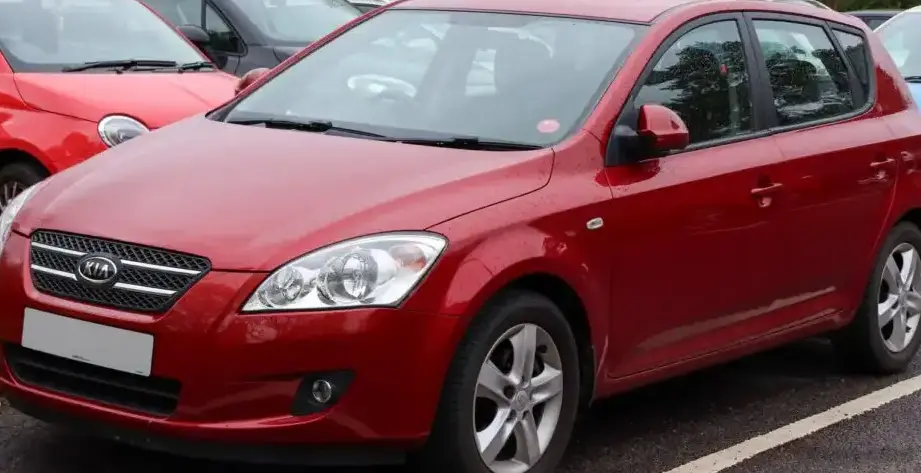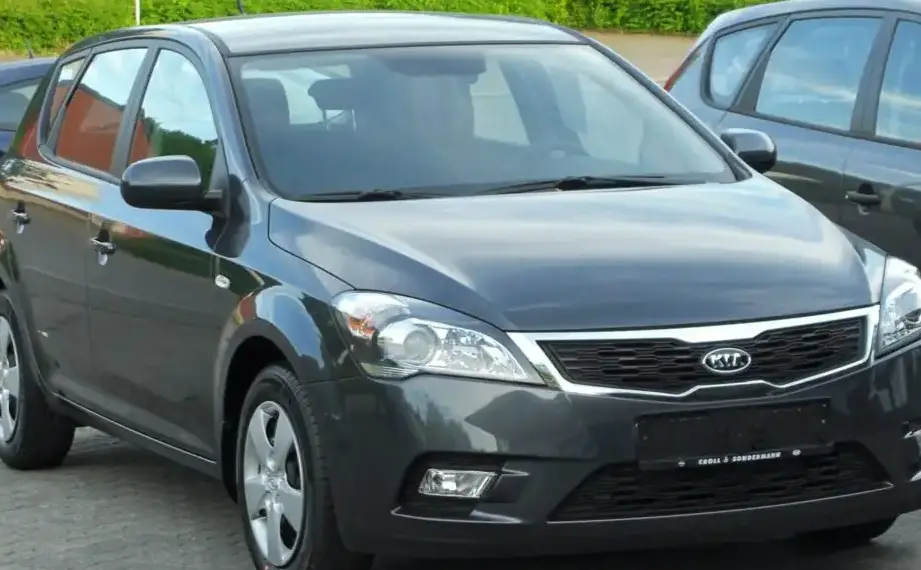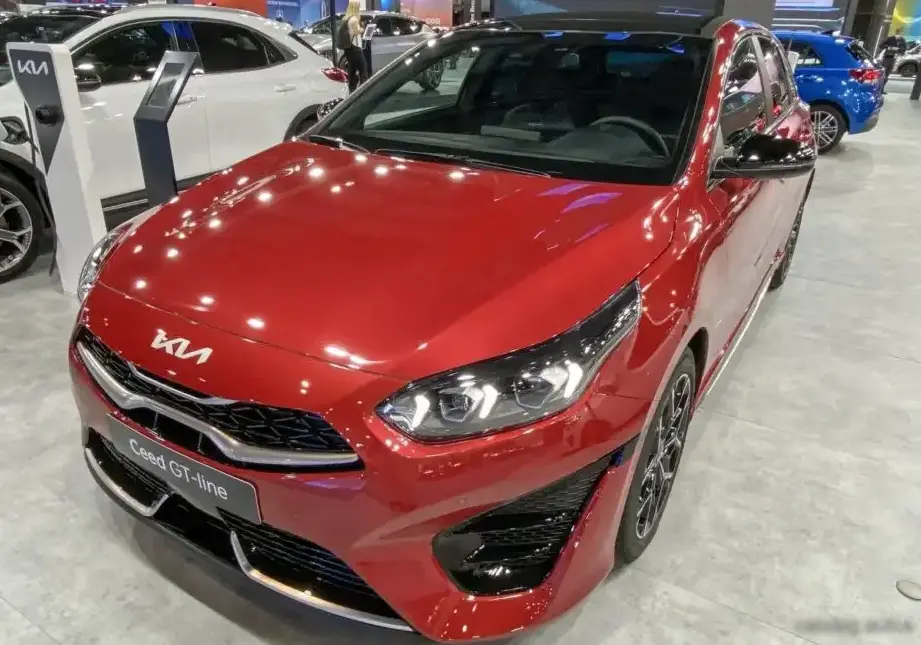
The Kia Ceed III (facelift, introduced in October 2021) 1.5 T-GDI 160 hp with a Dual Clutch Transmission (DCT) represents a significant iteration within the third generation of Kia’s popular C-segment hatchback. Positioned as a mid-range offering in the Ceed lineup, this variant aimed to balance performance, fuel efficiency, and modern technology. Production continued through April 2024. This facelift brought styling updates, enhanced safety features, and refinements to the powertrain, building upon the foundation of the AD platform (also known as the 1HX0/A3 platform) shared with the Hyundai i30. The Ceed, designed primarily for the European market, aimed to provide a compelling alternative to established rivals like the Volkswagen Golf, Ford Focus, and Opel Astra.
Technical Specifications
| Brand | Kia |
| Model | Ceed |
| Generation | Ceed III (facelift 2021) |
| Type (Engine) | 1.5 T-GDI (160 Hp) DCT |
| Start of production | October, 2021 |
| End of production | April, 2024 |
| Powertrain Architecture | Internal Combustion engine |
| Body type | Hatchback |
| Seats | 5 |
| Doors | 5 |
| Combined fuel consumption (WLTP) | 5.8-6.1 l/100 km (40.6 – 38.6 US mpg, 48.7 – 46.3 UK mpg, 17.2 – 16.4 km/l) |
| CO2 emissions (WLTP) | 131-138 g/km |
| Fuel consumption (urban) | 6.4-6.9 l/100 km (36.8 – 34.1 US mpg, 44.1 – 40.9 UK mpg, 15.6 – 14.5 km/l) |
| Fuel consumption (extra urban) | 4.6-5.2 l/100 km (51.1 – 45.2 US mpg, 61.4 – 54.3 UK mpg, 21.7 – 19.2 km/l) |
| Fuel consumption (combined) | 5.3-5.8 l/100 km (44.4 – 40.6 US mpg, 53.3 – 48.7 UK mpg, 18.9 – 17.2 km/l) |
| CO2 emissions (NEDC) | 119-132 g/km |
| Fuel Type | Petrol (Gasoline) |
| Acceleration 0 – 100 km/h | 8.6 sec |
| Acceleration 0 – 62 mph | 8.6 sec |
| Acceleration 0 – 60 mph | 8.2 sec |
| Maximum speed | 210 km/h (130.49 mph) |
| Emission standard | Euro 6d |
| Weight-to-power ratio | 8 kg/Hp, 124.5 Hp/tonne |
| Weight-to-torque ratio | 5.1 kg/Nm, 196.9 Nm/tonne |
| Power | 160 Hp @ 5500 rpm |
| Power per litre | 108 Hp/l |
| Torque | 253 Nm @ 1500-3500 rpm (186.6 lb.-ft. @ 1500-3500 rpm) |
| Engine layout | Front, Transverse |
| Engine Model/Code | G4LH |
| Engine displacement | 1482 cm3 (90.44 cu. in.) |
| Number of cylinders | 4 |
| Engine configuration | Inline |
| Cylinder Bore | 71.6 mm (2.82 in.) |
| Piston Stroke | 92 mm (3.62 in.) |
| Compression ratio | 10.5:1 |
| Number of valves per cylinder | 4 |
| Fuel injection system | Direct injection |
| Engine aspiration | Turbocharger, Intercooler |
| Engine oil capacity | 4.2 l (4.44 US qt | 3.7 UK qt) |
| Coolant capacity | 6.1 l (6.45 US qt | 5.37 UK qt) |
| Kerb Weight | 1285-1412 kg (2832.94 – 3112.93 lbs.) |
| Max. weight | 1850 kg (4078.55 lbs.) |
| Max load | 438-565 kg (965.62 – 1245.61 lbs.) |
| Trunk (boot) space – minimum | 395 l (13.95 cu. ft.) |
| Trunk (boot) space – maximum | 1291 l (45.59 cu. ft.) |
| Fuel tank capacity | 50 l (13.21 US gal | 11 UK gal) |
| Max. roof load | 80 kg (176.37 lbs.) |
| Permitted trailer load with brakes (12%) | 1410 kg (3108.52 lbs.) |
| Permitted trailer load without brakes | 600 kg (1322.77 lbs.) |
| Permitted towbar download | 75 kg (165.35 lbs.) |
| Length | 4315-4325 mm (169.88 – 170.28 in.) |
| Width | 1800 mm (70.87 in.) |
| Width including mirrors | 2055 mm (80.91 in.) |
| Height | 1442-1447 mm (56.77 – 56.97 in.) |
| Wheelbase | 2650 mm (104.33 in.) |
| Front track | 1559-1565 mm (61.38 – 61.61 in.) |
| Rear track | 1567-1573 mm (61.69 – 61.93 in.) |
| Front overhang | 885 mm (34.84 in.) |
| Rear overhang | 780-790 mm (30.71 – 31.1 in.) |
| Minimum turning circle | 10.6 m (34.78 ft.) |
| Drivetrain Architecture | Front wheel drive |
| Number of gears and type of gearbox | 7 gears, automatic transmission DCT |
| Front suspension | Independent type McPherson |
| Rear suspension | Independent multi-link spring suspension with stabilizer |
| Front brakes | Ventilated discs, 305×25 mm |
| Rear brakes | Disc, 284×10 mm |
| Tires size | 205/55 R16H; 225/45 R17V |
| Wheel rims size | 6.5J x 16 ET50; 7.0J x 17 ET53 |
Powertrain & Engine Architecture
The heart of this Ceed variant is the Hyundai-Kia “Smartstream” 1.5 T-GDI engine, designated G4LH. This is a four-cylinder, inline engine displacing 1482 cc. It utilizes direct fuel injection and a single scroll turbocharger with an intercooler to deliver 160 horsepower at 5500 rpm and 253 Nm (186.6 lb-ft) of torque between 1500 and 3500 rpm. The engine features a relatively high compression ratio of 10.5:1. The G4LH engine is known for its responsiveness and efficiency, benefiting from features like continuously variable valve timing (CVVT). Paired with this engine is a 7-speed Dual Clutch Transmission (DCT). This DCT provides quicker and smoother gear changes compared to a traditional automatic transmission, contributing to improved acceleration and fuel economy. The DCT’s programming prioritizes efficiency, with taller gear ratios in the higher gears for highway cruising.
Driving Characteristics
The 1.5 T-GDI 160 hp DCT Ceed offers a balanced driving experience. Acceleration to 60 mph takes approximately 8.2 seconds, and 0-100 km/h (0-62 mph) is achieved in 8.6 seconds. While not a performance-oriented model, the turbocharger provides ample low-end torque, making it feel responsive in everyday driving situations. The DCT transmission contributes to smooth gear changes, although some drivers may notice slight hesitation at low speeds. Compared to the base 1.0 T-GDI engine, the 1.5 T-GDI offers a noticeable increase in power and torque, resulting in more confident overtaking and highway merging. It’s less sporty than higher-powered Ceed variants, but provides a comfortable and efficient ride.
Equipment & Trim Levels
The 1.5 T-GDI DCT trim typically included a generous level of standard equipment. This often included features like an 8-inch touchscreen infotainment system with Apple CarPlay and Android Auto compatibility, a rear-view camera, automatic climate control, and a suite of advanced driver-assistance systems (ADAS) such as lane keeping assist, forward collision avoidance assist, and driver attention warning. Interior upholstery was typically cloth, with options for leather upgrades. Higher trim levels within the 1.5 T-GDI range could add features like a larger touchscreen, premium audio system, heated seats, and a panoramic sunroof.
Chassis & Braking
The Ceed III utilizes a McPherson strut front suspension and a multi-link rear suspension, providing a comfortable and controlled ride. Stabilizer bars are fitted to both axles to reduce body roll during cornering. Braking duties are handled by ventilated discs at the front and solid discs at the rear. The braking system is equipped with ABS (Anti-lock Braking System) and Electronic Stability Control (ESC). The suspension tuning is geared towards comfort and everyday usability, rather than outright sportiness.
Market Reception & Comparison
The Kia Ceed III 1.5 T-GDI DCT was generally well-received by automotive critics. It was praised for its stylish design, spacious interior, and comprehensive equipment list. The powertrain was noted for its efficiency and responsiveness, although some reviewers found the DCT transmission slightly less refined than those offered by some competitors. Compared to the base 1.0 T-GDI engine, the 1.5 T-GDI offered a significant performance upgrade without a substantial penalty in fuel economy. Against rivals like the Volkswagen Golf and Ford Focus, the Ceed offered a compelling value proposition, often undercutting them in price while offering similar levels of equipment.
Legacy
The 1.5 T-GDI engine has proven to be a relatively reliable unit, although, like any turbocharged engine, it requires regular maintenance, including oil changes with the correct specification. The DCT transmission is generally durable, but proper servicing is crucial to ensure smooth operation. In the used car market, the Ceed III 1.5 T-GDI DCT represents a sensible and well-rounded choice, offering a good balance of practicality, efficiency, and features. Its reputation for reliability and affordability makes it an attractive option for buyers seeking a comfortable and dependable C-segment hatchback.