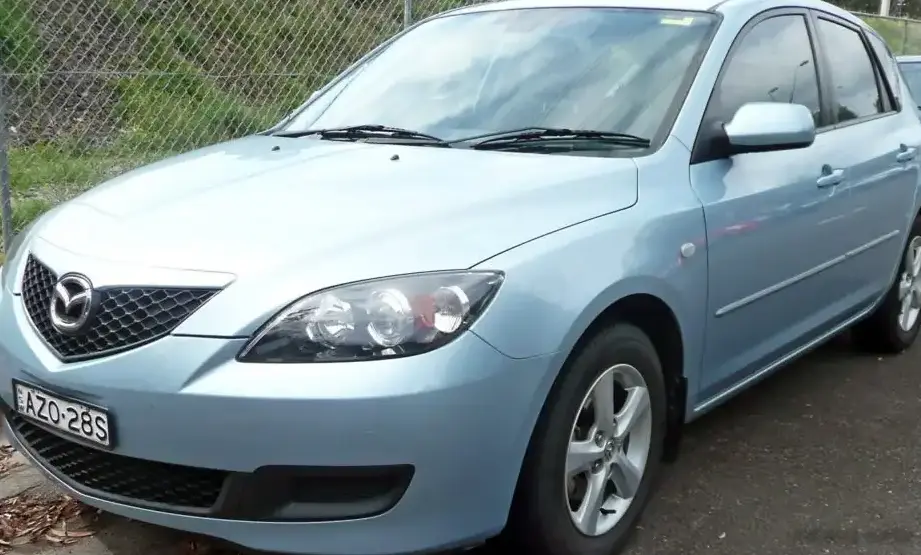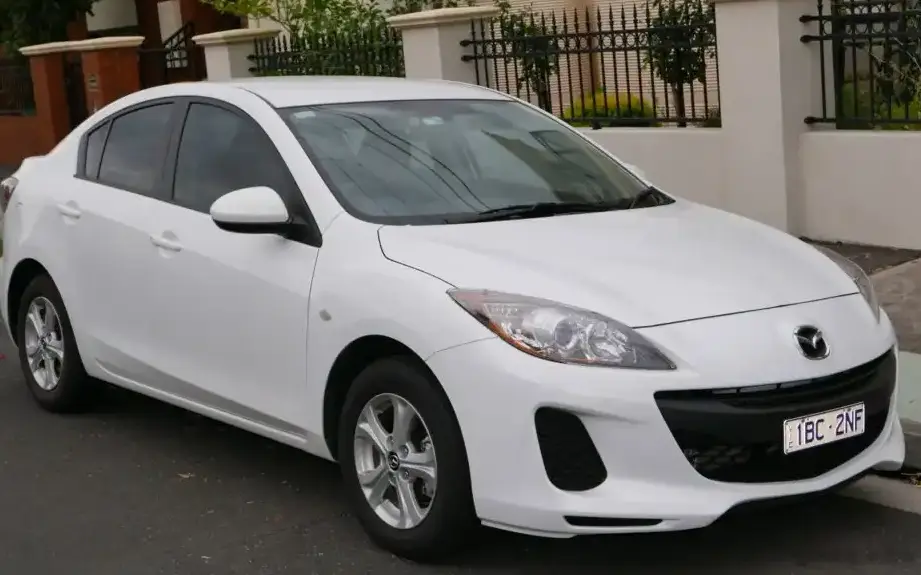
The Mazda 3 II Sedan, specifically the facelifted version introduced in 2011 (chassis code BL), represented a significant evolution of Mazda’s compact offering. Produced from 2011 through 2013, the 2.0 DISI variant, generating 150 horsepower, occupied a middle ground within the second-generation 3 lineup, positioned above the base 1.6L engine and below the more performance-oriented 2.5L models. This sedan aimed to balance fuel efficiency with a respectable level of performance, appealing to buyers seeking a practical and engaging daily driver. It was primarily marketed in Europe, Australia, and Asia, with the North American market receiving different engine options.
Technical Specifications
| Brand | Mazda |
| Model | 3 |
| Generation | II Sedan (BL, facelift 2011) |
| Type (Engine) | 2.0 DISI (150 Hp) |
| Start of production | 2011 |
| End of production | 2013 |
| Powertrain Architecture | Internal Combustion engine |
| Body type | Sedan |
| Seats | 5 |
| Doors | 4 |
| Fuel consumption (urban) | 9.1 l/100 km (25.8 US mpg) |
| Fuel consumption (extra urban) | 5.3 l/100 km (44.4 US mpg) |
| Fuel consumption (combined) | 6.7 l/100 km (35.1 US mpg) |
| CO2 emissions | 157 g/km |
| Fuel Type | Petrol (Gasoline) |
| Acceleration 0 – 100 km/h | 10.4 sec |
| Acceleration 0 – 62 mph | 10.4 sec |
| Acceleration 0 – 60 mph | 9.9 sec |
| Maximum speed | 212 km/h (131.73 mph) |
| Emission standard | Euro 5 |
| Weight-to-power ratio | 8.4 kg/Hp |
| Weight-to-torque ratio | 6.6 kg/Nm |
| Power | 150 Hp @ 6200 rpm |
| Torque | 191 Nm @ 4500 rpm (140.87 lb.-ft. @ 4500 rpm) |
| Engine layout | Front, Transverse |
| Engine Model/Code | LFZ2 |
| Engine displacement | 1999 cm3 (121.99 cu. in.) |
| Number of cylinders | 4 |
| Engine configuration | Inline |
| Cylinder Bore | 87.5 mm (3.44 in.) |
| Piston Stroke | 83.1 mm (3.27 in.) |
| Compression ratio | 11.2:1 |
| Number of valves per cylinder | 4 |
| Fuel injection system | Direct injection |
| Engine aspiration | Naturally aspirated engine |
| Valvetrain | DOHC |
| Engine oil capacity | 4.3 l (4.54 US qt | 3.78 UK qt) |
| Coolant | 7.5 l (7.93 US qt | 6.6 UK qt) |
| Kerb Weight | 1265 kg (2788.85 lbs.) |
| Max. weight | 1820 kg (4012.41 lbs.) |
| Max load | 555 kg (1223.57 lbs.) |
| Trunk (boot) space – minimum | 430 l (15.19 cu. ft.) |
| Fuel tank capacity | 55 l (14.53 US gal | 12.1 UK gal) |
| Permitted trailer load with brakes (12%) | 1000 kg (2204.62 lbs.) |
| Permitted trailer load without brakes | 550 kg (1212.54 lbs.) |
| Length | 4580 mm (180.31 in.) |
| Width | 1755 mm (69.09 in.) |
| Width including mirrors | 2002 mm (78.82 in.) |
| Height | 1470 mm (57.87 in.) |
| Wheelbase | 2640 mm (103.94 in.) |
| Front track | 1520 mm (59.84 in.) |
| Rear (Back) track | 1515 mm (59.65 in.) |
| Ride height (ground clearance) | 155 mm (6.1 in.) |
| Drag coefficient (Cd) | 0.27 |
| Minimum turning circle (turning diameter) | 10.4 m (34.12 ft.) |
| Drivetrain Architecture | Front wheel drive |
| Drive wheel | Front wheel drive |
| Number of gears and type of gearbox | 6 gears, manual transmission |
| Front suspension | Independent, type McPherson with coil spring and anti-roll bar |
| Rear suspension | Independent multi-link suspension |
| Front brakes | Ventilated discs |
| Rear brakes | Disc |
| Assisting systems | ABS (Anti-lock braking system) |
| Steering type | Steering rack and pinion |
| Power steering | Electric Steering |
| Tires size | 205/50 R17 |
| Wheel rims size | 17 |
Powertrain & Engine Architecture
The heart of the 2.0 DISI variant was the LFZ2 engine, a 1999cc inline-four cylinder powerplant. “DISI” stands for Direct Injection Spark Ignition, highlighting the engine’s key technology. This direct injection system, coupled with a high 11.2:1 compression ratio, allowed for increased power and efficiency compared to traditional port fuel injection. The engine utilized a double overhead camshaft (DOHC) valvetrain with four valves per cylinder, optimizing airflow for improved performance. The LFZ2 produced 150 horsepower at 6200 rpm and 191 Nm (140.87 lb-ft) of torque at 4500 rpm. The engine was transversely mounted in the front of the vehicle, driving the front wheels. The standard transmission was a six-speed manual, although a five-speed automatic was also available, impacting acceleration and fuel economy.
Driving Characteristics
The 2.0 DISI with the six-speed manual transmission offered a reasonably engaging driving experience. While not a sports car, the engine provided adequate power for everyday driving and overtaking maneuvers. The direct injection system contributed to a responsive throttle and a relatively flat torque curve. The six-speed gearbox allowed for efficient cruising at highway speeds. The automatic transmission, while offering convenience, resulted in slightly slower acceleration times and a less direct connection to the engine. Gear ratios were tuned for a balance between fuel economy and performance, prioritizing everyday usability over outright speed. Compared to the higher-output 2.5L engine, the 2.0 DISI felt less powerful, but it offered better fuel economy and a more manageable driving experience for many drivers.
Equipment & Trim Levels
The 2.0 DISI trim level typically included standard features such as air conditioning, power windows and locks, a basic audio system with CD player, and alloy wheels. Higher trim levels, often denoted by suffixes like “Sport” or “Luxury,” added features like automatic climate control, a more advanced audio system with Bluetooth connectivity, and upgraded interior materials. Optional extras included a sunroof, navigation system, and leather upholstery. Interior upholstery was generally cloth in the base trims, with leather available as an upgrade. The dashboard layout was functional and driver-focused, with a clear instrument cluster and logically placed controls.
Chassis & Braking
The Mazda 3 II Sedan utilized an independent suspension system at all four wheels. The front suspension employed a McPherson strut design with coil springs and an anti-roll bar, while the rear suspension featured a multi-link setup. This configuration provided a good balance between ride comfort and handling. Braking duties were handled by ventilated discs at the front and solid discs at the rear. Anti-lock Braking System (ABS) was standard. The chassis was designed to be relatively lightweight, contributing to the car’s agility. Stabilizer bars were used to reduce body roll during cornering.
Market Reception & Comparison
The 2.0 DISI variant of the Mazda 3 II Sedan received generally positive reviews from automotive critics. It was praised for its fuel efficiency, responsive engine, and engaging handling. However, some reviewers noted that the engine lacked the outright power of some of its competitors. Compared to the 1.6L base engine, the 2.0 DISI offered a significant performance upgrade. Compared to the 2.5L engine, it provided better fuel economy but less power. In terms of reliability, the LFZ2 engine proved to be generally dependable, although regular maintenance was crucial to prevent issues such as carbon buildup on the intake valves, a common concern with direct injection engines.
Legacy
The Mazda 3 II Sedan 2.0 DISI remains a popular choice in the used car market, particularly for buyers seeking a reliable and fuel-efficient compact sedan. The LFZ2 engine, while requiring diligent maintenance, has proven to be durable over the long term. The car’s combination of practicality, affordability, and engaging driving dynamics has ensured its continued appeal. Parts availability is generally good, and the car’s relatively simple mechanical design makes it accessible to independent mechanics. The 2.0 DISI variant represents a sweet spot in the second-generation Mazda 3 lineup, offering a compelling blend of performance, efficiency, and value.