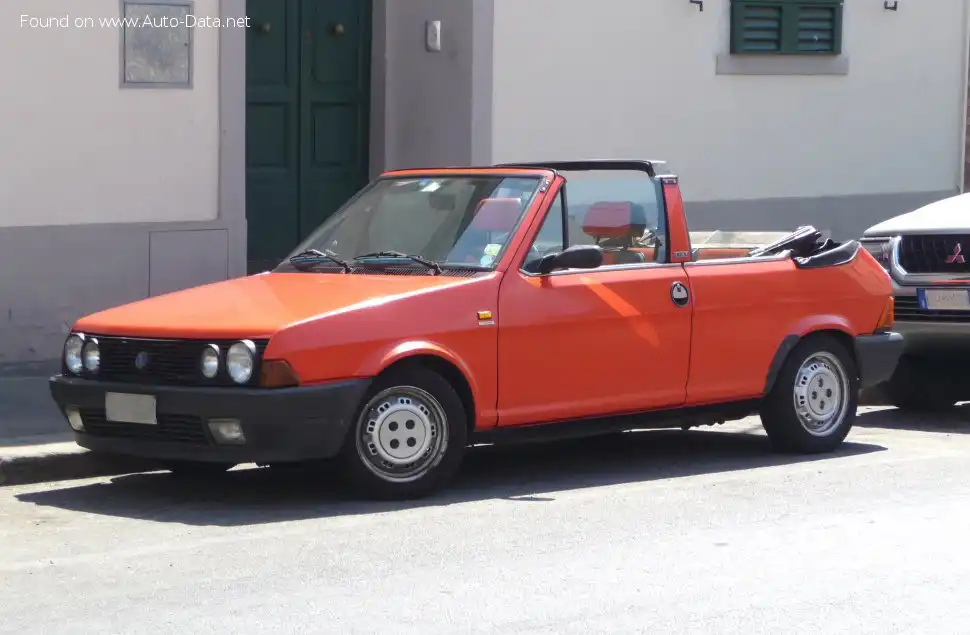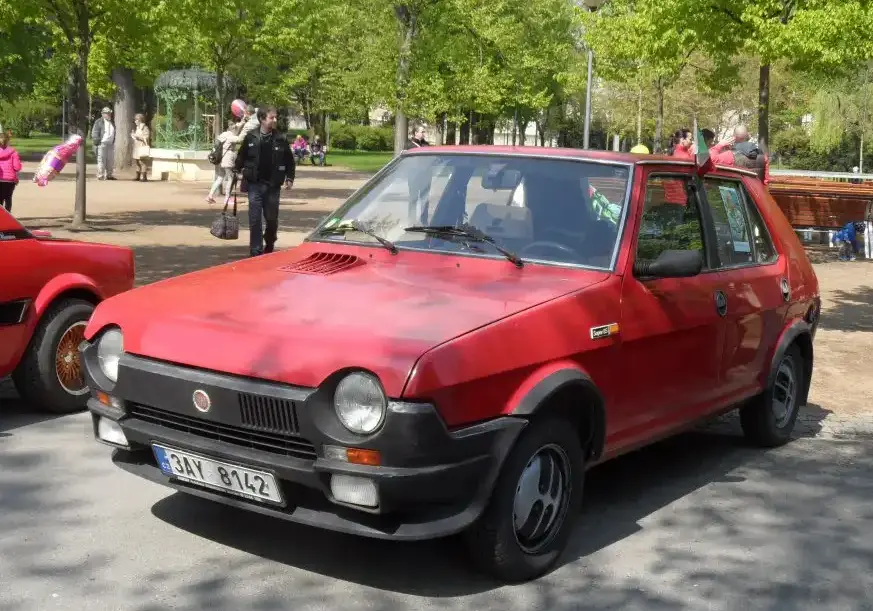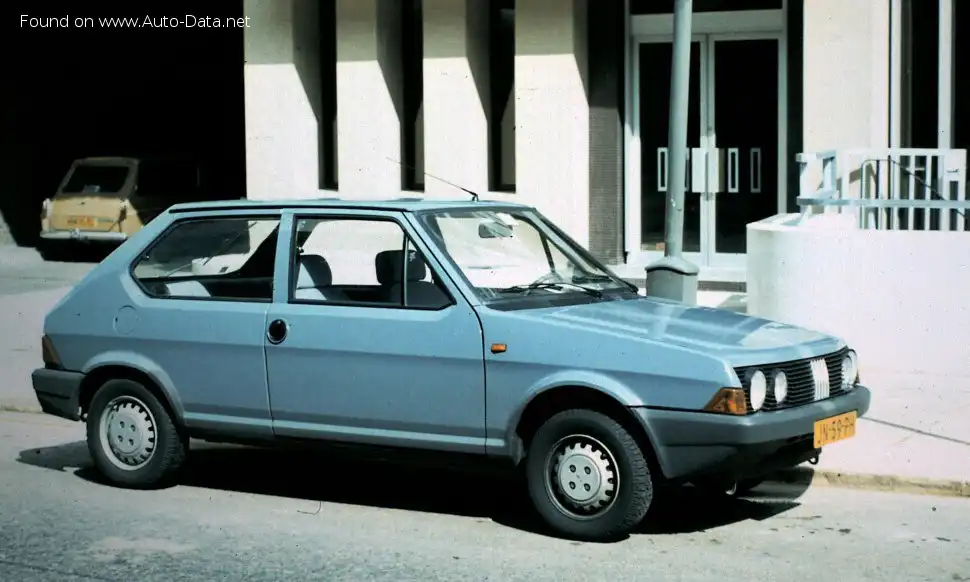
The Fiat Ritmo 100 1.6, produced from 1983 to 1987, represents a mid-range performance variant within the Ritmo (Type 138) lineup. Introduced as part of the facelifted 138A series in 1982, the Ritmo aimed to modernize Fiat’s offerings in the compact hatchback segment, competing with vehicles like the Volkswagen Golf and Opel Kadett. The “100” designation refers to the engine’s horsepower output, and this particular configuration – a 1.6-liter engine paired with either a manual or automatic transmission – offered a balance between affordability and spirited driving. The Ritmo, designed by the renowned Italian design house Bertone, was notable for its sharp, angular styling, a departure from the more rounded designs of its predecessors. This variant played a role in establishing the Ritmo as a more desirable option for buyers seeking a slightly more engaging driving experience than the base models.
Technical Specifications
| Brand | Fiat |
| Model | Ritmo |
| Generation | Ritmo I (138A, facelift 1982) |
| Type (Engine) | 100 1.6 (100 Hp) |
| Start of production | 1983 |
| End of production | 1987 |
| Powertrain Architecture | Internal Combustion engine |
| Body type | Coupe (3-door hatchback) |
| Fuel Type | Petrol (Gasoline) |
| Power | 100 Hp |
| Engine Model/Code | 149 A4.000 |
| Engine aspiration | Naturally aspirated engine |
Powertrain & Engine Architecture
The heart of the Ritmo 100 1.6 is the 149 A4.000 engine, a 1.6-liter inline-four cylinder gasoline engine. This engine featured a cast iron block and an aluminum cylinder head, a common configuration for Fiat engines of the era. It utilized a single overhead camshaft (SOHC) valvetrain, operating two valves per cylinder. Fuel delivery was managed by a Weber 32 ADFA carburetor, a relatively simple but effective system for the time. While not as sophisticated as fuel injection systems found in some contemporary vehicles, the Weber carburetor provided adequate fuel atomization and mixture control for the engine’s output. The engine produced 100 horsepower (metric) at 6000 rpm and approximately 109 lb-ft of torque at 4000 rpm. The Ritmo 100 1.6 was available with both a five-speed manual transmission and a three-speed automatic transmission. The automatic transmission, while offering convenience, was known to slightly diminish the car’s acceleration performance compared to the manual version. The three-speed automatic was a Borg Warner unit, chosen for its reliability and cost-effectiveness, though it lacked the refinement of more modern automatics.
Driving Characteristics
The Ritmo 100 1.6 offered a noticeable step up in performance compared to the lower-displacement Ritmo models. With 100 horsepower propelling a relatively lightweight vehicle (around 2,200 lbs), the Ritmo 100 1.6 could achieve a 0-60 mph time of around 10-11 seconds, which was competitive for its class in the early 1980s. The manual transmission version provided a more engaging driving experience, allowing the driver to fully utilize the engine’s power band. The automatic transmission, while smooth, resulted in some power loss and a less responsive feel. The gear ratios in the manual transmission were well-suited for everyday driving, providing adequate acceleration in urban environments and sufficient cruising ability on highways. The suspension, consisting of MacPherson struts in the front and a twist-beam axle in the rear, provided a comfortable ride, although it wasn’t particularly sporty. The steering was light and precise, making the Ritmo easy to maneuver in tight spaces. The automatic transmission, while convenient, had relatively widely spaced gear ratios, impacting both acceleration and engine noise at higher speeds.
Equipment & Trim Levels
The Ritmo 100 1.6 occupied a mid-range position in the Ritmo lineup. Standard equipment typically included cloth upholstery, a basic instrument cluster, and manual windows and door locks. The interior design was functional and straightforward, reflecting the car’s focus on practicality and affordability. Optional extras included a sunroof, upgraded stereo system, and metallic paint finishes. Higher trim levels, such as the Ritmo 100 CL, offered additional features like more comfortable seats, improved interior trim, and alloy wheels. The dashboard layout was relatively simple, with clearly marked gauges for speed, fuel level, and engine temperature. Air conditioning was available as an option, but it wasn’t a standard feature on the 100 1.6. The CL trim also often included upgraded door panels and a more refined steering wheel.
Chassis & Braking
The Ritmo’s chassis was a monocoque construction, providing a good balance of strength and rigidity. The front suspension utilized MacPherson struts, while the rear suspension employed a twist-beam axle. This setup provided a comfortable ride, but it wasn’t particularly sophisticated in terms of handling. The Ritmo 100 1.6 typically featured disc brakes on the front wheels and drum brakes on the rear wheels. The braking system was adequate for everyday driving, but it lacked the stopping power of more advanced braking systems found in some contemporary vehicles. The steering was a rack-and-pinion system, providing precise and responsive steering feel. Stabilizer bars were fitted to both the front and rear axles to reduce body roll during cornering. The drum brakes on the rear were a cost-saving measure, and could fade under heavy use.
Market Reception & Comparison
The Ritmo 100 1.6 was generally well-received by automotive critics. It was praised for its stylish design, comfortable ride, and relatively strong performance. However, some critics noted the car’s somewhat basic interior and the limitations of the automatic transmission. Compared to its rivals, such as the Volkswagen Golf and Opel Kadett, the Ritmo 100 1.6 offered a similar level of performance and practicality, but it often came at a slightly lower price point. Fuel economy was reasonable for the time, averaging around 28-32 mpg in mixed driving conditions. The Ritmo 100 1.6 was considered to be a reliable vehicle, although some owners reported issues with the carburetor and the electrical system. Compared to the more basic Ritmo models, the 100 1.6 offered a significant improvement in performance, making it a more appealing option for drivers who enjoyed a more spirited driving experience. The Golf GTI offered significantly more performance, but at a higher price point, while the Kadett was generally considered less stylish.
Legacy
The Fiat Ritmo, and specifically the 100 1.6 variant, holds a nostalgic place in the hearts of many European car enthusiasts. While not known for exceptional longevity, the 149 A4.000 engine is relatively simple to maintain and repair, and parts are still available, albeit sometimes requiring sourcing from specialist suppliers. Today, well-maintained examples of the Ritmo 100 1.6 are becoming increasingly collectible, particularly among those who appreciate classic Italian design and engineering. The car’s unique styling and relatively affordable price make it an attractive option for classic car enthusiasts. The Ritmo’s influence can be seen in subsequent Fiat models, and it remains a significant chapter in the company’s history. The Ritmo 100 1.6, in particular, represents a sweet spot in the lineup, offering a balance of performance, practicality, and style that continues to appeal to enthusiasts today. The automatic transmission versions, while less sought after by performance enthusiasts, offer a more accessible entry point into Ritmo ownership.