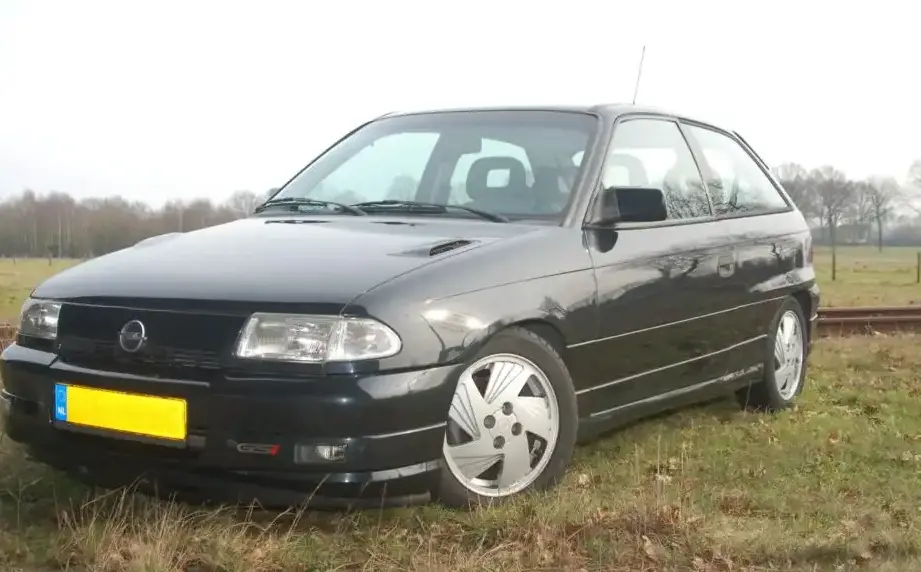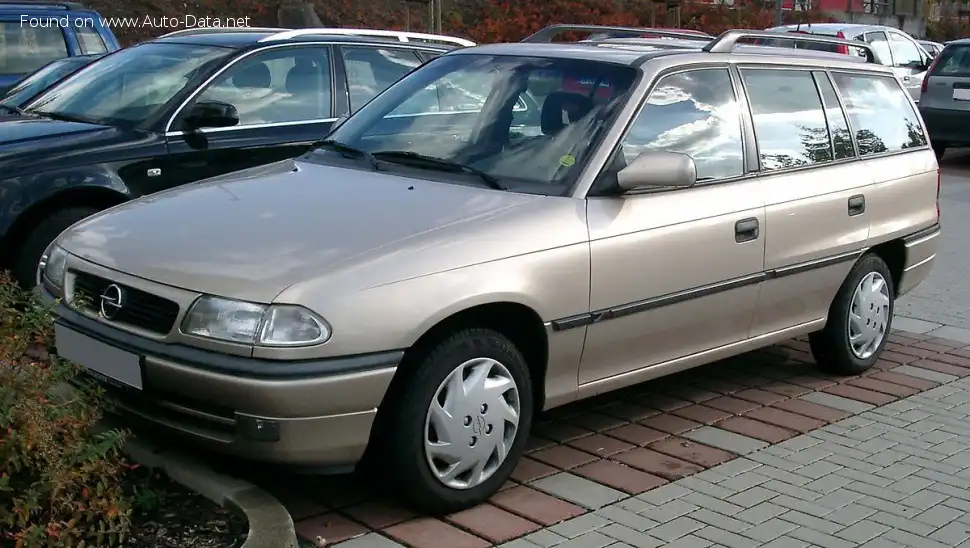
The Opel Astra F Caravan 1.4 Si, produced from 1994 to 1996, represented an entry-level offering within the facelifted Astra F range. Positioned as a practical and affordable family vehicle, it catered to buyers prioritizing economy and space over outright performance. This variant, characterized by its 1.4-liter engine and automatic transmission, was a common sight in European markets, offering a comfortable and convenient driving experience. It built upon the foundation of the original Astra F, launched in 1991, benefiting from the mid-cycle refresh that improved styling and addressed some initial criticisms.
Technical Specifications
| Brand | Opel |
| Model | Astra |
| Generation | Astra F Caravan (facelift 1994) |
| Type (Engine) | 1.4 Si (82 Hp) |
| Start of production | 1994 |
| End of production | 1996 |
| Powertrain Architecture | Internal Combustion engine |
| Body type | Station wagon (estate) |
| Seats | 5 |
| Doors | 5 |
| Fuel consumption (urban) | 10.8 l/100 km (21.8 US mpg, 26.2 UK mpg, 9.3 km/l) |
| Fuel consumption (extra urban) | 7.6 l/100 km (30.9 US mpg, 37.2 UK mpg, 13.2 km/l) |
| Fuel consumption (combined) | 8 l/100 km (29.4 US mpg, 35.3 UK mpg, 12.5 km/l) |
| Fuel Type | Petrol (Gasoline) |
| Acceleration 0 – 100 km/h | 13.5 sec |
| Acceleration 0 – 62 mph | 13.5 sec |
| Acceleration 0 – 60 mph | 12.8 sec |
| Maximum speed | 170 km/h (105.63 mph) |
| Weight-to-power ratio | 12.7 kg/Hp, 78.8 Hp/tonne |
| Weight-to-torque ratio | 9.1 kg/Nm, 109.6 Nm/tonne |
| Power | 82 Hp @ 5800 rpm |
| Power per litre | 59 Hp/l |
| Torque | 114 Nm @ 3400 rpm (84.08 lb.-ft. @ 3400 rpm) |
| Engine layout | Front, Transverse |
| Engine Model/Code | C14SE |
| Engine displacement | 1389 cm3 (84.76 cu. in.) |
| Number of cylinders | 4 |
| Engine configuration | Inline |
| Cylinder Bore | 77.6 mm (3.06 in.) |
| Piston Stroke | 73.4 mm (2.89 in.) |
| Compression ratio | 9.8:1 |
| Number of valves per cylinder | 2 |
| Fuel injection system | Multi-port manifold injection |
| Engine aspiration | Naturally aspirated engine |
| Valvetrain | SOHC |
| Engine oil capacity | 3.5 l (3.7 US qt | 3.08 UK qt) |
| Coolant | 5.8 l (6.13 US qt | 5.1 UK qt) |
| Kerb Weight | 1040 kg (2292.81 lbs.) |
| Max. weight | 1555 kg (3428.19 lbs.) |
| Max load | 515 kg (1135.38 lbs.) |
| Trunk (boot) space – minimum | 500 l (17.66 cu. ft.) |
| Trunk (boot) space – maximum | 1630 l (57.56 cu. ft.) |
| Fuel tank capacity | 50 l (13.21 US gal | 11 UK gal) |
| Length | 4278 mm (168.43 in.) |
| Width | 1696 mm (66.77 in.) |
| Width including mirrors | 1852 mm (72.91 in.) |
| Height | 1525 mm (60.04 in.) |
| Wheelbase | 2517 mm (99.09 in.) |
| Front track | 1430 mm (56.3 in.) |
| Rear (Back) track | 1429 mm (56.26 in.) |
| Ride height (ground clearance) | 135 mm (5.31 in.) |
| Drag coefficient (Cd) | 0.34 |
| Minimum turning circle | 10.5 m (34.45 ft.) |
| Drivetrain Architecture | The Internal combustion engine (ICE) drives the front wheels of the vehicle. |
| Drive wheel | Front wheel drive |
| Number of gears and type of gearbox | 5 gears, manual transmission |
| Front brakes | Disc |
| Rear brakes | Drum |
| Steering type | Steering rack and pinion |
| Tires size | 175/70 R13 82T |
| Wheel rims size | 5.5J x 13 ET49 |
Powertrain & Engine Architecture
The heart of the Astra F Caravan 1.4 Si was the C14SE engine, a 1.4-liter inline-four cylinder petrol engine. This engine featured a single overhead camshaft (SOHC) valvetrain with two valves per cylinder. Fuel delivery was handled by a multi-port fuel injection system, providing a balance between efficiency and performance. The C14SE was known for its relative simplicity and durability, though it wasn’t a powerhouse. The engine produced 82 horsepower at 5800 rpm and 114 Nm (84 lb-ft) of torque at 3400 rpm. Paired with a four-speed automatic transmission, the powertrain prioritized smooth operation and ease of use over sporty acceleration. This automatic transmission, while offering convenience, was not known for its particularly quick shifts or fuel efficiency compared to the available five-speed manual.
Driving Characteristics
The 1.4 Si automatic offered a comfortable, if uninspiring, driving experience. Acceleration was modest, taking around 13.5 seconds to reach 62 mph (100 km/h). The automatic transmission, while smooth, contributed to a noticeable lack of responsiveness, especially when attempting to overtake or climb hills. The gear ratios were geared towards fuel economy rather than performance. Compared to the more powerful 1.6 or 1.8-liter versions of the Astra F, or even the diesel variants, the 1.4 Si felt noticeably slower. However, for everyday commuting and relaxed cruising, the powertrain proved adequate. The suspension, tuned for comfort, absorbed bumps reasonably well, making it a suitable choice for long journeys.
Equipment & Trim Levels
The 1.4 Si trim level typically included basic amenities such as central locking, power steering, and an adjustable steering column. Interior upholstery was usually cloth, with a relatively simple dashboard layout. Optional extras included air conditioning, electric windows, and a radio/cassette player. The Caravan body style, being a station wagon, offered a generous amount of cargo space – 500 liters with the rear seats up, expanding to 1630 liters with them folded down. This made it a practical choice for families or those needing to transport larger items. The trim level was considered entry-level, focusing on providing essential features at an affordable price point.
Chassis & Braking
The Astra F Caravan 1.4 Si utilized a MacPherson strut front suspension and a torsion beam rear suspension. Braking was handled by disc brakes on the front wheels and drum brakes on the rear. This configuration was typical for vehicles in this class and price range during the mid-1990s. The suspension setup prioritized ride comfort over sharp handling. Stabilizer bars were present, but their thickness was modest, contributing to a degree of body roll during cornering. The 175/70 R13 tires provided adequate grip for normal driving conditions.
Market Reception & Comparison
The Astra F Caravan 1.4 Si was generally well-received as a practical and affordable family car. Critics acknowledged its spacious interior and comfortable ride, but often noted its lack of performance. Compared to the 1.6 and 1.8-liter variants, the 1.4 Si offered significantly less power and acceleration. The diesel models, while slower in outright speed, provided superior fuel economy. However, the 1.4 Si’s lower purchase price and simpler mechanicals made it an attractive option for budget-conscious buyers. Fuel economy was reasonable for the time, averaging around 29.4 US mpg (35.3 UK mpg) on the combined cycle.
Legacy
The Opel Astra F Caravan 1.4 Si, while not a performance icon, remains a relatively common sight on European roads today. The C14SE engine is known for its durability, and with proper maintenance, can provide reliable service for many years. However, age-related issues such as corrosion and wear on suspension components are common. In the used car market, these vehicles are typically very affordable, making them a popular choice for first-time car owners or those seeking a cheap and practical runabout. The combination of a spacious estate body style, a simple engine, and an automatic transmission continues to appeal to buyers prioritizing practicality and ease of use.