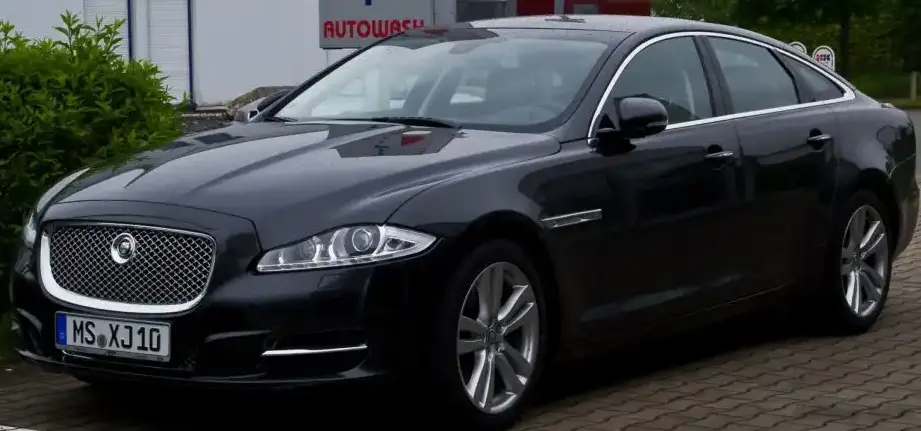
The Jaguar XJ (X351) 5.0 V8 Supercharged Automatic, produced from 2009 to 2012, represented the pinnacle of luxury and performance within the fourth generation of Jaguar’s flagship sedan. Positioned as the top-tier engine option, this variant aimed to compete directly with established German rivals like the BMW 7 Series and Mercedes-Benz S-Class. Built on the XJ aluminum chassis (X351), it showcased Jaguar’s commitment to lightweight construction and advanced technology. This model year marked a significant departure from previous XJ generations, embracing a more contemporary design language and a focus on driver engagement alongside traditional British luxury.
Technical Specifications
| Brand | Jaguar |
| Model | XJ |
| Generation | XJ (X351) |
| Type (Engine) | 5.0 V8 Supercharged (470 Hp) Automatic 6-speed |
| Start of production | 2009 |
| End of production | 2012 |
| Powertrain Architecture | Internal Combustion engine |
| Body type | Sedan |
| Seats | 5 |
| Doors | 4 |
| Fuel consumption (economy) – urban (EPA) | 15.7 l/100 km (15 US mpg, 18 UK mpg, 6.4 km/l) |
| Fuel consumption (economy) – extra urban (EPA) | 11.2 l/100 km (21 US mpg, 25.2 UK mpg, 8.9 km/l) |
| Fuel Type | Petrol (Gasoline) |
| Acceleration 0 – 100 km/h | 5.2 sec |
| Acceleration 0 – 62 mph | 5.2 sec |
| Acceleration 0 – 60 mph | 4.9 sec |
| Maximum speed | 250 km/h (155.34 mph), Electronically limited |
| Weight-to-power ratio | 4.1 kg/Hp, 242 Hp/tonne |
| Weight-to-torque ratio | 3.4 kg/Nm, 296.1 Nm/tonne |
| Power | 470 Hp @ 6000-6500 rpm |
| Power per litre | 94 Hp/l |
| Torque | 575 Nm @ 2500-5500 rpm (424.1 lb.-ft. @ 2500-5500 rpm) |
| Engine layout | Front, Longitudinal |
| Engine Model/Code | 508PS |
| Engine displacement | 5000 cm3 (305.12 cu. in.) |
| Number of cylinders | 8 |
| Engine configuration | V-engine |
| Cylinder Bore | 92.5 mm (3.64 in.) |
| Piston Stroke | 93 mm (3.66 in.) |
| Compression ratio | 9.5:1 |
| Number of valves per cylinder | 4 |
| Fuel injection system | Direct injection |
| Engine aspiration | Supercharger, Intercooler |
| Valvetrain | DOHC |
| Engine oil capacity | 7.25 l (7.66 US qt, 6.38 UK qt) |
| Coolant | 8.6 l (9.09 US qt, 7.57 UK qt) |
| Kerb Weight | 1942 kg (4281.38 lbs.) |
| Max. weight | 2365 kg (5213.93 lbs.) |
| Max load | 423 kg (932.56 lbs.) |
| Trunk (boot) space – minimum | 520 l (18.36 cu. ft.) |
| Fuel tank capacity | 82 l (21.66 US gal, 18.04 UK gal) |
| Length | 5127 mm (201.85 in.) |
| Width | 1894 mm (74.57 in.) |
| Width with mirrors folded | 1950 mm (76.77 in.) |
| Width including mirrors | 2105 mm (82.87 in.) |
| Height | 1457 mm (57.36 in.) |
| Wheelbase | 3032 mm (119.37 in.) |
| Front track | 1626 mm (64.02 in.) |
| Rear (Back) track | 1604 mm (63.15 in.) |
| Minimum turning circle (turning diameter) | 11.9 m (39.04 ft.) |
| Drivetrain Architecture | The Internal combustion engine (ICE) drives the rear wheels of the vehicle. |
| Drive wheel | Rear wheel drive |
| Number of gears and type of gearbox | 6 gears, automatic transmission |
| Front suspension | Coil spring, Double wishbone, Transverse stabilizer |
| Rear suspension | Independent multi-link suspension, Air suspension, Transverse stabilizer |
| Front brakes | Ventilated discs, 380 mm |
| Rear brakes | Ventilated discs, 376 mm |
| Assisting systems | ABS (Anti-lock braking system) |
| Steering type | Steering rack and pinion |
| Power steering | Hydraulic Steering |
| Tires size | Front wheel tires: 245/45 R19; 245/40 R20 Rear wheel tires: 275/40 R19; 275/35 R20 |
| Wheel rims size | Front wheel rims: 9J x 19; 9J x 20 Rear wheel rims: 10J x 19; 10J x 20 |
Powertrain & Engine Architecture
At the heart of the XJ Supercharged lay Jaguar’s 5.0-liter AJ-V8 engine, internally designated as the 508PS. This engine featured a Roots-type supercharger, providing instant throttle response and a broad torque curve. Direct fuel injection, combined with variable valve timing (VVT) on both intake and exhaust valves, optimized efficiency and power output. The engine produced 470 horsepower at 6000-6500 rpm and 575 Nm (424 lb-ft) of torque between 2500 and 5500 rpm. The engine utilized a cast aluminum block and cylinder heads, contributing to its relatively lightweight construction. The six-speed automatic transmission, sourced from ZF, was calibrated to provide smooth shifts and complement the engine’s power delivery. This transmission featured a ‘Sport’ mode for more aggressive shifting and engine holding.
Driving Characteristics
The 5.0 V8 Supercharged Automatic XJ delivered exhilarating performance. The supercharger eliminated turbo lag, providing immediate power across the rev range. Acceleration from 0-60 mph took approximately 4.9 seconds, making it a genuinely quick luxury sedan. The ZF 6-speed automatic transmission, while not as many gears as modern units, was well-matched to the engine’s characteristics. Gear ratios were tuned for a balance of acceleration and cruising efficiency. Compared to the naturally aspirated 4.2-liter V8 or the diesel variants, the Supercharged model offered a significantly more potent driving experience. The air suspension provided a comfortable ride, while also minimizing body roll during cornering. However, the added weight of the supercharger and associated components did slightly impact handling agility compared to lighter XJ models.
Equipment & Trim Levels
The XJ Supercharged Automatic came standard with a comprehensive array of luxury features. Leather upholstery, wood veneer trim, and heated/cooled front seats were standard. A premium sound system, navigation system, and rear seat entertainment options were also available. Standard safety features included ABS, traction control, stability control, and multiple airbags. Optional extras included upgraded leather packages, a panoramic sunroof, and adaptive cruise control. The interior design emphasized elegance and craftsmanship, with attention to detail throughout the cabin.
Chassis & Braking
The XJ (X351) utilized an all-aluminum chassis, a pioneering feature for a production sedan at the time. This lightweight construction significantly reduced the vehicle’s overall weight, improving performance and fuel efficiency. The front suspension employed a double wishbone configuration with coil springs and a transverse stabilizer bar. The rear suspension featured an independent multi-link setup with air suspension and a transverse stabilizer bar, providing a smooth and controlled ride. Braking duties were handled by ventilated discs on all four wheels, measuring 380mm at the front and 376mm at the rear. ABS (Anti-lock Braking System) was standard, ensuring optimal braking performance in various conditions.
Market Reception & Comparison
The Jaguar XJ Supercharged Automatic was generally well-received by automotive critics. It was praised for its powerful engine, luxurious interior, and comfortable ride. However, some reviewers noted that the fuel economy was relatively poor compared to its competitors, particularly the hybrid options offered by BMW and Mercedes-Benz. Reliability was also a concern for some, with reports of occasional electronic glitches. Compared to the XJ’s other engine options, the Supercharged model appealed to buyers who prioritized performance and exclusivity. The diesel variants offered better fuel economy, while the naturally aspirated V8 provided a more affordable entry point into the XJ range.
Legacy
The Jaguar XJ (X351) 5.0 V8 Supercharged Automatic remains a desirable luxury sedan in the used car market. The AJ-V8 engine, while complex, is generally considered reliable when properly maintained. Regular oil changes and adherence to the manufacturer’s recommended service intervals are crucial for long-term durability. The all-aluminum chassis continues to be a significant selling point, offering a lightweight and rigid platform. While newer XJ models have been introduced, the X351 Supercharged retains a certain appeal for enthusiasts who appreciate its blend of British luxury, powerful performance, and distinctive styling. Parts availability is generally good, although some specialized components may be more difficult to source.