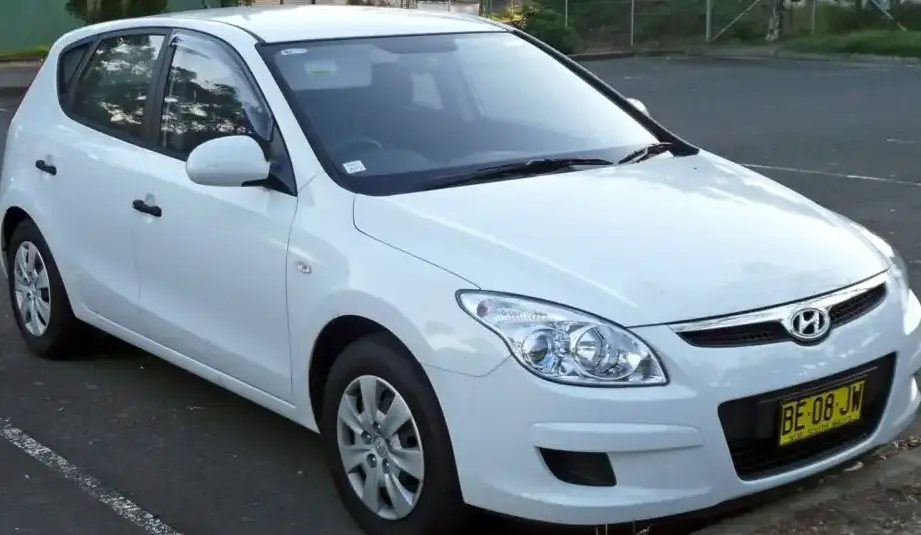
The Hyundai i30 III CW (facelift 2020) 1.0 T-GDi 120 hp Mild Hybrid represents a significant iteration within the third generation of Hyundai’s globally successful i30 compact family. Introduced in May 2020 and continuing through June 2024, this variant – a station wagon (estate) body style – was positioned as an efficient and practical option within the i30 lineup, appealing to buyers prioritizing fuel economy and cargo space. It leverages a 48-volt mild hybrid system to enhance efficiency and reduce emissions, aligning with increasingly stringent European emission standards. This model is primarily targeted towards the European market, where the station wagon body style remains popular.
Technical Specifications
| Brand | Hyundai |
| Model | i30 |
| Generation | i30 III CW (facelift 2020) |
| Type (Engine) | 1.0 T-GDi (120 Hp) Mild Hybrid |
| Start of production | May, 2020 |
| End of production | June, 2024 |
| Powertrain Architecture | MHEV (Mild Hybrid Electric Vehicle) |
| Body type | Station wagon (estate) |
| Seats | 5 |
| Doors | 5 |
| Fuel Type | Petrol (Gasoline) |
| Acceleration 0 – 100 km/h | 11.2 sec |
| Acceleration 0 – 62 mph | 11.2 sec |
| Acceleration 0 – 60 mph | 10.6 sec |
| Maximum speed | 196 km/h (121.79 mph) |
| Emission standard | EURO 6d |
| Weight-to-power ratio | 10.3 kg/Hp |
| Weight-to-torque ratio | 7.2 kg/Nm |
| Power | 120 Hp @ 6000 rpm |
| Power per litre | 120.2 Hp/l |
| Torque | 172 Nm @ 1500-4000 rpm (126.86 lb.-ft. @ 1500-4000 rpm) |
| Engine layout | Front, Transverse |
| Engine Model/Code | Kappa II / G3LC |
| Engine displacement | 998 cm3 (60.9 cu. in.) |
| Number of cylinders | 3 |
| Engine configuration | Inline |
| Number of valves per cylinder | 4 |
| Fuel injection system | Direct injection |
| Engine aspiration | Turbocharger, Intercooler |
| Engine oil capacity | 3.6 l (3.8 US qt | 3.17 UK qt) |
| Coolant capacity | 6 l (6.34 US qt | 5.28 UK qt) |
| Kerb Weight | 1241 kg (2735.94 lbs.) |
| Max. weight | 1840 kg (4056.51 lbs.) |
| Max load | 599 kg (1320.57 lbs.) |
| Trunk (boot) space – minimum | 602 l (21.26 cu. ft.) |
| Trunk (boot) space – maximum | 1650 l (58.27 cu. ft.) |
| Max. roof load | 80 kg (176.37 lbs.) |
| Permitted trailer load with brakes (12%) | 1200 kg (2645.55 lbs.) |
| Permitted trailer load without brakes | 600 kg (1322.77 lbs.) |
| Length | 4585 mm (180.51 in.) |
| Width | 1795 mm (70.67 in.) |
| Height | 1465-1475 mm (57.68 – 58.07 in.) |
| Wheelbase | 2650 mm (104.33 in.) |
| Drivetrain Architecture | ICE and electric motor drive front wheels, mixed mode operation |
| Drive wheel | Front wheel drive |
| Number of gears | 6 |
| Gearbox type | Manual transmission |
| Front suspension | Independent, McPherson with coil spring and anti-roll bar |
| Rear suspension | Independent multi-link suspension |
| Assisting systems | ABS (Anti-lock braking system) |
| Steering type | Steering rack and pinion |
Powertrain & Engine Architecture
At the heart of the i30 CW 1.0 T-GDi MHEV lies the Hyundai-Kia Kappa II engine family, specifically the G3LC code. This is a 1.0-liter, three-cylinder turbocharged gasoline engine. The direct injection system, coupled with a twin-scroll turbocharger and intercooler, allows for a relatively high output for its size. The engine produces 120 horsepower at 6000 rpm and 172 Nm (126.86 lb-ft) of torque between 1500 and 4000 rpm. The mild hybrid system utilizes a 48V battery and a belt-driven starter generator (BSG). This BSG assists the engine during acceleration, allowing for engine-off coasting and regenerative braking, improving fuel efficiency. The engine features four valves per cylinder and a timing chain for durability. The transmission is a six-speed manual gearbox, chosen for its efficiency and driver engagement.
Driving Characteristics
The 1.0 T-GDi engine, paired with the six-speed manual transmission, delivers a balanced driving experience. While not exceptionally quick – achieving 0-60 mph in approximately 10.6 seconds – it provides adequate performance for everyday driving situations. The turbocharger provides a noticeable boost in power, but the three-cylinder configuration is evident in the engine’s character. The gear ratios are well-matched for fuel efficiency, with a taller final drive contributing to lower engine speeds at highway cruising. Compared to higher-output i30 variants, such as those with the 1.6-liter gasoline engine, this version prioritizes fuel economy over outright performance. The mild hybrid system provides a subtle but noticeable improvement in responsiveness during acceleration.
Equipment & Trim Levels
The i30 CW 1.0 T-GDi Mild Hybrid typically came equipped with a respectable level of standard features. These included air conditioning, a touchscreen infotainment system with Apple CarPlay and Android Auto compatibility, Bluetooth connectivity, and a suite of safety features such as ABS, ESC (Electronic Stability Control), and multiple airbags. Higher trim levels offered upgrades such as automatic climate control, a larger touchscreen display, navigation system, rear parking sensors, and a reversing camera. Interior upholstery was typically cloth, with options for leather upgrades on higher trims. Exterior features included alloy wheels, body-colored door handles and mirrors, and LED daytime running lights.
Chassis & Braking
The i30 CW utilizes a front-wheel-drive platform with independent suspension at all four corners. The front suspension employs a McPherson strut design with a coil spring and anti-roll bar, while the rear features a multi-link setup. This configuration provides a good balance between ride comfort and handling. The braking system consists of disc brakes on the front wheels and drum brakes on the rear wheels, a cost-saving measure common in this segment. ABS (Anti-lock Braking System) is standard, enhancing braking performance and stability. The steering is a rack and pinion system, providing precise and responsive steering feel.
Market Reception & Comparison
The Hyundai i30 CW 1.0 T-GDi Mild Hybrid was generally well-received by automotive critics for its fuel efficiency and practicality. It offered a compelling alternative to competitors such as the Volkswagen Golf Estate, Ford Focus Estate, and Skoda Octavia Combi. Fuel economy figures were competitive, with combined cycle consumption averaging around 5.0-5.5 liters per 100 kilometers (47-51 mpg). Reliability was generally good, although some owners reported minor issues with the mild hybrid system. Compared to the diesel-powered i30 variants, the 1.0 T-GDi offered lower emissions and a more refined driving experience, albeit with slightly less torque.
Legacy
The Hyundai i30 III CW 1.0 T-GDi Mild Hybrid represents a key step in Hyundai’s electrification strategy. The Kappa engine family, while not without its quirks, proved to be a reliable and efficient powerplant. The mild hybrid technology, while relatively basic by today’s standards, paved the way for more advanced hybrid and electric vehicles from Hyundai. On the used car market, these i30s are generally considered a good value proposition, offering a blend of practicality, fuel efficiency, and modern features. The powertrain’s long-term reliability appears to be solid, with regular maintenance being the key to ensuring continued performance.