Technical Specifications
| Brand | Volkswagen |
| Model | Golf |
| Generation | Golf VI (3-door) |
| Type (Engine) | GTD 2.0 TDI (170 Hp) |
| Start of production | 2009 |
| End of production | 2012 |
| Powertrain Architecture | Internal Combustion engine |
| Body type | Hatchback |
| Seats | 5 |
| Doors | 3 |
| Fuel consumption (urban) | 6.5 l/100 km (36.2 US mpg, 43.5 UK mpg, 15.4 km/l) |
| Fuel consumption (extra urban) | 4.3 l/100 km (54.7 US mpg, 65.7 UK mpg, 23.3 km/l) |
| Fuel consumption (combined) | 5.1 l/100 km (46.1 US mpg, 55.4 UK mpg, 19.6 km/l) |
| CO2 emissions | 134 g/km |
| Fuel Type | Diesel |
| Acceleration 0 – 100 km/h | 8.1 sec |
| Acceleration 0 – 62 mph | 8.1 sec |
| Acceleration 0 – 60 mph | 7.7 sec |
| Maximum speed | 222 km/h (137.94 mph) |
| Emission standard | Euro 5 |
| Weight-to-power ratio | 7.8 kg/Hp, 127.4 Hp/tonne |
| Weight-to-torque ratio | 3.8 kg/Nm, 262.4 Nm/tonne |
| Power | 170 Hp @ 4200 rpm |
| Torque | 350 Nm @ 1750-2500 rpm (258.15 lb.-ft. @ 1750-2500 rpm) |
| Engine layout | Front, Transverse |
| Engine Model/Code | CBBB, CFGB |
| Engine displacement | 1968 cm3 (120.09 cu. in.) |
| Number of cylinders | 4 |
| Engine configuration | Inline |
| Cylinder Bore | 81 mm (3.19 in.) |
| Piston Stroke | 95.5 mm (3.76 in.) |
| Compression ratio | 16.5:1 |
| Number of valves per cylinder | 4 |
| Fuel injection system | Diesel Commonrail |
| Engine aspiration | Turbocharger, Intercooler |
| Engine oil capacity | 4 l (4.23 US qt | 3.52 UK qt) |
| Kerb Weight | 1334 kg (2940.97 lbs.) |
| Max. weight | 1890 kg (4166.74 lbs.) |
| Max load | 556 kg (1225.77 lbs.) |
| Trunk (boot) space – minimum | 350 l (12.36 cu. ft.) |
| Trunk (boot) space – maximum | 1305 l (46.09 cu. ft.) |
| Fuel tank capacity | 55 l (14.53 US gal | 12.1 UK gal) |
| Max. roof load | 100 kg (220.46 lbs.) |
| Permitted trailer load with brakes (12%) | 1500 kg (3306.93 lbs.) |
| Permitted trailer load without brakes | 700 kg (1543.24 lbs.) |
| Length | 4213 mm (165.87 in.) |
| Width | 1779 mm (70.04 in.) |
| Width with mirrors folded | 1786 mm (70.31 in.) |
| Width including mirrors | 2048 mm (80.63 in.) |
| Height | 1469 mm (57.83 in.) |
| Wheelbase | 2578 mm (101.5 in.) |
| Front track | 1533 mm (60.35 in.) |
| Rear (Back) track | 1514 mm (59.61 in.) |
| Drivetrain Architecture | Front wheel drive |
| Number of gears and type of gearbox | 6 gears, manual transmission |
| Front suspension | Independent type McPherson |
| Rear suspension | Independent multi-link suspension |
| Front brakes | Disc |
| Rear brakes | Disc |
| Assisting systems | ABS (Anti-lock braking system) |
| Steering type | Steering rack and pinion |
| Power steering | Electric Steering |
| Tires size | 225/45 R17 |
| Wheel rims size | 7J x 17 |
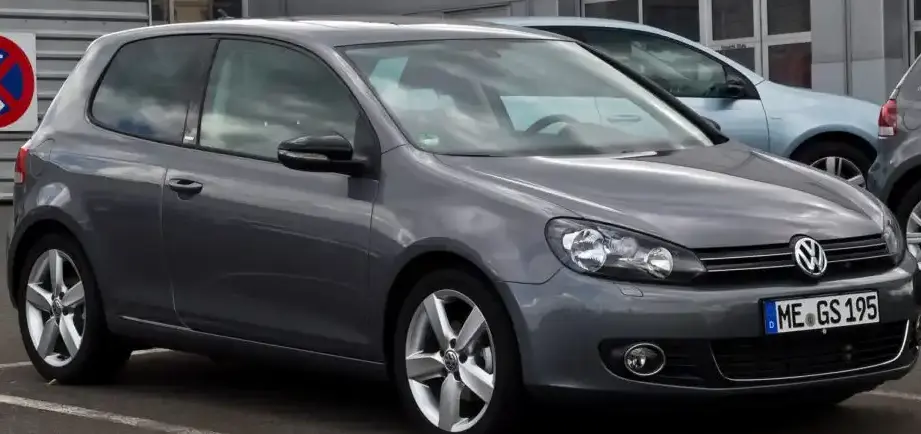
The Volkswagen Golf VI GTD, launched in 2009, built upon the success of previous Golf TDI models, offering a more performance-oriented experience. It was part of the Mk6 Golf range (internal code 1HX0/A3), which represented a significant refinement over its predecessor, focusing on build quality and technology. The 2.0 TDI engine with 170 horsepower became a popular choice, offering a balance between fuel efficiency and spirited driving. The three-door body style further emphasized the GTD’s sporty character, appealing to buyers who prioritized aesthetics and handling over rear passenger space.
Powertrain & Engine Architecture
The heart of the Golf VI GTD is the 2.0-liter four-cylinder diesel engine, available with engine codes CBBB and CFGB. This engine utilizes a common rail direct injection system, delivering fuel directly into the combustion chamber at extremely high pressure. This technology, combined with a variable geometry turbocharger and intercooler, allows for increased power output and improved fuel efficiency. The engine boasts a compression ratio of 16.5:1, contributing to its thermal efficiency. The GTD’s engine produces 350 Nm (258 lb-ft) of torque between 1750 and 2500 rpm, providing strong acceleration in everyday driving situations. The engine is transversely mounted at the front of the vehicle. The standard transmission for this variant was a 6-speed manual gearbox, although a Direct-Shift Gearbox (DSG) was also available as an option. The DSG offered quicker shifts and a more seamless driving experience, but at a higher cost.
Driving Characteristics
The Golf VI GTD 2.0 TDI with the manual transmission delivers a surprisingly engaging driving experience. The readily available torque allows for effortless overtaking and strong acceleration from low speeds. While not as outright quick as the gasoline-powered GTI, the GTD offers a more relaxed and refined power delivery. The 6-speed manual gearbox is well-matched to the engine’s characteristics, providing precise shifts and a good spread of ratios. Compared to the lower-powered TDI models, the GTD feels significantly more responsive. The DSG version further enhances the driving experience with its rapid gear changes. However, some drivers may find the DSG slightly less engaging than the manual. The suspension is tuned for a balance between comfort and handling, providing a stable and controlled ride.
Equipment & Trim Levels
The GTD trim level came well-equipped as standard. Interior features typically included sport seats upholstered in a unique cloth pattern, a leather-wrapped steering wheel, and aluminum pedal caps. The dashboard featured GTD-specific trim elements, and the instrument cluster included unique graphics. Standard equipment also included air conditioning, an infotainment system with a CD player and auxiliary input, and alloy wheels. Optional extras included a sunroof, navigation system, parking sensors, and upgraded audio systems. The GTD’s interior aimed for a sporty yet refined feel, differentiating it from the more basic TDI models.
Chassis & Braking
The Golf VI GTD utilizes an independent McPherson strut suspension at the front and an independent multi-link suspension at the rear. This setup provides a good balance between ride comfort and handling precision. The GTD typically featured slightly stiffer springs and dampers compared to the standard Golf models, enhancing its cornering ability. Braking duties are handled by disc brakes on all four wheels, providing ample stopping power. An Anti-lock Braking System (ABS) is standard, enhancing safety and control during emergency braking situations. The steering is a rack and pinion system with electric power assistance, offering precise and responsive steering feel.
Market Reception & Comparison
The Golf VI GTD was generally well-received by automotive critics. It was praised for its strong performance, excellent fuel economy, and refined driving experience. Compared to the GTI, the GTD offered a more economical alternative without sacrificing too much in terms of driving enjoyment. The lower-powered TDI models were seen as more practical for everyday use, but lacked the GTD’s sporty character. Fuel economy figures of around 5.1 l/100 km (46.1 US mpg) were considered excellent for a performance-oriented hatchback. Reliability was generally good, although, like all diesel engines, the GTD’s diesel particulate filter (DPF) required periodic maintenance.
Legacy
The Golf VI GTD 2.0 TDI remains a popular choice in the used car market. The 2.0 TDI engine, particularly the CBBB and CFGB variants, has proven to be relatively reliable, although regular maintenance is crucial. The DPF can be a potential source of issues if the vehicle is primarily used for short trips. The GTD’s combination of performance, efficiency, and practicality has ensured its enduring appeal. It represents a well-rounded package for drivers seeking a sporty and economical hatchback, and continues to be a sought-after model among Golf enthusiasts.