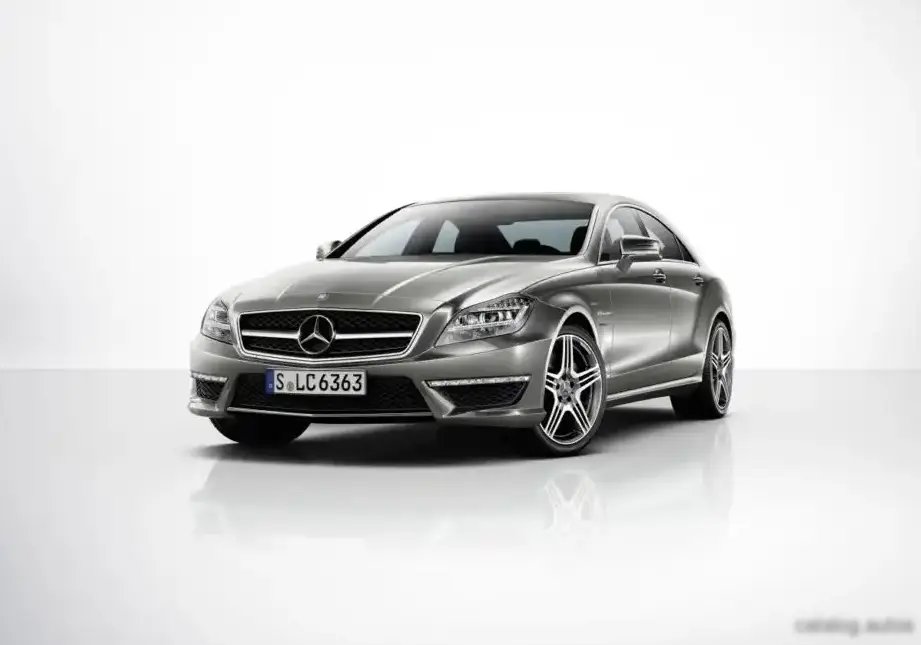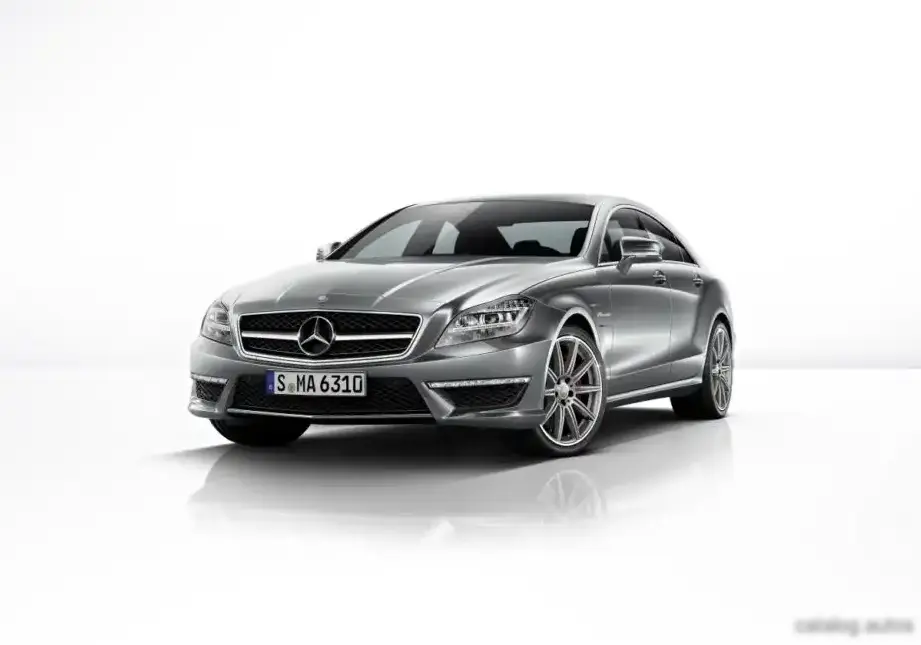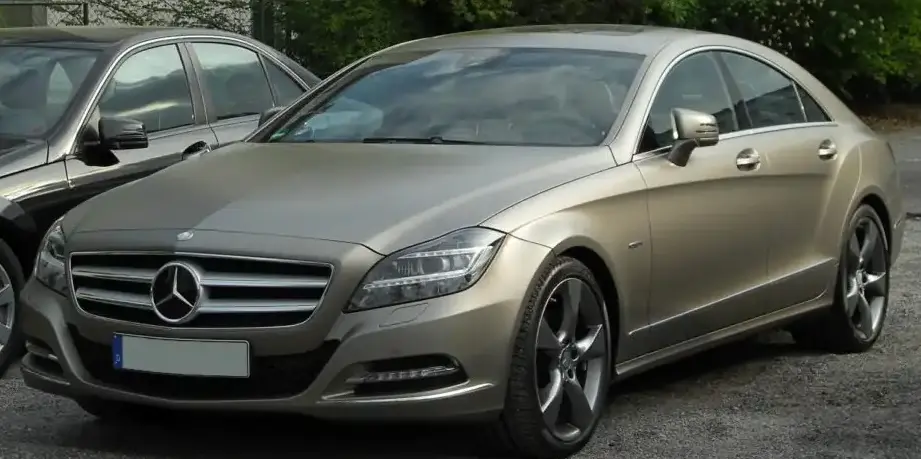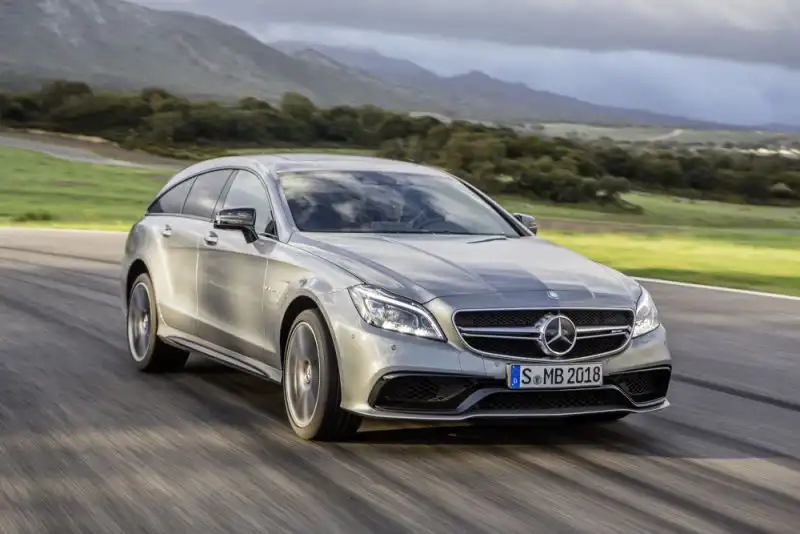
The Mercedes-Benz CLS 250 BlueTEC 4MATIC, part of the X218 facelift generation produced from 2014 to 2018, represented a compelling blend of luxury, practicality, and efficiency within the premium four-door coupe segment. Positioned as a mid-range offering in the CLS Shooting Brake lineup, it catered to buyers seeking a sophisticated vehicle with strong fuel economy and all-weather capability. This variant combined a 2.1-liter turbocharged diesel engine with a seven-speed 7G-TRONIC PLUS automatic transmission and Mercedes-Benz’s 4MATIC all-wheel-drive system. The Shooting Brake body style, essentially a wagon, added a significant degree of practicality compared to the standard CLS coupe, without sacrificing its elegant profile.
Technical Specifications
| Brand | Mercedes-Benz |
| Model | CLS |
| Generation | CLS Shooting Brake (X218, facelift 2014) |
| Type (Engine) | CLS 250 BlueTEC (204 Hp) 4MATIC 7G-TRONIC PLUS |
| Start of production | 2014 |
| End of production | 2018 |
| Powertrain Architecture | Internal Combustion engine |
| Body type | Station wagon (estate) |
| Seats | 5 |
| Doors | 5 |
| Fuel consumption (urban) | 6.6 l/100 km (35.6 US mpg, 42.8 UK mpg, 15.2 km/l) |
| Fuel consumption (extra urban) | 4.8-5.0 l/100 km (49-47 US mpg, 58.9-56.5 UK mpg, 20.8-20 km/l) |
| Fuel consumption (combined) | 5.5-5.6 l/100 km (42.8-42 US mpg, 51.4-50.4 UK mpg, 18.2-17.9 km/l) |
| CO2 emissions | 146-147 g/km |
| Fuel Type | Diesel |
| Acceleration 0 – 100 km/h | 8.1 sec |
| Acceleration 0 – 62 mph | 8.1 sec |
| Acceleration 0 – 60 mph | 7.7 sec |
| Maximum speed | 229 km/h (142.29 mph) |
| Emission standard | Euro 6 |
| Weight-to-power ratio | 9.2 kg/Hp, 108.5 Hp/tonne |
| Weight-to-torque ratio | 3.8 kg/Nm, 266 Nm/tonne |
| Power | 204 Hp @ 3800 rpm |
| Power per litre | 95.2 Hp/l |
| Torque | 500 Nm @ 1600-1800 rpm (368.78 lb.-ft. @ 1600-1800 rpm) |
| Engine layout | Front, Longitudinal |
| Engine Model/Code | OM 651.924 |
| Engine displacement | 2143 cm3 (130.77 cu. in.) |
| Number of cylinders | 4 |
| Engine configuration | Inline |
| Cylinder Bore | 83 mm (3.27 in.) |
| Piston Stroke | 99 mm (3.9 in.) |
| Compression ratio | 16.2:1 |
| Number of valves per cylinder | 4 |
| Fuel injection system | Diesel Commonrail |
| Engine aspiration | BiTurbo, Intercooler |
| Valvetrain | DOHC |
| Engine oil capacity | 6.5 l (6.87 US qt | 5.72 UK qt) |
| Coolant | 10.4 l (10.99 US qt | 9.15 UK qt) |
| Kerb Weight | 1880 kg (4144.69 lbs.) |
| Max. weight | 2480 kg (5467.46 lbs.) |
| Max load | 600 kg (1322.77 lbs.) |
| Trunk (boot) space – minimum | 590 l (20.84 cu. ft.) |
| Trunk (boot) space – maximum | 1550 l (54.74 cu. ft.) |
| Fuel tank capacity | 59 l (15.59 US gal | 12.98 UK gal) |
| Max. roof load | 100 kg (220.46 lbs.) |
| Permitted trailer load with brakes (12%) | 2100 kg (4629.71 lbs.) |
| Permitted trailer load without brakes | 750 kg (1653.47 lbs.) |
| Length | 4953 mm (195 in.) |
| Width | 1881 mm (74.06 in.) |
| Width including mirrors | 2075 mm (81.69 in.) |
| Height | 1419 mm (55.87 in.) |
| Wheelbase | 2874 mm (113.15 in.) |
| Front track | 1596 mm (62.83 in.) |
| Rear (Back) track | 1629 mm (64.13 in.) |
| Front overhang | 898 mm (35.35 in.) |
| Rear overhang | 1181 mm (46.5 in.) |
| Drag coefficient (Cd) | 0.29 |
| Minimum turning circle (turning diameter) | 11.51 m (37.76 ft.) |
| Drive wheel | All wheel drive (4×4) |
| Number of gears and type of gearbox | 7 gears, automatic transmission G-TRONIC PLUS |
| Front suspension | Independent, type McPherson with coil spring and anti-roll bar |
| Rear suspension | Independent multi-link suspension |
| Front brakes | Ventilated discs |
| Rear brakes | Disc |
| Assisting systems | ABS (Anti-lock braking system) |
| Steering type | Steering rack and pinion |
| Power steering | Electric Steering |
| Tires size | 245/45 R17 |
| Wheel rims size | 17 |
Powertrain & Engine Architecture
The CLS 250 BlueTEC utilized Mercedes-Benz’s OM651.924 2.1-liter inline-four cylinder diesel engine. This engine was a highly refined unit, featuring common-rail direct injection and a sophisticated two-stage turbocharging system. The first turbocharger was a variable geometry turbine (VGT) for improved low-end response, while the second turbocharger provided increased boost at higher engine speeds. This configuration helped to deliver a broad torque curve, peaking at 500 Nm (368.78 lb.-ft.) between 1600 and 1800 rpm. The engine also incorporated an intercooler to further enhance performance. The 7G-TRONIC PLUS seven-speed automatic transmission was specifically tuned to complement the engine’s characteristics, offering smooth and efficient gear changes. This transmission featured a torque converter lock-up clutch to minimize slippage and improve fuel economy.
Driving Characteristics
The CLS 250 BlueTEC 4MATIC offered a comfortable and refined driving experience. While not overtly sporty, the engine provided ample power for everyday driving and confident highway cruising. The 0-100 km/h (0-62 mph) acceleration time of 8.1 seconds was respectable for a large, luxurious wagon. The 7G-TRONIC PLUS transmission contributed to a relaxed driving style, with well-spaced gear ratios. Compared to the more powerful CLS 350 or CLS 550 models, the 250 BlueTEC prioritized fuel efficiency and torque over outright horsepower. The all-wheel-drive system provided enhanced traction and stability, particularly in inclement weather conditions. The steering was precise and well-weighted, although it lacked the direct feel of some sportier vehicles.
Equipment & Trim Levels
The CLS 250 BlueTEC 4MATIC typically came well-equipped as standard. Features included leather upholstery, automatic climate control, a high-resolution infotainment system with navigation, and a suite of safety technologies such as adaptive cruise control, lane-keeping assist, and automatic emergency braking. Optional extras included a premium sound system, panoramic sunroof, and various interior trim upgrades. The interior design was characterized by Mercedes-Benz’s signature luxury and attention to detail, with high-quality materials and a sophisticated layout. The Shooting Brake body style offered a generous amount of cargo space, making it a practical choice for families or those who frequently transport large items.
Chassis & Braking
The CLS 250 BlueTEC featured a sophisticated chassis designed to balance comfort and handling. The front suspension utilized McPherson struts with coil springs and an anti-roll bar, while the rear suspension employed a multi-link setup. This configuration provided a smooth and controlled ride. The braking system consisted of ventilated discs at the front and solid discs at the rear, providing ample stopping power. ABS (Anti-lock Braking System) and electronic stability control were standard features, enhancing safety and control.
Market Reception & Comparison
The CLS 250 BlueTEC 4MATIC was generally well-received by automotive critics. It was praised for its fuel efficiency, comfortable ride, and luxurious interior. However, some reviewers noted that the engine lacked the punch of its more powerful siblings. Compared to the CLS 350, the 250 BlueTEC offered significantly better fuel economy but less acceleration. The 250 BlueTEC appealed to buyers who prioritized efficiency and practicality over outright performance. Its diesel engine also offered a longer range between fill-ups, making it a suitable choice for long-distance travel.
Legacy
The OM651 engine family, including the 2.1-liter unit found in the CLS 250 BlueTEC, has proven to be remarkably durable and reliable. With proper maintenance, these engines can accumulate high mileage without major issues. The 7G-TRONIC PLUS transmission is also known for its longevity. On the used car market, the CLS 250 BlueTEC 4MATIC represents a good value proposition, offering a luxurious and well-equipped vehicle at a relatively affordable price point. However, potential buyers should be aware of the potential for diesel particulate filter (DPF) issues, particularly if the vehicle has been primarily used for short trips. Regular servicing and the use of high-quality diesel fuel are essential to maintaining the long-term reliability of this powertrain.