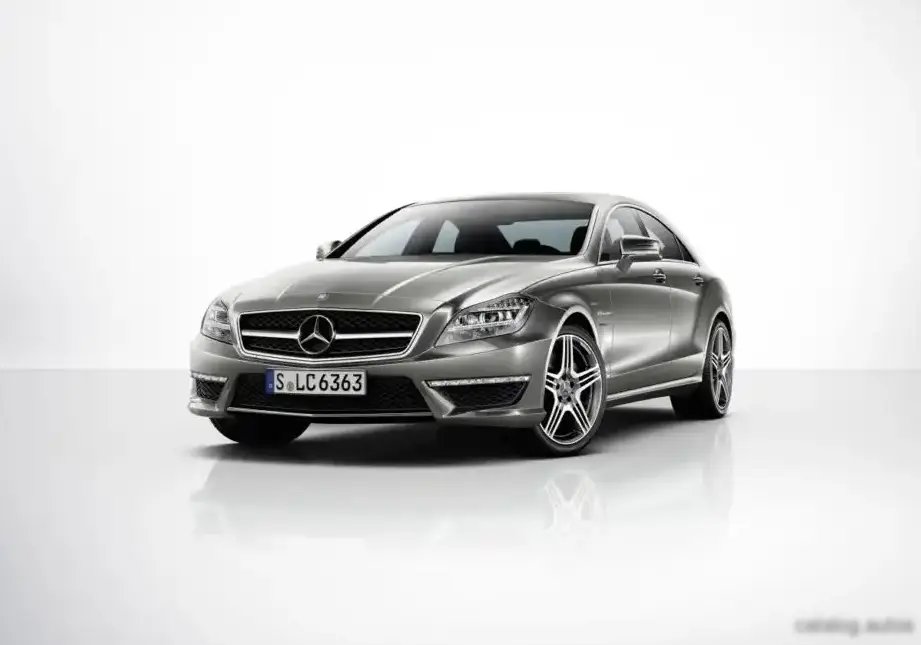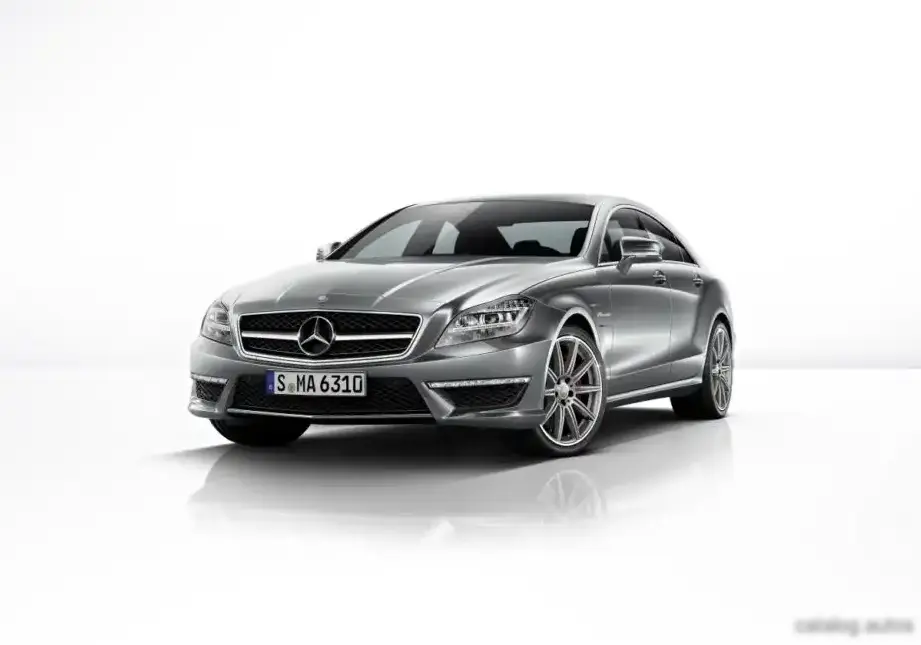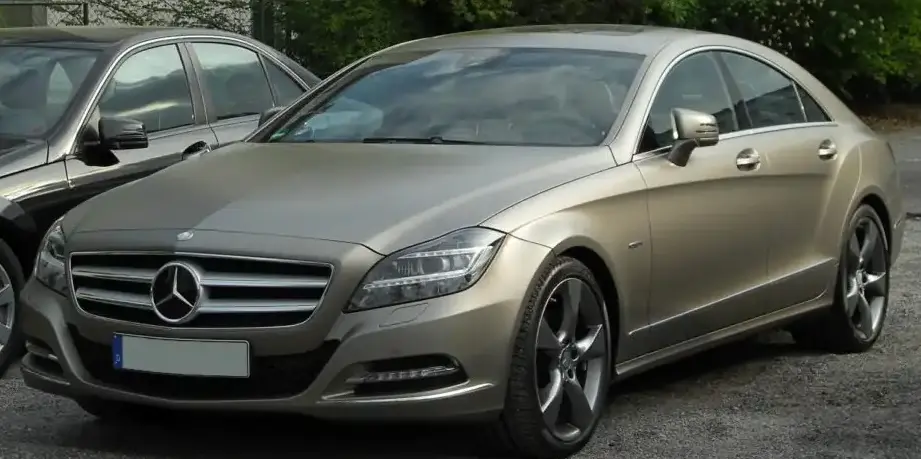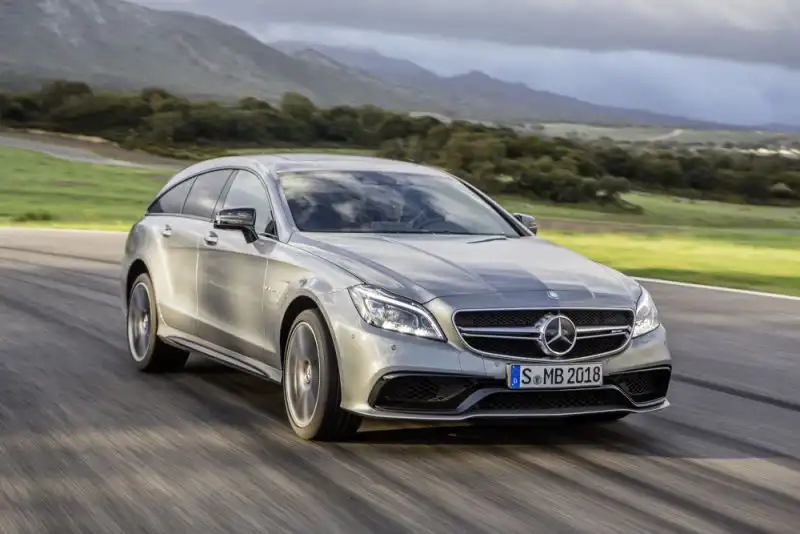
The Mercedes-Benz CLS 250 BlueTEC Shooting Brake (X218, facelift 2014) represents a unique blend of luxury, practicality, and efficiency within the CLS model range. Introduced as part of the X218 facelift in 2014 and continuing through 2018, this variant offered a diesel-powered, automatic transmission option in the stylish Shooting Brake body style. It aimed to provide a more economical and accessible entry point into the CLS lineup, appealing to buyers seeking a premium wagon experience without the higher costs associated with the more powerful gasoline engines. This model occupied a mid-range position, slotting below the CLS 350 and CLS 550 variants in terms of performance and price.
Technical Specifications
| Brand | Mercedes-Benz |
| Model | CLS |
| Generation | CLS Shooting Brake (X218, facelift 2014) |
| Type (Engine) | CLS 250 BlueTEC (204 Hp) 9G-TRONIC |
| Start of production | 2014 |
| End of production | 2018 |
| Powertrain Architecture | Internal Combustion engine |
| Body type | Station wagon (estate) |
| Seats | 5 |
| Doors | 5 |
| Fuel consumption (urban) | 5.8 l/100 km (40.6 US mpg, 48.7 UK mpg, 17.2 km/l) |
| Fuel consumption (extra urban) | 4.4-4.5 l/100 km (53.5 – 52.3 US mpg, 64.2 – 62.8 UK mpg, 22.7 – 22.2 km/l) |
| Fuel consumption (combined) | 5 l/100 km (47 US mpg, 56.5 UK mpg, 20 km/l) |
| CO2 emissions | 130 g/km |
| Fuel Type | Diesel |
| Acceleration 0 – 100 km/h | 7.7 sec |
| Acceleration 0 – 62 mph | 7.7 sec |
| Acceleration 0 – 60 mph | 7.3 sec |
| Maximum speed | 235 km/h (146.02 mph) |
| Emission standard | Euro 6 |
| Weight-to-power ratio | 8.9 kg/Hp, 112.7 Hp/tonne |
| Weight-to-torque ratio | 3.6 kg/Nm, 276.2 Nm/tonne |
| Power | 204 Hp @ 3800 rpm |
| Power per litre | 95.2 Hp/l |
| Torque | 500 Nm @ 1600-1800 rpm (368.78 lb.-ft. @ 1600-1800 rpm) |
| Engine layout | Front, Longitudinal |
| Engine Model/Code | OM 651.924 |
| Engine displacement | 2143 cm3 (130.77 cu. in.) |
| Number of cylinders | 4 |
| Engine configuration | Inline |
| Cylinder Bore | 83 mm (3.27 in.) |
| Piston Stroke | 99 mm (3.9 in.) |
| Compression ratio | 16.2:1 |
| Number of valves per cylinder | 4 |
| Fuel injection system | Diesel Commonrail |
| Engine aspiration | BiTurbo, Intercooler |
| Valvetrain | DOHC |
| Engine oil capacity | 6.5 l (6.87 US qt | 5.72 UK qt) |
| Coolant | 10.4 l (10.99 US qt | 9.15 UK qt) |
| Kerb Weight | 1810 kg (3990.37 lbs.) |
| Max. weight | 2410 kg (5313.14 lbs.) |
| Max load | 600 kg (1322.77 lbs.) |
| Trunk (boot) space – minimum | 590 l (20.84 cu. ft.) |
| Trunk (boot) space – maximum | 1550 l (54.74 cu. ft.) |
| Fuel tank capacity | 59 l (15.59 US gal | 12.98 UK gal) |
| Max. roof load | 100 kg (220.46 lbs.) |
| Permitted trailer load with brakes (12%) | 2100 kg (4629.71 lbs.) |
| Permitted trailer load without brakes | 750 kg (1653.47 lbs.) |
| Length | 4953 mm (195 in.) |
| Width | 1881 mm (74.06 in.) |
| Width including mirrors | 2075 mm (81.69 in.) |
| Height | 1419 mm (55.87 in.) |
| Wheelbase | 2874 mm (113.15 in.) |
| Front track | 1596 mm (62.83 in.) |
| Rear (Back) track | 1629 mm (64.13 in.) |
| Front overhang | 898 mm (35.35 in.) |
| Rear overhang | 1181 mm (46.5 in.) |
| Minimum turning circle | 11.18 m (36.68 ft.) |
| Drivetrain Architecture | Rear wheel drive |
| Number of gears and type of gearbox | 9 gears, automatic transmission G-TRONIC |
| Front suspension | Independent, type McPherson with coil spring and anti-roll bar |
| Rear suspension | Independent multi-link suspension |
| Front brakes | Ventilated discs |
| Rear brakes | Disc |
| Tires size | 245/45 R17 |
| Wheel rims size | 17 |
Powertrain & Engine Architecture
The CLS 250 BlueTEC Shooting Brake utilized the OM 651.924 2.1-liter inline-four cylinder diesel engine. This engine was a mainstay in the Mercedes-Benz lineup, known for its robust construction and fuel efficiency. The ‘BlueTEC’ designation indicated the inclusion of advanced emissions control technologies, including a diesel particulate filter and selective catalytic reduction (SCR) system utilizing AdBlue (Diesel Exhaust Fluid) to reduce NOx emissions, ensuring compliance with Euro 6 standards. The engine featured a common rail direct injection system, delivering fuel at extremely high pressures for optimized combustion. A twin-turbocharger setup, incorporating a small turbo for quick response and a larger turbo for peak power, contributed to the engine’s 500 Nm (368.78 lb-ft) of torque available from 1600-1800 rpm. The 9G-TRONIC nine-speed automatic transmission was paired exclusively with this engine. This transmission offered a wide range of gear ratios, contributing to both fuel economy and smooth acceleration. The transmission’s sophisticated control logic adapted to driving conditions and driver input, optimizing shift points for efficiency or performance.
Driving Characteristics
The CLS 250 BlueTEC Shooting Brake offered a comfortable and refined driving experience. While not as overtly sporty as its higher-powered siblings, the 204 hp and 500 Nm of torque provided ample power for everyday driving and highway cruising. Acceleration from 0-60 mph took approximately 7.3 seconds. The 9G-TRONIC transmission played a crucial role in delivering smooth and seamless gear changes, minimizing disruptions to the driving experience. The wide gear spread allowed the engine to operate efficiently at lower RPMs during cruising, contributing to excellent fuel economy. Compared to the CLS 350 or CLS 550, the 250 BlueTEC felt less urgent in its acceleration, but the abundant low-end torque made it feel effortless in most driving situations. The automatic transmission, while refined, didn’t offer the same level of driver engagement as the available manual transmissions in other CLS models.
Equipment & Trim Levels
The CLS 250 BlueTEC Shooting Brake typically came well-equipped as standard. Features included automatic climate control, a high-resolution infotainment system with a central display screen, leather upholstery, and a suite of safety features such as ABS, ESP, and multiple airbags. Optional extras included a panoramic sunroof, premium sound system, advanced driver-assistance systems (such as lane keeping assist and adaptive cruise control), and various interior trim options. The interior design mirrored that of other CLS models, emphasizing luxury and sophistication with high-quality materials and meticulous attention to detail. Trim levels were often differentiated by the availability of these optional packages and the choice of interior colors and materials.
Chassis & Braking
The CLS 250 BlueTEC Shooting Brake utilized an independent suspension system, with McPherson struts at the front and a multi-link setup at the rear. This configuration provided a comfortable ride quality while maintaining good handling characteristics. The suspension was tuned to prioritize comfort over outright sportiness, reflecting the car’s grand touring nature. Braking duties were handled by ventilated discs at the front and solid discs at the rear, providing adequate stopping power for the vehicle’s weight and performance. Anti-lock braking system (ABS) and electronic stability program (ESP) were standard features, enhancing safety and control.
Market Reception & Comparison
The CLS 250 BlueTEC Shooting Brake was generally well-received by automotive critics. It was praised for its fuel efficiency, comfortable ride, and stylish design. However, some reviewers noted that the engine lacked the outright performance of the more powerful CLS variants. Compared to the CLS 350, the 250 BlueTEC offered significantly better fuel economy but less acceleration. The 250 BlueTEC appealed to buyers who prioritized efficiency and refinement over outright performance. Its diesel engine provided a significant advantage in terms of fuel costs, making it an attractive option for long-distance drivers.
Legacy
The OM 651 engine family, including the 2.1-liter variant used in the CLS 250 BlueTEC, has proven to be remarkably durable and reliable. With proper maintenance, these engines can accumulate high mileage without major issues. The 9G-TRONIC transmission has also demonstrated good long-term reliability. In the used car market, the CLS 250 BlueTEC Shooting Brake represents a compelling value proposition, offering a luxurious and practical wagon experience at a relatively affordable price point. However, potential buyers should be aware of the maintenance requirements associated with diesel engines, including the need for regular AdBlue refills and potential issues with the diesel particulate filter.