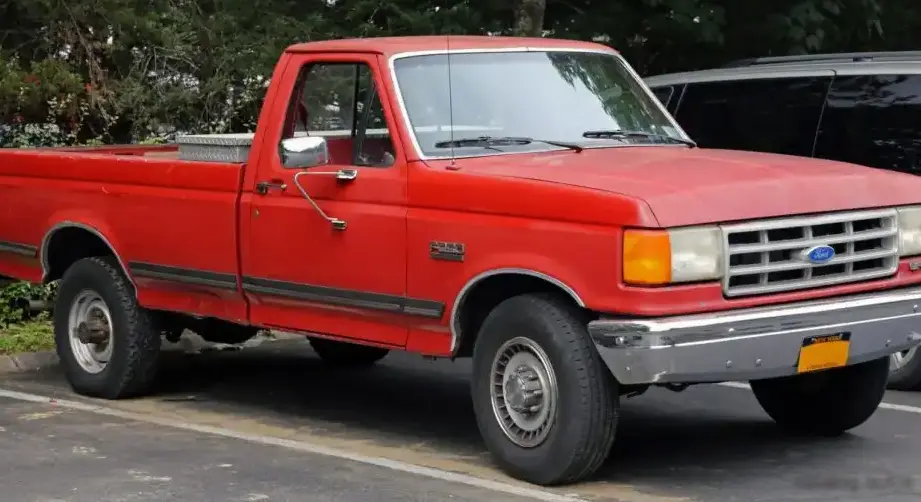
The Ford F-Series F-250 VIII Regular Cab, equipped with the 4.9-liter inline-six engine and an automatic transmission, represented a work-focused configuration within the eighth generation of Ford’s immensely popular F-Series pickup trucks. Produced from 1986 through 1988, this variant served as a dependable, if not particularly powerful, option for buyers prioritizing affordability and durability over outright performance. It occupied the entry-level position in the F-250 lineup, catering to those needing a heavier-duty truck than the F-150, but without the expense of the larger V8 engines offered. This model was primarily sold in the North American market, where the F-Series had been the best-selling vehicle for decades.
Technical Specifications
| Brand | Ford |
| Model | F-Series F-250 |
| Generation | F-Series F-250 VIII Regular Cab |
| Type (Engine) | 4.9 300 Six (145 Hp) Automatic |
| Start of production | 1986 |
| End of production | 1988 |
| Powertrain Architecture | Internal Combustion engine |
| Body type | Pick-up |
| Seats | 3 |
| Doors | 2 |
| Fuel Type | Petrol (Gasoline) |
| Power | 145 Hp |
| Power per litre | 29.5 Hp/l |
| Torque | 359 Nm / 264.78 lb.-ft. |
| Engine layout | Front, Longitudinal |
| Engine displacement | 4916 cm3 / 299.99 cu. in. |
| Number of cylinders | 6 |
| Engine configuration | Inline |
| Fuel injection system | Multi-port manifold injection |
| Engine aspiration | Naturally aspirated engine |
| Max. weight | 3493 kg / 7700.75 lbs. |
| Fuel tank capacity | 72 l / 19.02 US gal | 15.84 UK gal |
| Length | 5339 mm / 210.2 in. |
| Width | 1778 mm / 70 in. |
| Height | 1854 mm / 72.99 in. |
| Wheelbase | 3378 mm / 132.99 in. |
| Wading depth | 826 mm / 32.52 in. |
| Drivetrain Architecture | The Internal combustion engine (ICE) drives the rear wheels of the vehicle. |
| Drive wheel | Rear wheel drive |
| Number of gears and type of gearbox | automatic transmission SelectShift |
| Front suspension | Independent coil spring |
| Front brakes | Disc |
| Rear brakes | Drum |
| Power steering | Electric Steering |
| Tires size | 215/85 R16; 235/85 R16 |
| Wheel rims size | 6J x 16 |
Powertrain & Engine Architecture
The heart of this F-250 variant was Ford’s 4.9-liter (299 cubic inch) inline-six engine, commonly known as the “300 Six.” This engine, a long-stroke design, was renowned for its exceptional durability and low-end torque. While not a powerhouse in terms of horsepower – producing 145 hp – it delivered a respectable 359 Nm (264.78 lb-ft) of torque. The engine utilized a multi-port fuel injection system, a relatively modern feature for the time, improving fuel efficiency and drivability compared to carbureted predecessors. The valvetrain employed a single overhead camshaft. The “SelectShift” automatic transmission, a three-speed unit, was the sole transmission option for this configuration. This transmission was designed for durability and ease of use, prioritizing smooth shifts over aggressive performance.
Driving Characteristics
The 145 hp and automatic transmission combination resulted in a driving experience geared towards utility rather than speed. Acceleration was modest, and the truck wasn’t designed for quick maneuvers. However, the 300 Six’s ample low-end torque made it capable of hauling and towing moderate loads. The automatic transmission’s gear ratios were optimized for work, providing sufficient power for everyday tasks and towing. Compared to the available V8 engines (such as the 351 Windsor or 460), this 4.9L automatic was significantly slower, but it offered better fuel economy. Manual transmission equipped versions of the F-250, even with the same 4.9L engine, felt more responsive due to the direct connection and the driver’s control over gear selection.
Equipment & Trim Levels
The F-250 VIII Regular Cab with the 4.9L engine and automatic transmission typically represented the base trim level. Standard features included a basic vinyl interior, a simple dashboard layout, and manual windows and locks. Air conditioning and an upgraded radio were common optional extras. The interior was functional and durable, designed to withstand the rigors of work-truck use. Exterior options were limited, with basic steel wheels and a standard paint color being the norm. Higher trim levels, such as the XLT or Lariat, offered more luxurious features like cloth upholstery, woodgrain trim, and power accessories, but were typically paired with the larger V8 engines.
Chassis & Braking
The F-250’s chassis was a robust body-on-frame construction, designed for heavy-duty use. The front suspension utilized independent coil springs, providing a relatively comfortable ride for a truck of its size. The rear suspension employed leaf springs, capable of handling substantial payloads. Braking duties were handled by disc brakes at the front and drum brakes at the rear. Power steering was standard, making maneuvering the large truck easier. Tire sizes typically ranged from 215/85 R16 to 235/85 R16, providing adequate traction for various road conditions. The rear axle ratio was typically chosen to balance towing capacity and fuel economy.
Market Reception & Comparison
Critics generally viewed the 4.9L automatic F-250 as a practical and reliable work truck, but not an exciting one. Its primary appeal lay in its affordability and durability. Fuel economy was reasonable for a truck of its size and capability, though significantly lower than smaller pickups. Compared to the V8-powered F-250s, this variant offered a lower purchase price and potentially lower maintenance costs, but at the expense of performance. The 4.9L engine was known for its longevity, often outlasting the rest of the vehicle. The automatic transmission, while not particularly sophisticated, proved to be durable and reliable in most applications.
Legacy
The Ford 300 Six engine, in all its iterations, has achieved legendary status among truck enthusiasts for its incredible durability and longevity. Even today, well-maintained examples of the 4.9L F-250 can be found in service, a testament to the engine’s robust design. In the used car market, these trucks are often sought after by those looking for a simple, reliable, and affordable work truck. While not a collector’s item in the same vein as some of the higher-performance F-Series models, the 4.9L automatic F-250 represents a significant chapter in Ford’s long history of building tough and dependable trucks. The powertrain, while dated by modern standards, remains relatively easy to maintain and repair, making it a popular choice for those who prefer to work on their own vehicles.