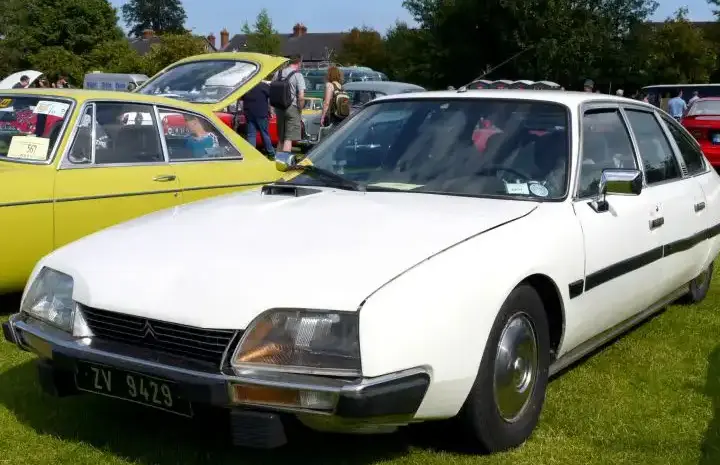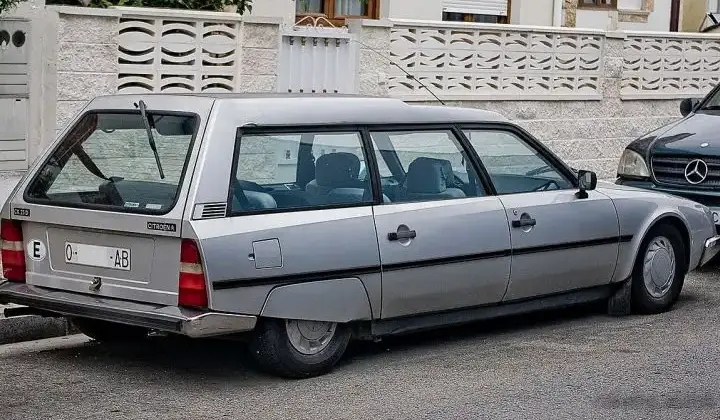
The Citroën CX I Break 2500 D, produced during the initial phase of the CX Break’s run in 1982, represents a unique offering within the broader CX range. The CX, launched in 1974 as a replacement for the venerable DS, continued Citroën’s tradition of innovative engineering and distinctive styling. The Break (estate/station wagon) variant, introduced later, expanded the CX’s appeal to families and those requiring greater cargo capacity. This specific 2500 D model, equipped with a 2.5-liter diesel engine producing 75 horsepower, occupied a position as a practical, fuel-efficient option within the lineup, aimed at buyers prioritizing economy and durability over outright performance. It was built on the CX platform (often referred to as the G platform), known for its advanced hydropneumatic suspension.
Technical Specifications
| Brand | Citroen |
| Model | CX |
| Generation | CX I Break (Phase I, 1982) |
| Type (Engine) | 2500 D (75 Hp) |
| Start of production | 1982 |
| End of production | 1982 |
| Powertrain Architecture | Internal Combustion engine |
| Body type | Station wagon (estate) |
| Seats | 5 |
| Doors | 5 |
| Fuel Type | Diesel |
| Acceleration 0 – 100 km/h | 19 sec |
| Acceleration 0 – 62 mph | 19 sec |
| Acceleration 0 – 60 mph | 18.1 sec |
| Maximum speed | 151 km/h (93.83 mph) |
| Weight-to-power ratio | 19.5 kg/Hp, 51.2 Hp/tonne |
| Weight-to-torque ratio | 9.8 kg/Nm, 102.4 Nm/tonne |
| Power | 75 Hp @ 4250 rpm |
| Power per litre | 30 Hp/l |
| Torque | 150 Nm @ 2000 rpm (110.63 lb.-ft. @ 2000 rpm) |
| Engine layout | Front, Transverse |
| Engine Model/Code | M25-629 |
| Engine displacement | 2499 cm3 (152.5 cu. in.) |
| Number of cylinders | 4 |
| Engine configuration | Inline |
| Cylinder Bore | 93 mm (3.66 in.) |
| Piston Stroke | 92 mm (3.62 in.) |
| Compression ratio | 22.25:1 |
| Number of valves per cylinder | 2 |
| Fuel injection system | Precombustion chamber injection |
| Engine aspiration | Naturally aspirated engine |
| Engine oil capacity | 5.3 l (5.6 US qt | 4.66 UK qt) |
| Coolant | 12.3 l (13 US qt | 10.82 UK qt) |
| Kerb Weight | 1465 kg (3229.77 lbs.) |
| Max. weight | 2110 kg (4651.75 lbs.) |
| Max load | 645 kg (1421.98 lbs.) |
| Trunk (boot) space – minimum | 1100 l (38.85 cu. ft.) |
| Trunk (boot) space – maximum | 2030 l (71.69 cu. ft.) |
| Fuel tank capacity | 68 l (17.96 US gal | 14.96 UK gal) |
| Permitted trailer load with brakes (12%) | 1300 kg (2866.01 lbs.) |
| Permitted trailer load without brakes | 685 kg (1510.17 lbs.) |
| Length | 4952 mm (194.96 in.) |
| Width | 1734 mm (68.27 in.) |
| Height | 1456 mm (57.32 in.) |
| Wheelbase | 3095 mm (121.85 in.) |
| Front track | 1474 mm (58.03 in.) |
| Rear (Back) track | 1390 mm (54.72 in.) |
| Front overhang | 1050 mm (41.34 in.) |
| Rear overhang | 807 mm (31.77 in.) |
| Drag coefficient (Cd) | 0.43 |
| Minimum turning circle (turning diameter) | 12.70 m (41.67 ft.) |
| Drivetrain Architecture | The Internal combustion engine (ICE) drives the front wheels of the vehicle. |
| Drive wheel | Front wheel drive |
| Number of gears and type of gearbox | 5 gears, manual transmission |
| Front brakes | Ventilated discs |
| Rear brakes | Disc |
| Steering type | Steering rack and pinion |
Powertrain & Engine Architecture
The CX 2500 D Break utilized the M25-629 engine, a 2.5-liter inline-four diesel engine. This engine was a naturally aspirated, indirect injection diesel, employing a precombustion chamber design. This system, common in European diesels of the era, involved injecting fuel into a small precombustion chamber within the cylinder head, where it ignited and then ignited the main charge in the cylinder. This design aided in smoother combustion and reduced engine noise compared to direct injection systems. The engine featured a two-valve per cylinder configuration and a relatively low compression ratio of 22.25:1, typical for diesel engines. The engine’s 75 horsepower output at 4250 rpm and 150 Nm (110.63 lb-ft) of torque at 2000 rpm were modest, but sufficient for comfortable cruising and load-carrying capability. The engine was transversely mounted, contributing to the CX’s compact engine bay. The 5-speed manual transmission was the only gearbox option for this variant.
Driving Characteristics
The CX 2500 D Break, with its 75 horsepower and manual transmission, offered a driving experience focused on practicality and fuel efficiency rather than performance. Acceleration was leisurely, taking approximately 19 seconds to reach 62 mph. The engine’s torque, however, provided reasonable pulling power for everyday driving and when carrying a load. The gear ratios were optimized for economy, with taller gearing in the upper gears to reduce engine speed at highway speeds. Compared to the gasoline-powered CX variants, the 2500 D offered significantly better fuel economy, but at the expense of responsiveness. The CX’s renowned hydropneumatic suspension, however, provided a remarkably smooth and comfortable ride, regardless of the engine fitted, mitigating some of the performance shortcomings.
Equipment & Trim Levels
The CX 2500 D Break was generally equipped with a fairly basic level of trim, reflecting its position as a more affordable model. Standard features typically included cloth upholstery, a basic dashboard layout with analog gauges, and manual windows and door locks. Optional extras, such as air conditioning, upgraded audio systems, and power windows, were available, but often added significantly to the vehicle’s price. The interior was functional and designed for durability, rather than luxury. The Break body style itself offered a significant amount of cargo space, with a minimum of 1100 liters (38.85 cu. ft.) and a maximum of 2030 liters (71.69 cu. ft.) with the rear seats folded down.
Chassis & Braking
The CX Break’s chassis featured Citroën’s innovative hydropneumatic suspension system, which provided a self-leveling ride and exceptional comfort. The front suspension utilized independent double wishbones, while the rear suspension employed trailing arms. The 2500 D Break was equipped with ventilated disc brakes at the front and solid disc brakes at the rear. The steering was rack and pinion, providing precise and responsive handling. Stabilizer bars were fitted to both the front and rear axles to reduce body roll during cornering.
Market Reception & Comparison
The CX 2500 D Break was generally well-received by critics as a practical and economical estate car. Its fuel efficiency was a major selling point, particularly in Europe where diesel fuel was often cheaper than gasoline. However, its performance was often criticized as being underwhelming, especially compared to the more powerful gasoline-powered CX variants. Compared to the CX 2000 or V6 models, the 2500 D offered significantly lower running costs but lacked the refinement and performance of its more expensive siblings. The 2500 D appealed to buyers who prioritized practicality, fuel economy, and comfort over outright speed and luxury.
Legacy
The Citroën CX 2500 D Break, while not the most sought-after variant of the CX range, remains a respected and interesting vehicle among classic Citroën enthusiasts. The M25-629 diesel engine, while not known for its high performance, proved to be relatively durable and reliable. Today, well-maintained examples of the CX 2500 D Break are becoming increasingly rare and are valued for their unique combination of comfort, practicality, and distinctive styling. Parts availability can be a challenge, but a dedicated network of Citroën specialists and enthusiasts continues to support the preservation of these iconic vehicles. The hydropneumatic suspension, while requiring specialized maintenance, continues to be admired for its innovative design and exceptional ride quality.