
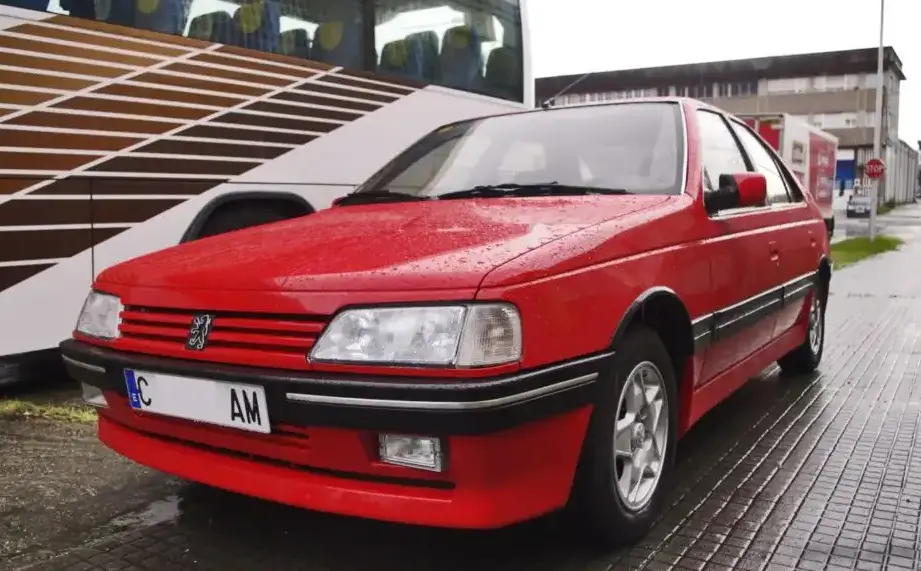
The Peugeot 405, launched in 1987, represented a significant step forward for the French automaker, replacing the aging 505. The 405 I (15B) series, produced from 1987 to 1988, was the initial iteration of this popular model. Within the 405 range, the 1.6-liter (75 horsepower) variant, powered by the BAZ XU5CP engine, served as the entry-level offering, aimed at buyers prioritizing fuel efficiency and affordability over outright performance. This model played a crucial role in establishing the 405’s presence in the competitive mid-size sedan segment, particularly in Europe, where it was positioned against rivals like the Ford Sierra, Opel/Vauxhall Vectra, and Renault 20.
Technical Specifications
| Brand | Peugeot |
| Model | 405 |
| Generation | 405 I (15B) |
| Type (Engine) | 1.6 (75 Hp) |
| Start of production | 1987 |
| End of production | 1988 |
| Powertrain Architecture | Internal Combustion engine |
| Body type | Sedan |
| Fuel Type | Petrol (Gasoline) |
| Power | 75 Hp |
| Engine Model/Code | BAZ XU5CP |
| Engine aspiration | Naturally aspirated engine |
| Engine oil capacity | 5 l (5.28 US qt | 4.4 UK qt) |
| Coolant capacity | 6.5 l (6.87 US qt | 5.72 UK qt) |
Powertrain & Engine Architecture
The heart of the 405 1.6 was the BAZ XU5CP engine, a 1.580-liter (96.2 cubic inches) inline-four cylinder petrol engine. This engine was part of Peugeot’s XU series, known for its relative simplicity and durability. The XU5CP featured a single overhead camshaft (SOHC) valvetrain operating two valves per cylinder. Fuel delivery was managed by a Bosch mechanical fuel injection system, a common setup for the era, providing a balance between cost and efficiency. While not particularly powerful, the XU5CP was known for its smooth operation and reasonable fuel economy. The engine produced 75 horsepower (56 kW) at 5,800 rpm and 118 Nm (87 lb-ft) of torque at 3,500 rpm. The engine was typically paired with a four-speed automatic transmission, although a five-speed manual gearbox was also available. The automatic transmission, while offering convenience, was not known for its particularly quick shifts or sporty feel.
Driving Characteristics
The 405 1.6 with the automatic transmission offered a comfortable, if not exhilarating, driving experience. Acceleration was modest, with a 0-60 mph time estimated around 13-14 seconds. The automatic gearbox, with its four forward ratios, prioritized fuel economy over performance. Gear changes were relatively smooth, but lacked the responsiveness of more modern automatic transmissions. The engine’s torque characteristics meant that it felt relatively strained when accelerating hard, particularly when fully loaded. Compared to the more powerful 1.9-liter and 2.0-liter versions of the 405, the 1.6 automatic was noticeably slower. However, it excelled in urban driving and on long highway journeys where relaxed cruising was the priority. The steering was light and precise, making it easy to maneuver in tight spaces. The suspension, while comfortable, wasn’t particularly sporty, resulting in some body roll during cornering.
Equipment & Trim Levels
The 405 1.6, as the entry-level model, was equipped with a relatively basic level of standard features. Typically, it included cloth upholstery, a simple dashboard layout, and manual windows and door locks. Power steering was often included, but air conditioning was usually an optional extra. The interior was functional and well-built, reflecting Peugeot’s reputation for quality. Higher trim levels, such as the GR and SR, added features like central locking, electric windows, upgraded upholstery, and a more comprehensive instrument panel. Optional extras for the 1.6 included a sunroof, upgraded audio system, and metallic paint. The overall interior ambiance was geared towards practicality and durability rather than luxury.
Chassis & Braking
The 405 I (15B) utilized a MacPherson strut front suspension and a torsion beam rear suspension. This setup provided a good balance between ride comfort and handling. The front suspension featured coil springs and an anti-roll bar, while the rear suspension relied on leaf springs and dampers. Braking on the 405 1.6 typically consisted of disc brakes on the front wheels and drum brakes on the rear wheels. The braking system was adequate for the car’s performance, but lacked the stopping power of the larger-engined models with all-round disc brakes. The steering was a rack-and-pinion system, providing precise and responsive steering feel. The chassis was relatively lightweight, contributing to the car’s fuel efficiency.
Market Reception & Comparison
The Peugeot 405 1.6 received generally positive reviews, particularly for its fuel economy, comfortable ride, and build quality. Critics acknowledged that it wasn’t a particularly exciting car to drive, but praised its practicality and affordability. Compared to its rivals, the 405 1.6 offered a good value proposition, providing a well-equipped and reliable car at a competitive price. The 1.9-liter and 2.0-liter versions of the 405 offered significantly more performance, but at a higher cost. The 1.6 was often seen as a sensible choice for buyers who prioritized fuel efficiency and low running costs. Fuel economy was a key selling point, with the 1.6 achieving around 30-35 mpg in mixed driving conditions. Reliability was generally good, although the Bosch fuel injection system could occasionally require maintenance.
Legacy
The Peugeot 405, and specifically the 1.6 variant, established a strong reputation for reliability and durability. The XU5CP engine, while not a powerhouse, proved to be a robust and long-lasting unit. Today, the 405 1.6 is a relatively rare sight on the roads, but those that remain are often well-maintained by enthusiasts. The car’s simple mechanical design makes it relatively easy to repair and maintain. In the used car market, the 405 1.6 is often sought after by those looking for a classic French sedan that is affordable, reliable, and offers a unique driving experience. While not a performance icon, the 405 1.6 played a vital role in cementing Peugeot’s reputation as a manufacturer of well-engineered and practical automobiles.
